 Inty AI
Mid-Century Modern Living Room Ideas
10 mid-century versions of the same real living room, all shot from the same spot.
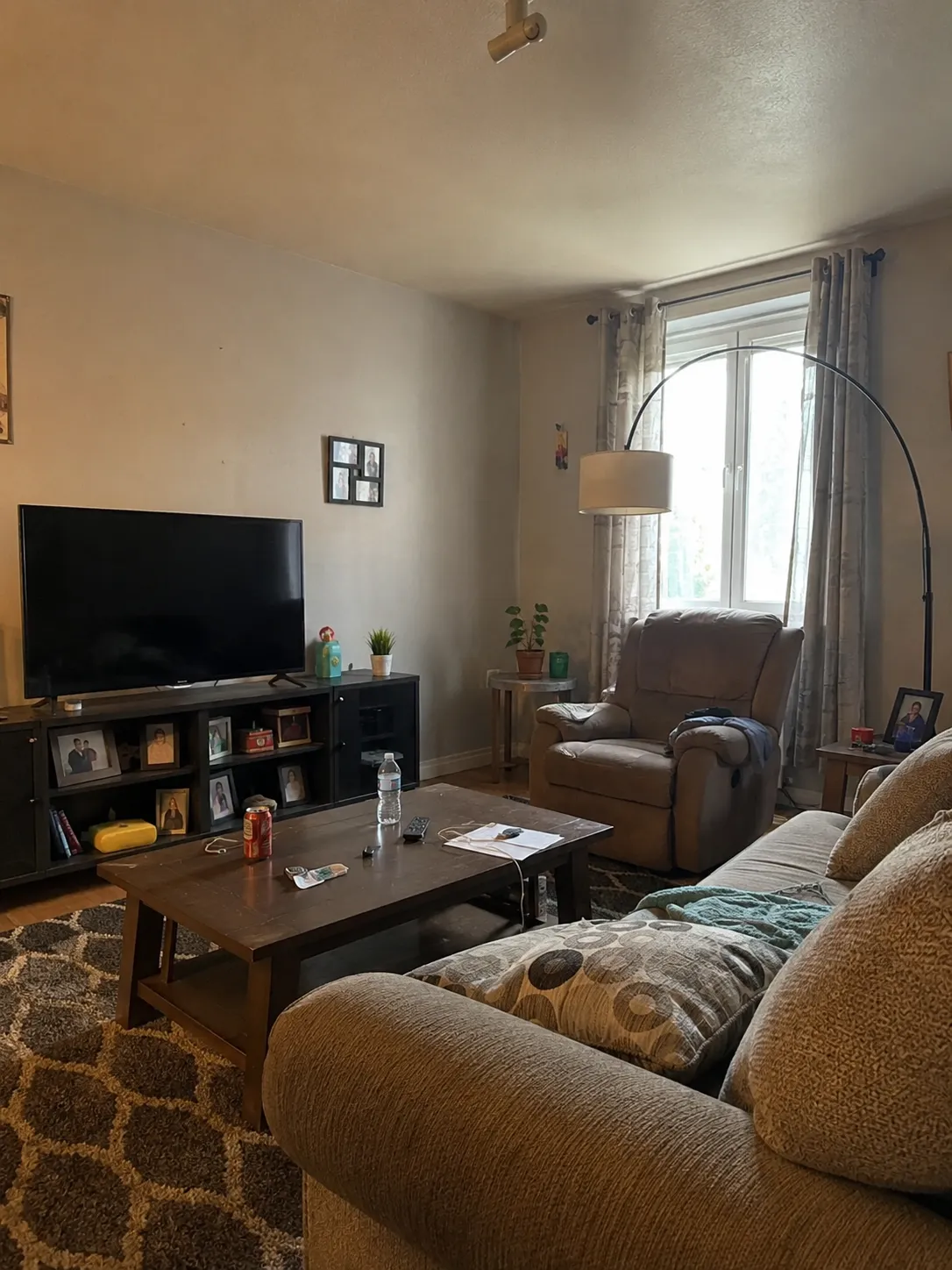 Before
Mid-century modern fits this room better than you'd think, because the bones are already right: a window on the right and a long wall on the left begging for a low sideboard. Dump the cluttered media console for a teak credenza, hide the TV, and you're mostly there. The cheap end is real - a warm rug, a couple of framed prints and a mushroom lamp is a Saturday job. The rust velvet sofa or the caramel sectional is a weekend and a delivery, the biggest line on the bill. Then it climbs. The Pop-art version swaps the wood floor for polished concrete, and the wood-panelled den wraps the walls in teak veneer and lays wall-to-wall carpet, both of which mean a fitter and a proper budget. Decide how far down that ladder you want to go before you buy the sofa.
10 versions of mid-century modern
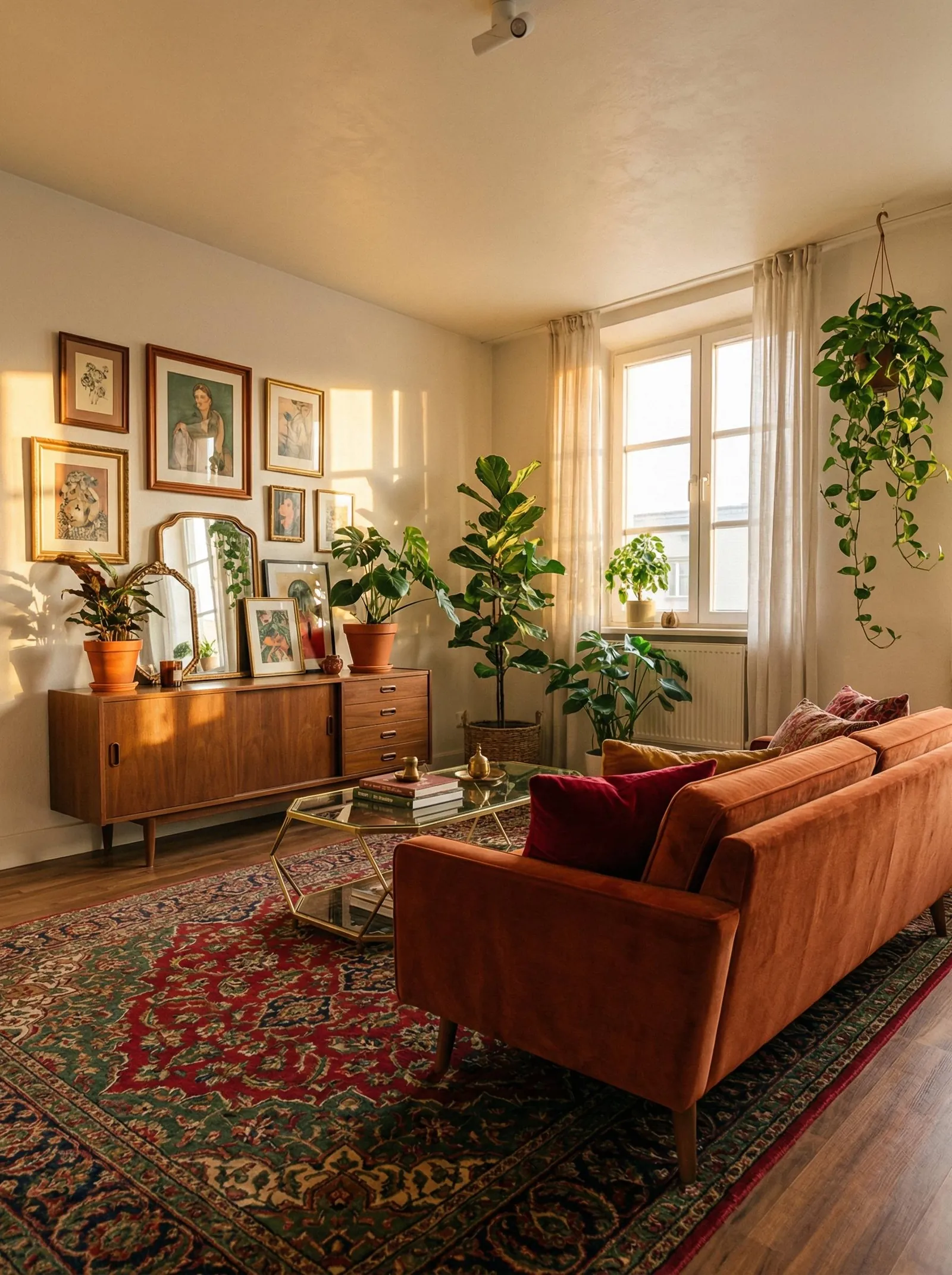
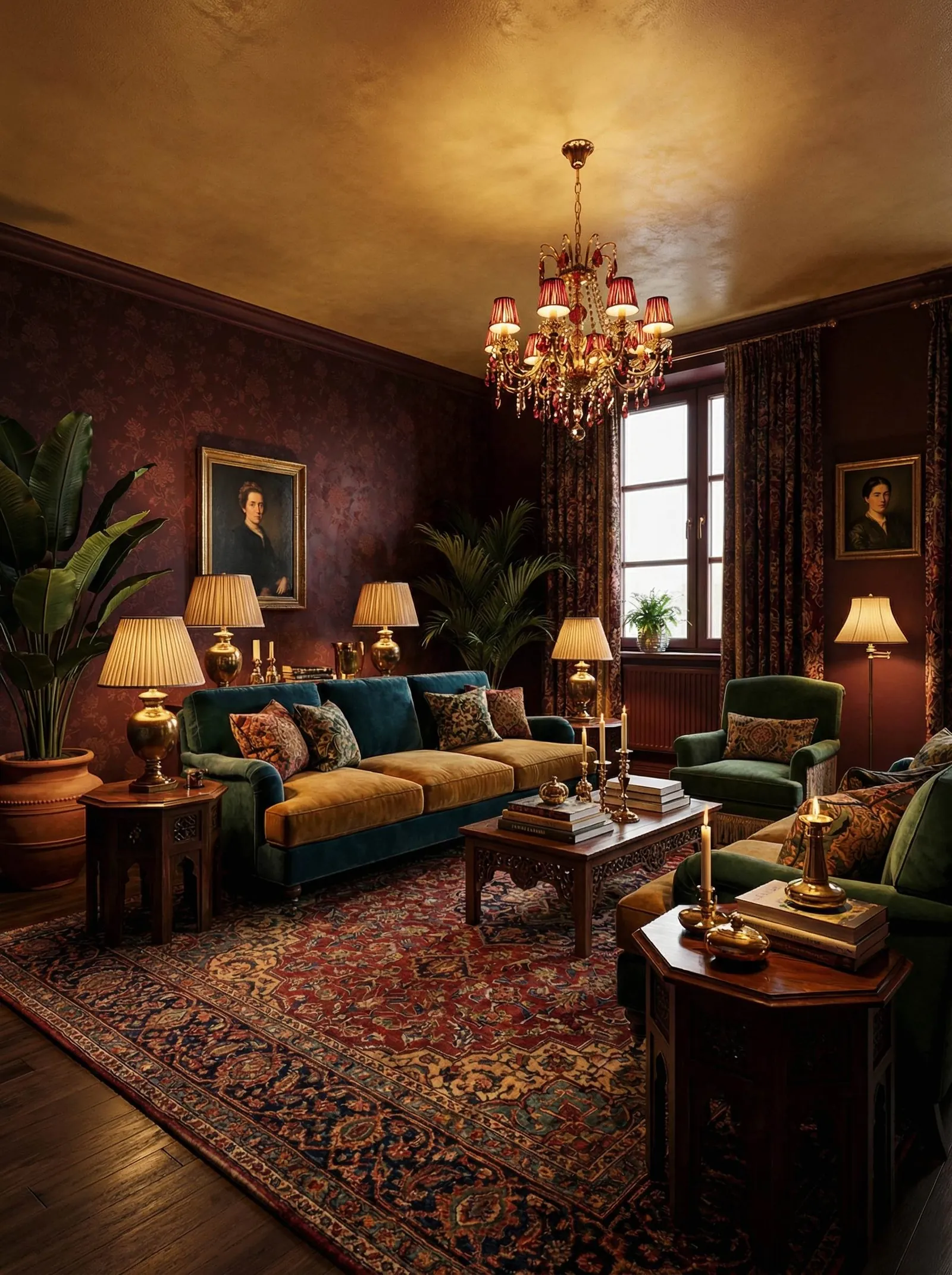
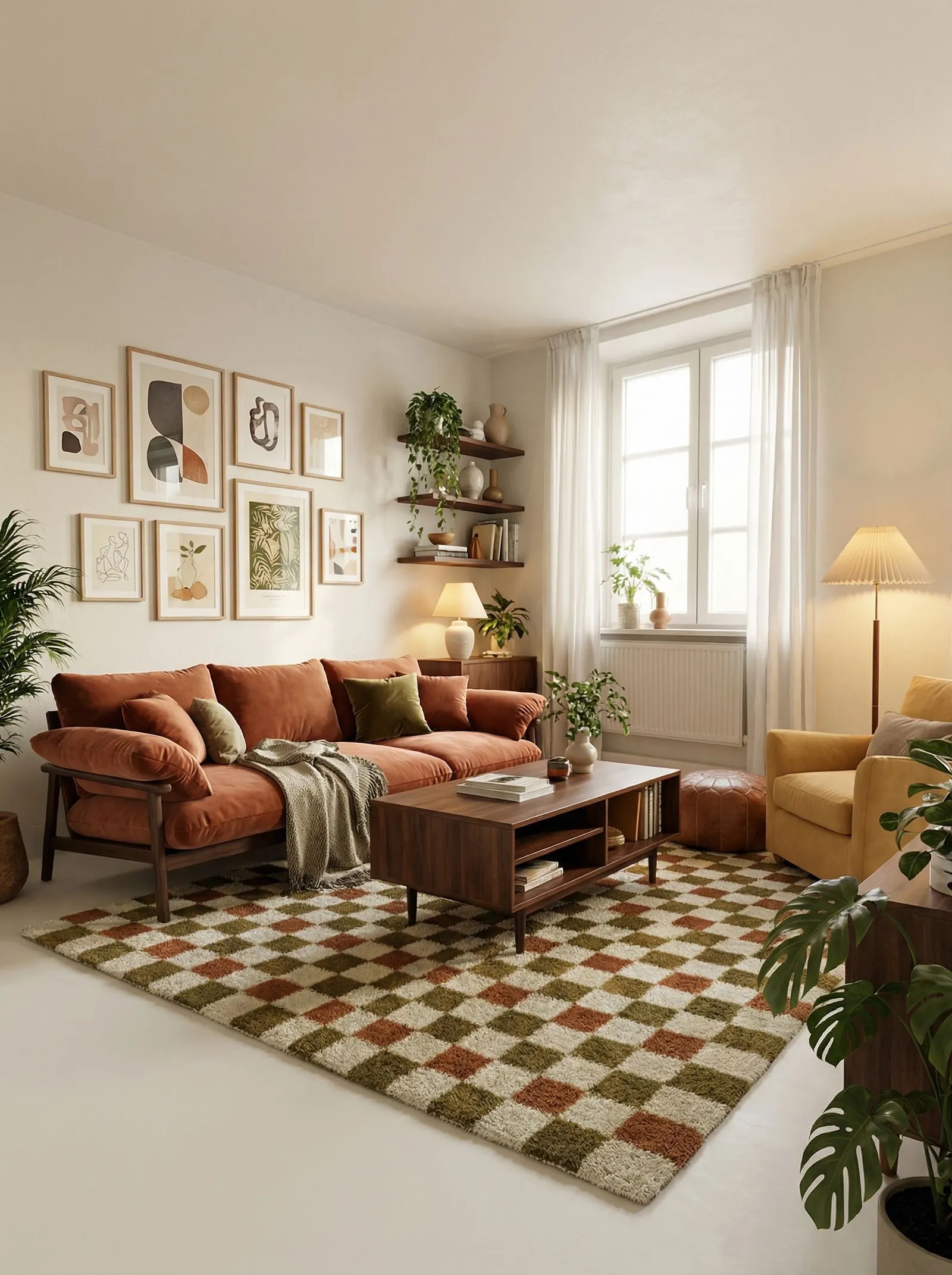
Warm Rust Velvet
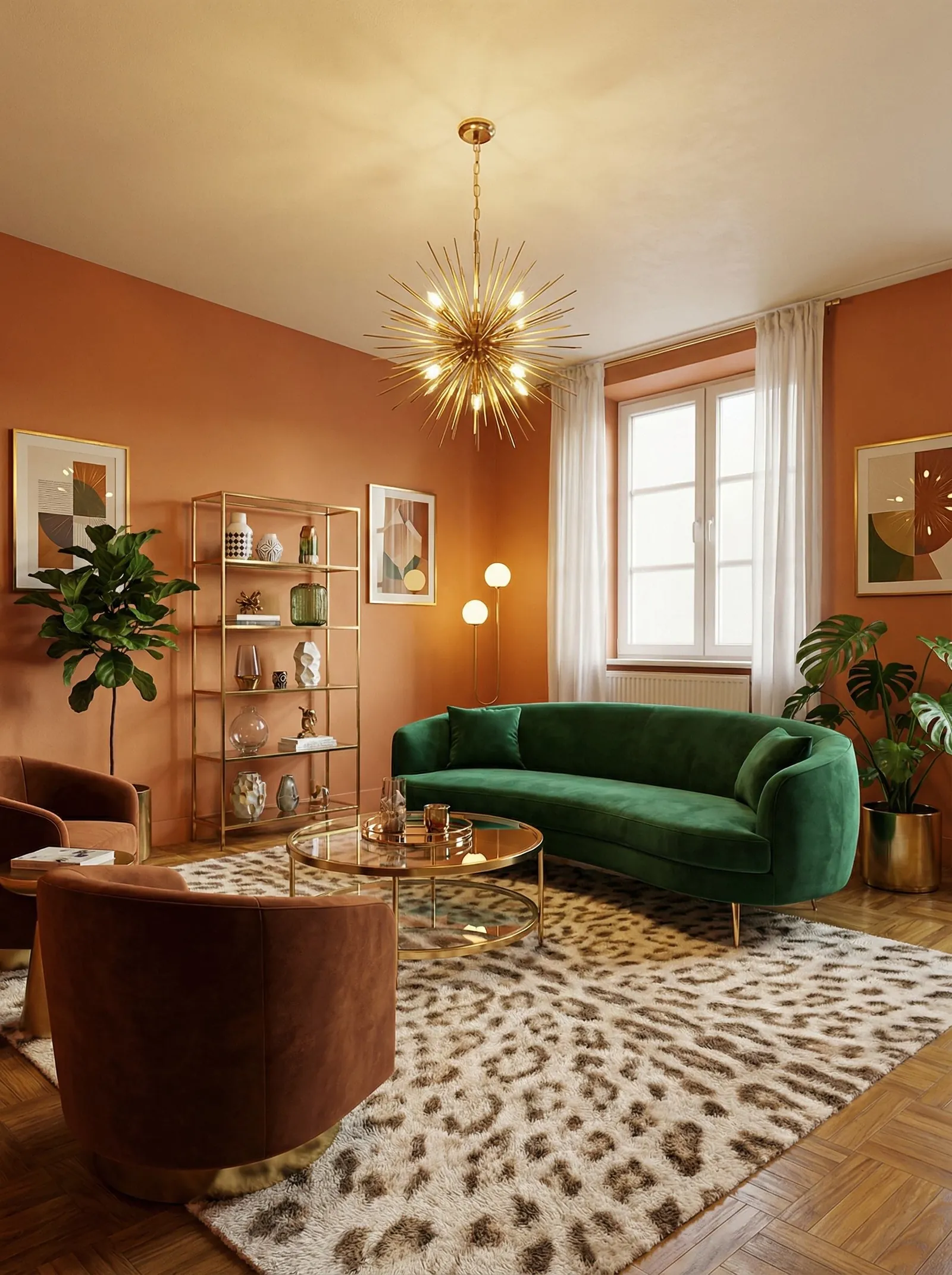
The teak sideboard and the rust velvet sofa are the two real purchases here, call it a weekend and a delivery each. Everything else is cheap and cumulative - the gallery wall, the plants, the brass table, a Saturday of hanging and arranging. Velvet in this colour hides crumbs but shows every cat scratch, so think about who lives there. The Persian rug is the one thing you can buy second-hand and nobody will know.
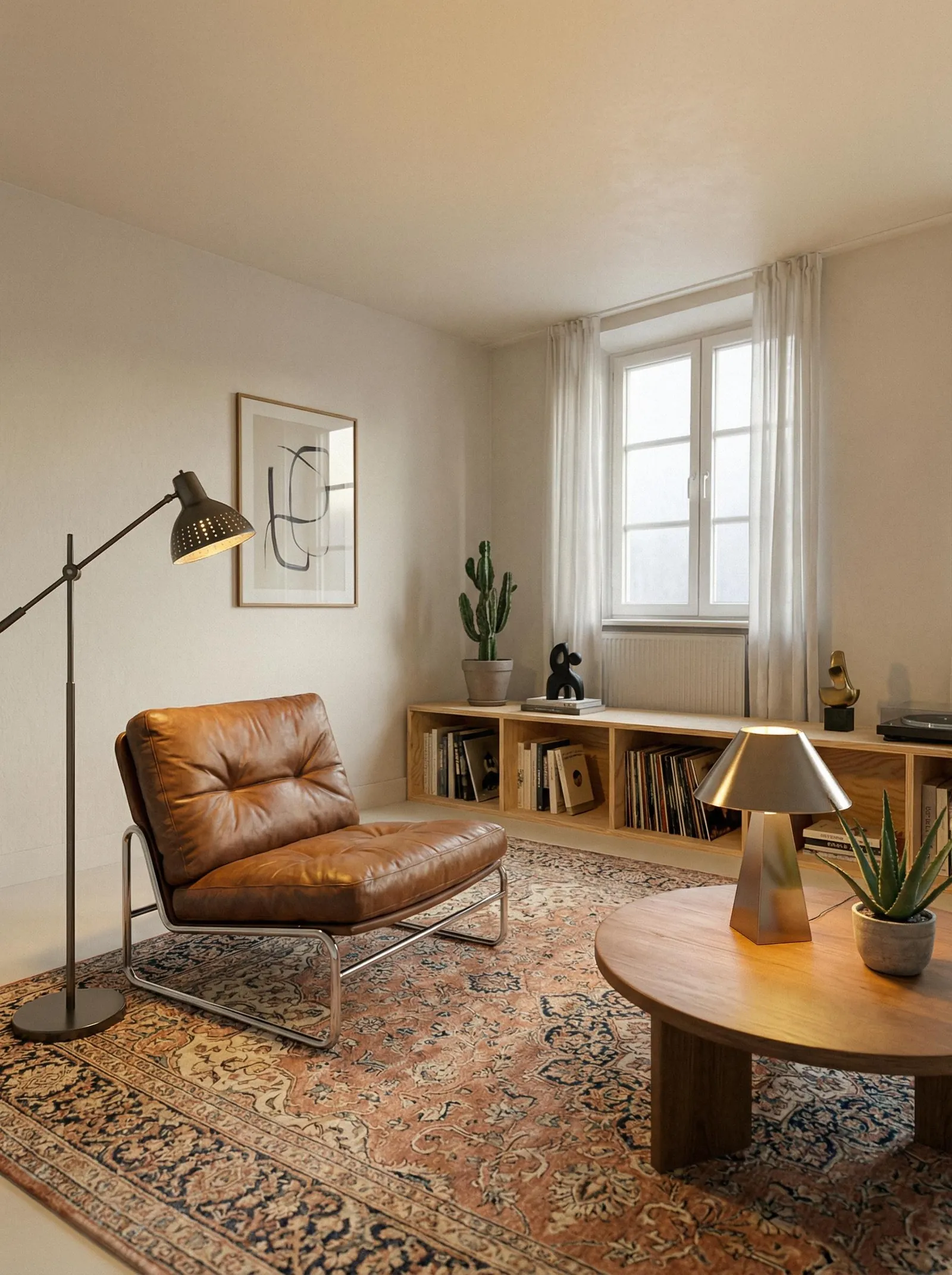
Pared-Back Modern
This is the restrained version and the easiest on the wallet. One good leather chair, a low oak unit for the records, a round table, done. The leather sling chair is the splurge and it will patina, which is the point, but it also means no hiding spills. If you already own the wood floor, this whole look is furniture you order and place, no trades involved.
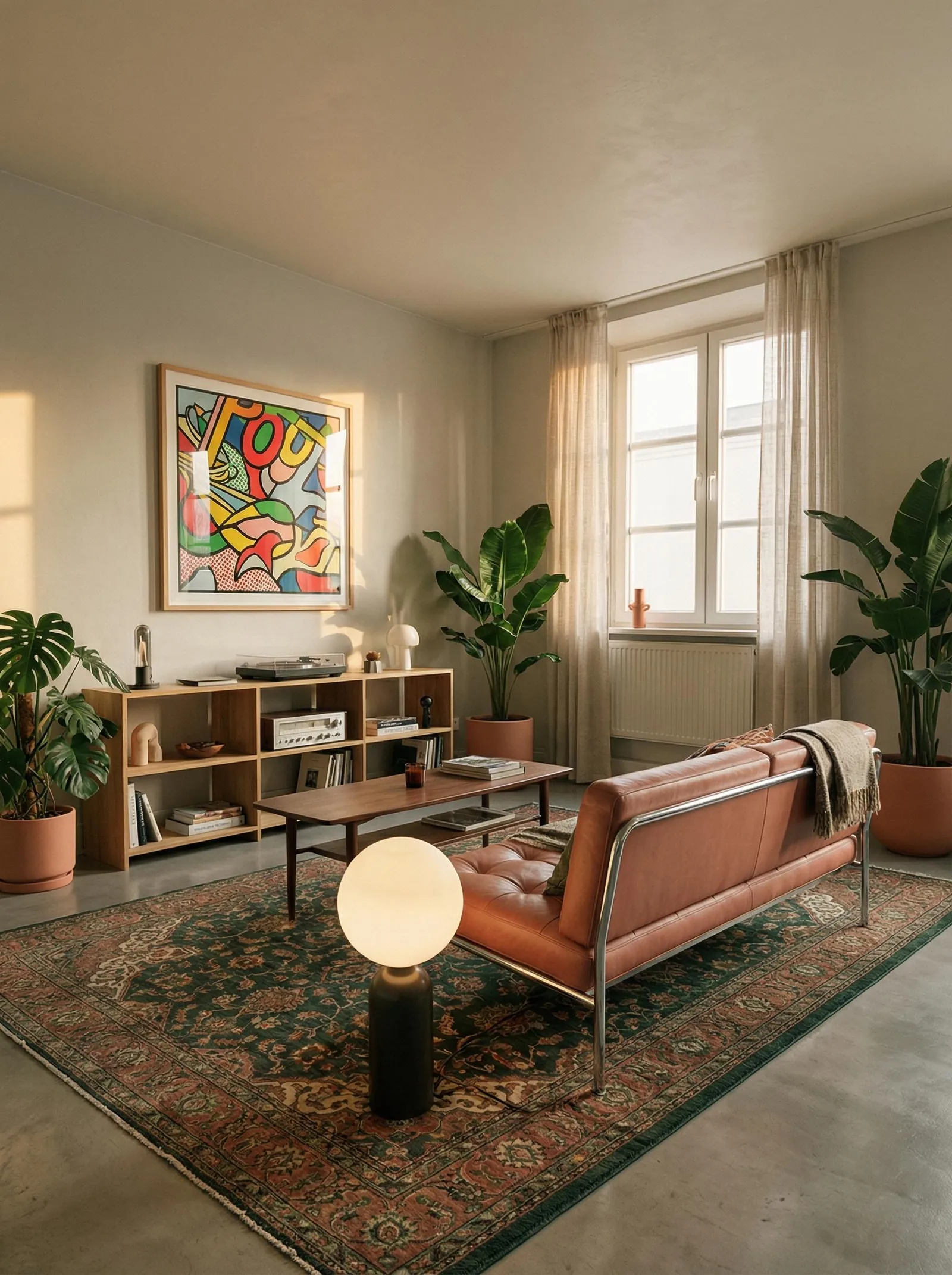
Pop Art Concrete
Look down. The wood floor is gone and this is polished concrete, which is a trade and not a cheap one, either grinding the existing slab or pouring new. Concrete is cold underfoot and loud, so that big rug is doing real work, it warms the floor and kills the echo. The cognac sofa and oak shelving are ordinary furniture buys. The Pop-art print is the whole personality of the room and costs whatever you decide a print costs.
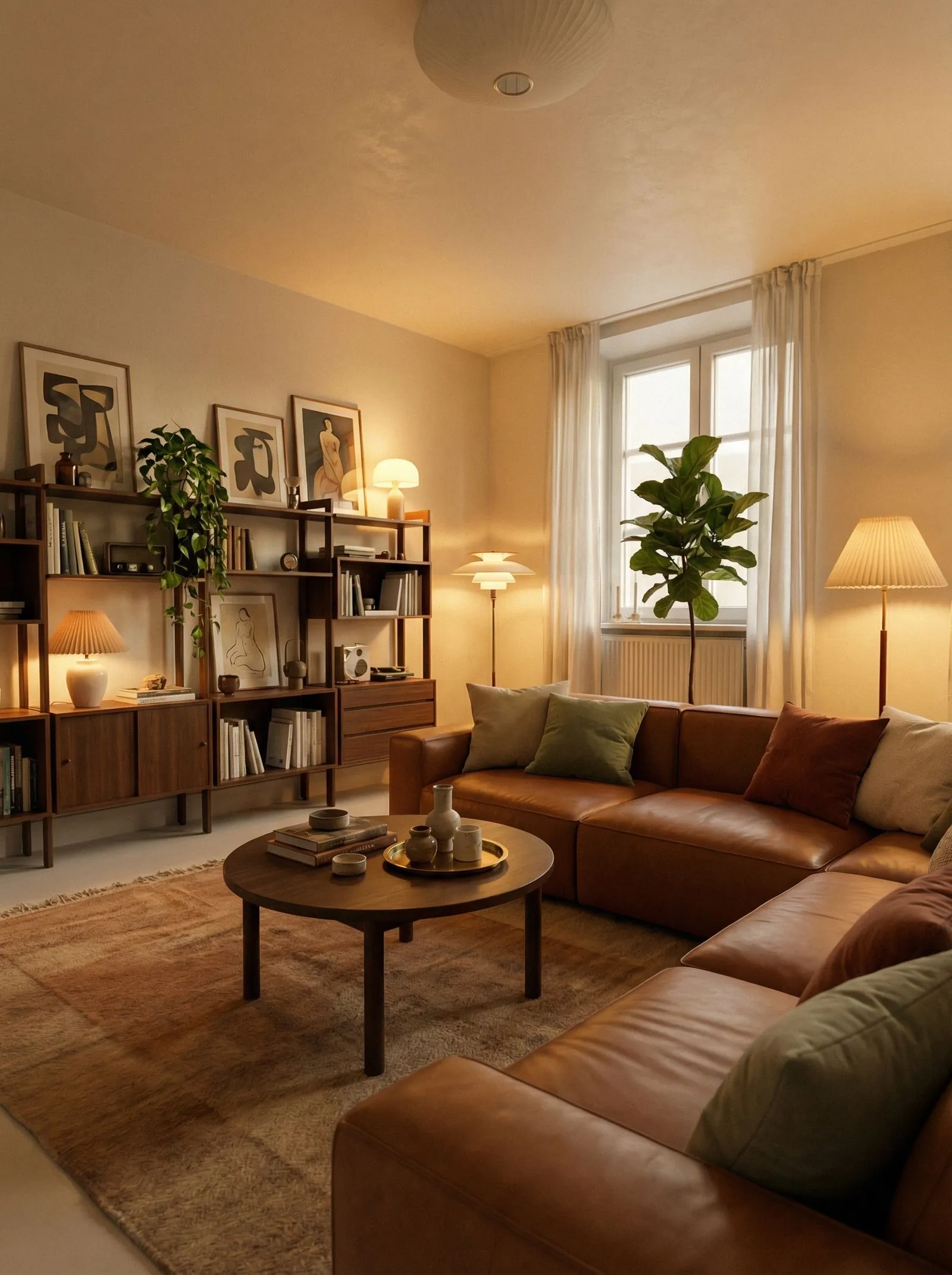
Caramel Sectional
The caramel sectional is the big spend and the reason the room feels this warm, budget accordingly, an L-shape in real leather is the most expensive seat on any of these pages. The walnut wall unit is the second buy and worth measuring twice for. The rest is lamps and plants, layered warm light doing the heavy lifting. Light leather like this marks, and a sunny window will fade it, so watch where the light lands.
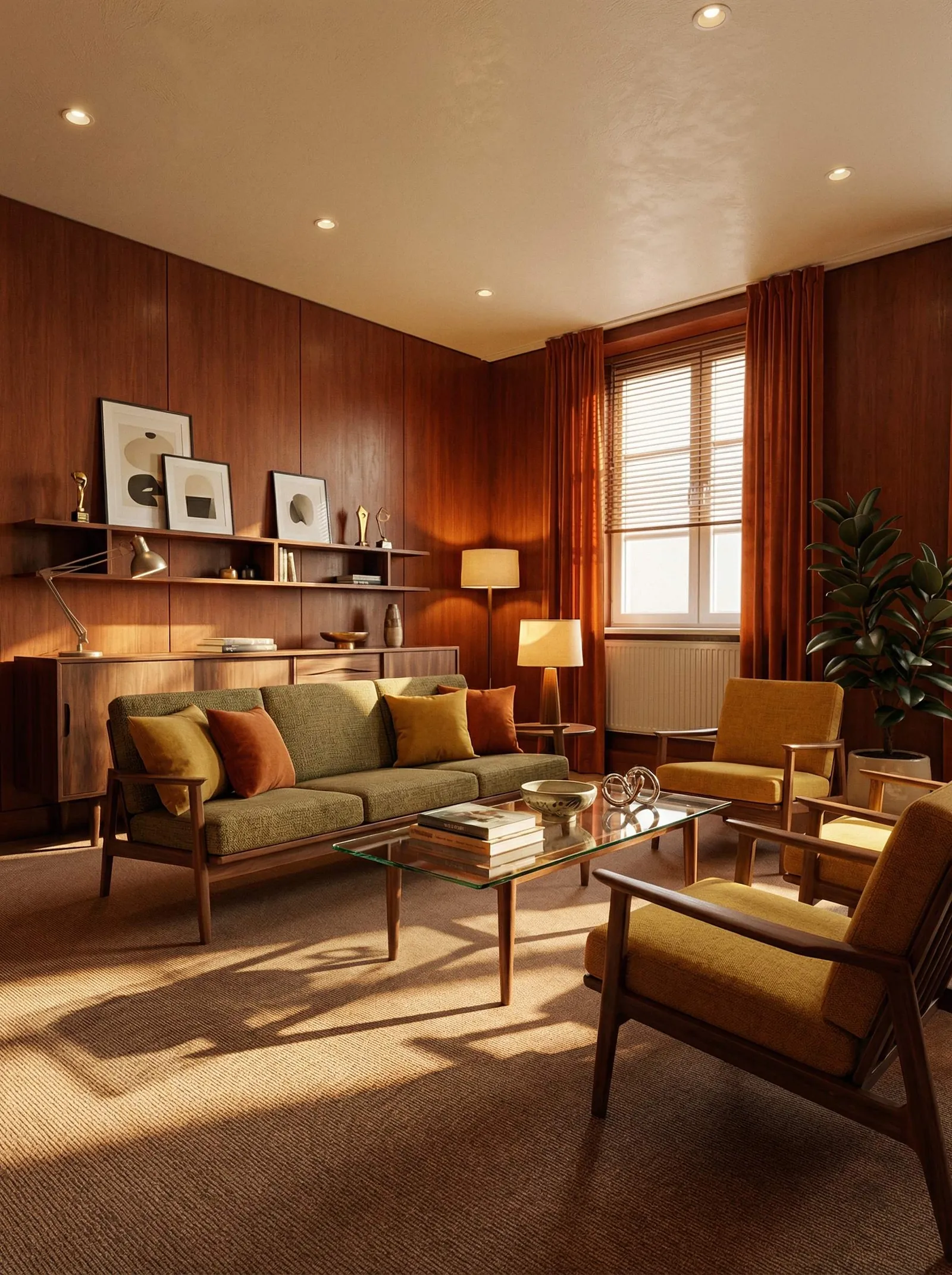
Wood-Panelled Den
This is the deep end. Teak veneer paneling on the walls and wall-to-wall carpet both mean a fitter, and the recessed downlights mean an electrician, so this is a proper renovation, not a shopping trip. It looks superb and it dates hard, wood paneling is a love-it-or-strip-it commitment the next owner may not share. The olive tweed and mustard chairs are the easy part. Do this in a room you plan to keep.
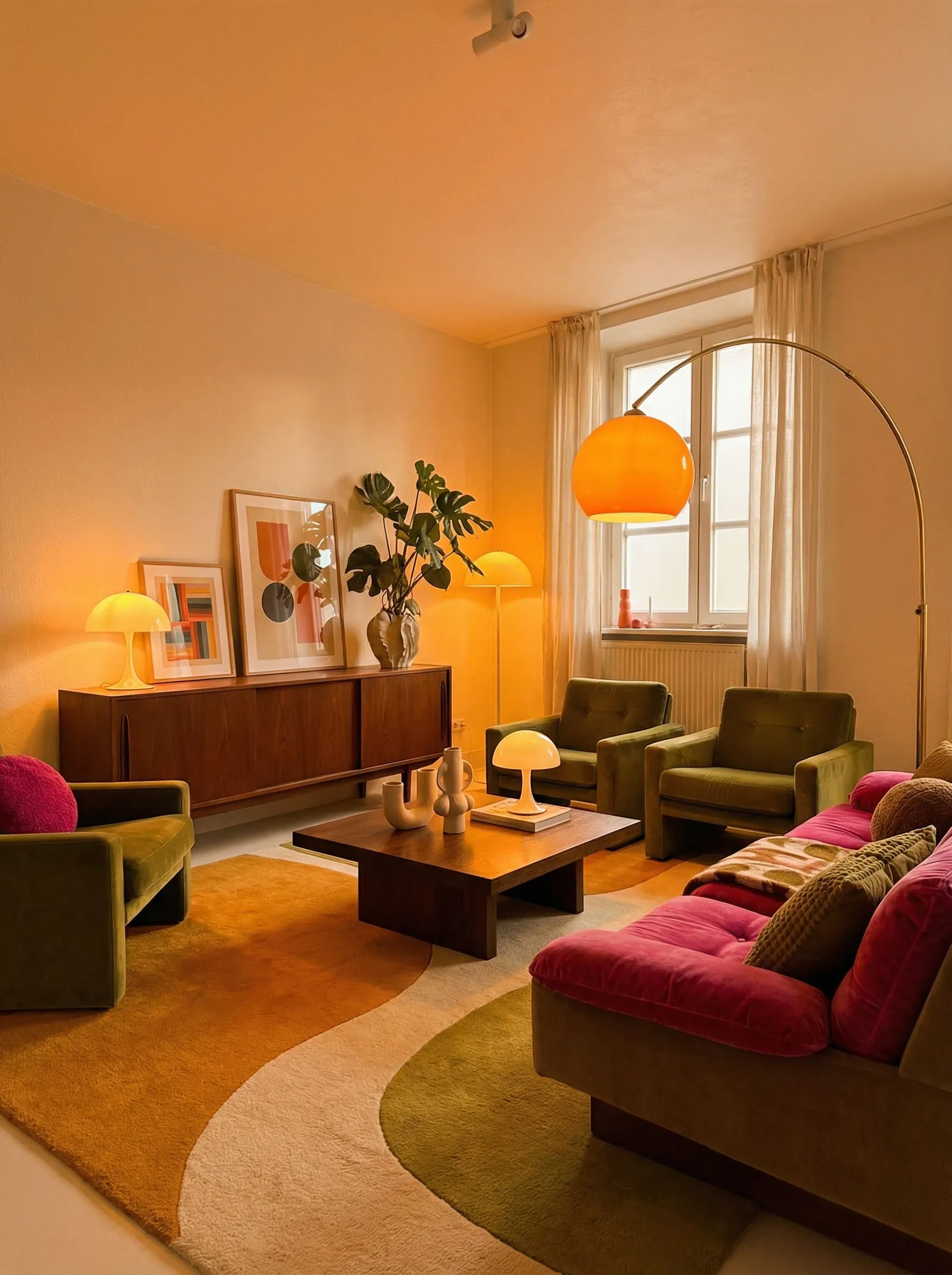
Groovy Seventies
The magenta and olive combination is bold and it will divide the room, which is the fun of it. Furniture-wise this is a weekend and a delivery - sideboard, sofa and two chairs, plus the arc lamp, which is the one piece here that nods to the black arc lamp the room already had. The wavy rug is the hardest thing to replace later because nothing else matches it. Warm wall colour would need paint, a weekend with a roller, for the full glow.
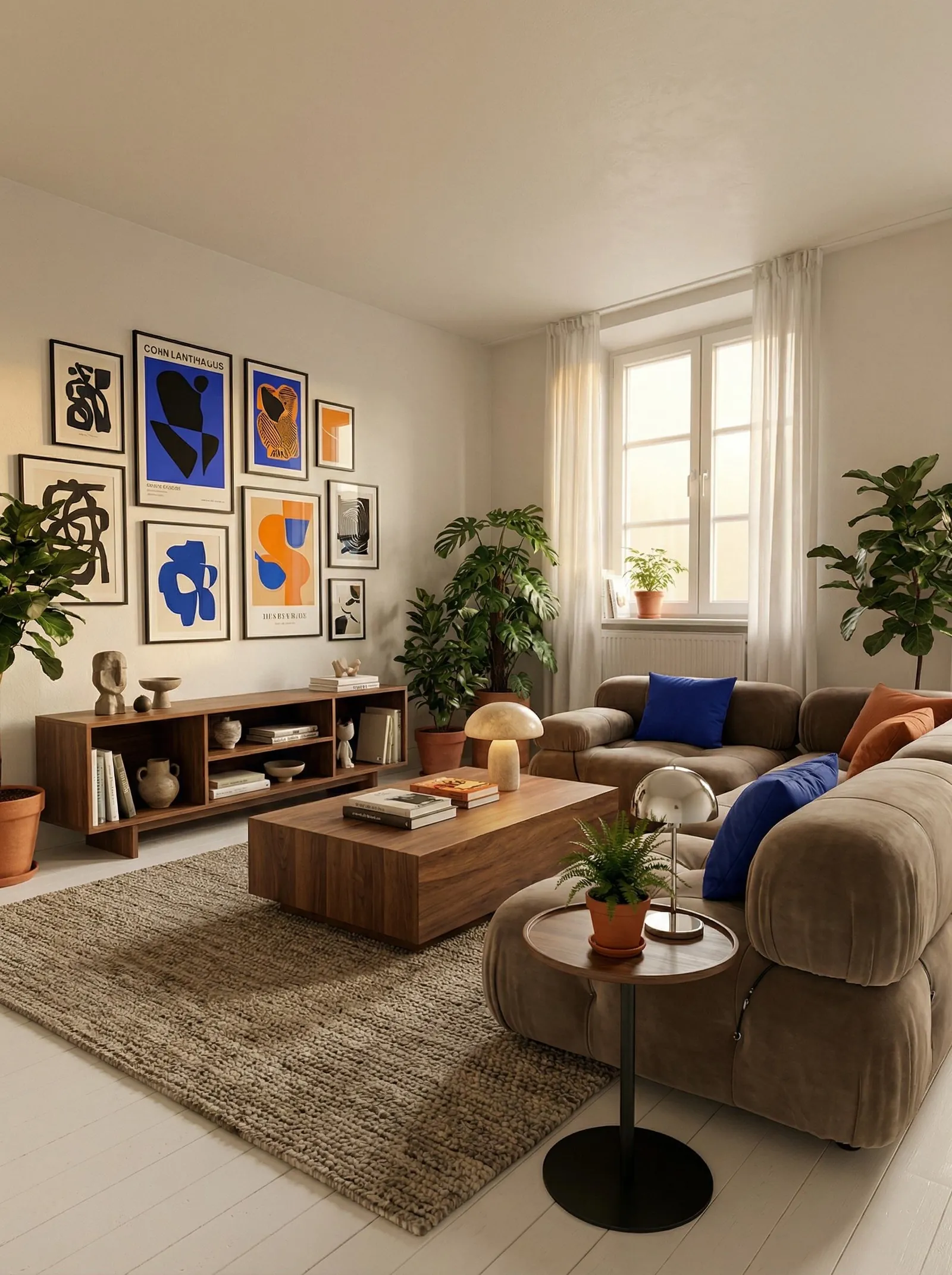
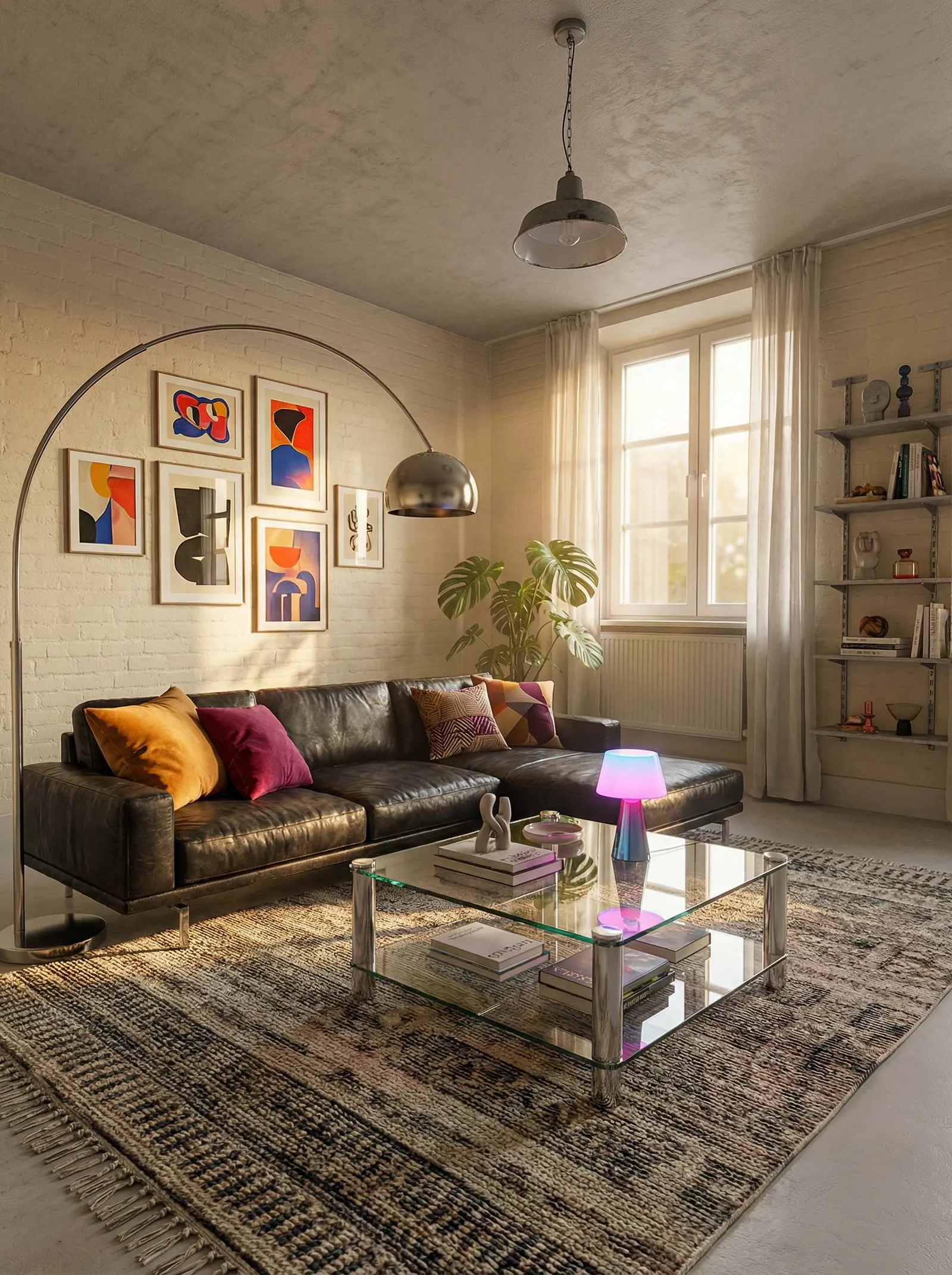
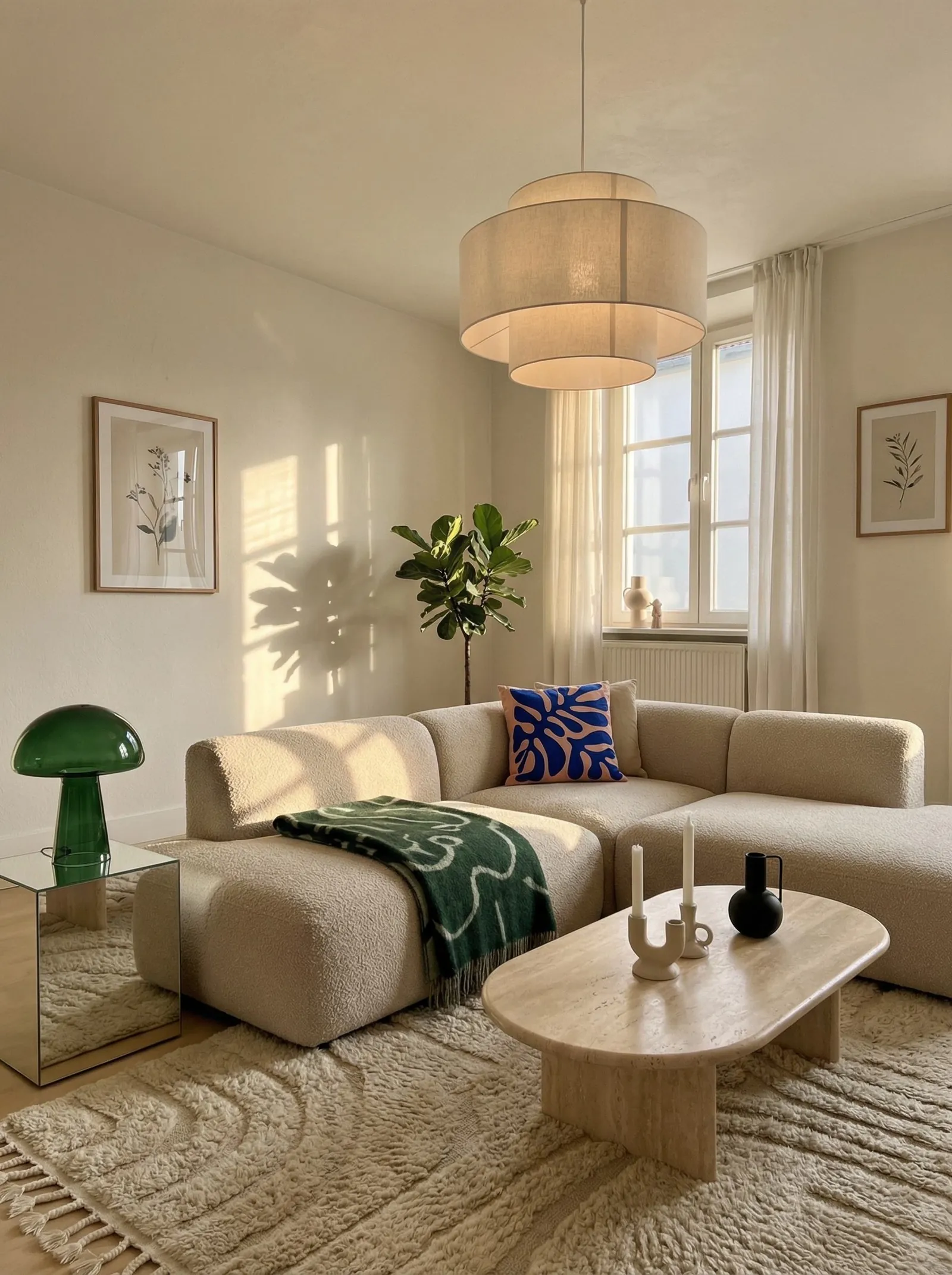
Graphic Gallery Wall
The gallery wall is the whole idea and it is the cheapest big gesture in decorating, a set of prints and an afternoon with a level. The puffy modular sofa is the real cost. That white-painted floor looks fresh but it is a trap, painted wood scuffs at every chair leg and needs redoing, so hard-wearing floor paint and felt pads are not optional. Jute is scratchy underfoot and sheds, worth knowing before you commit.
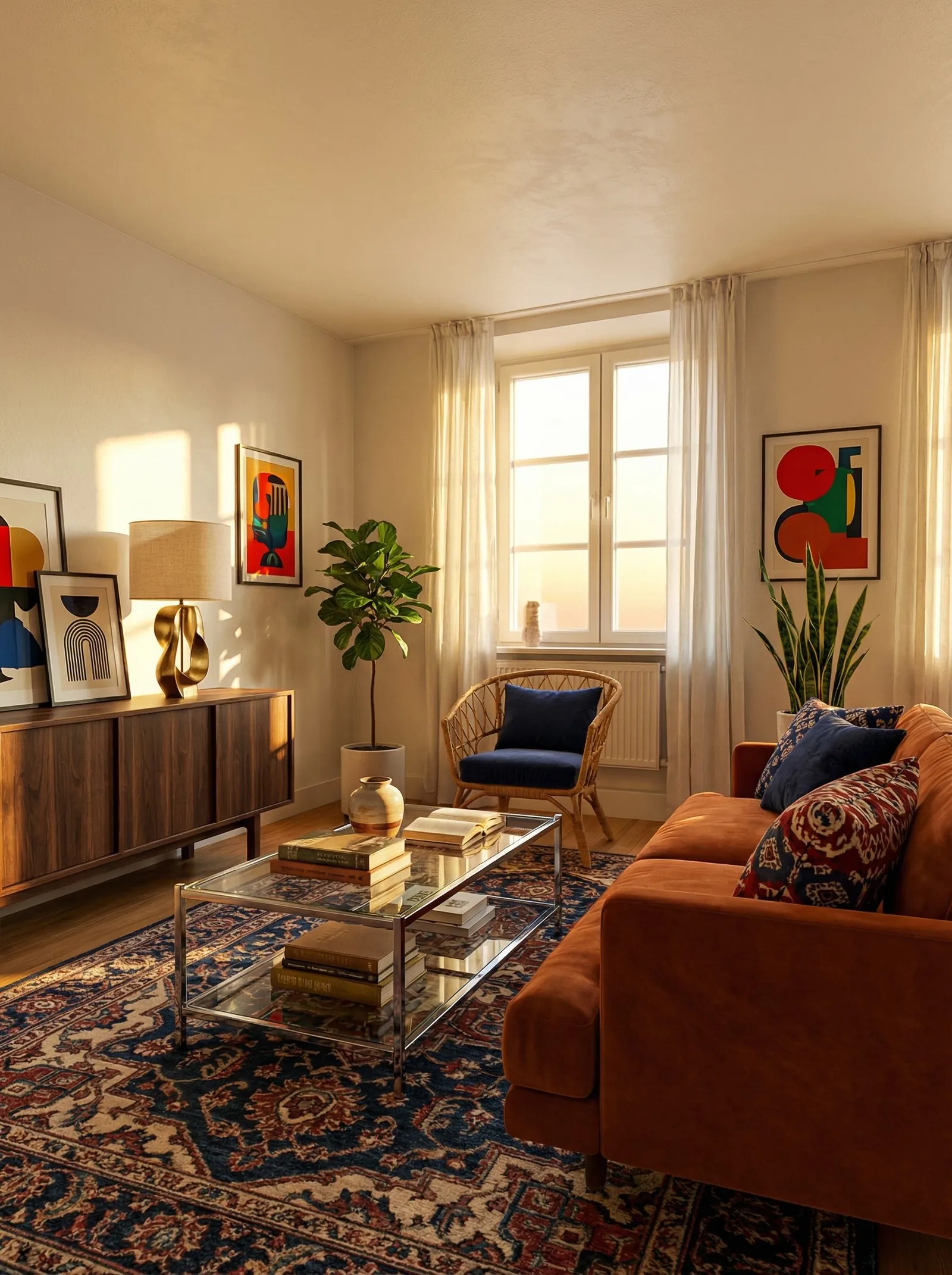
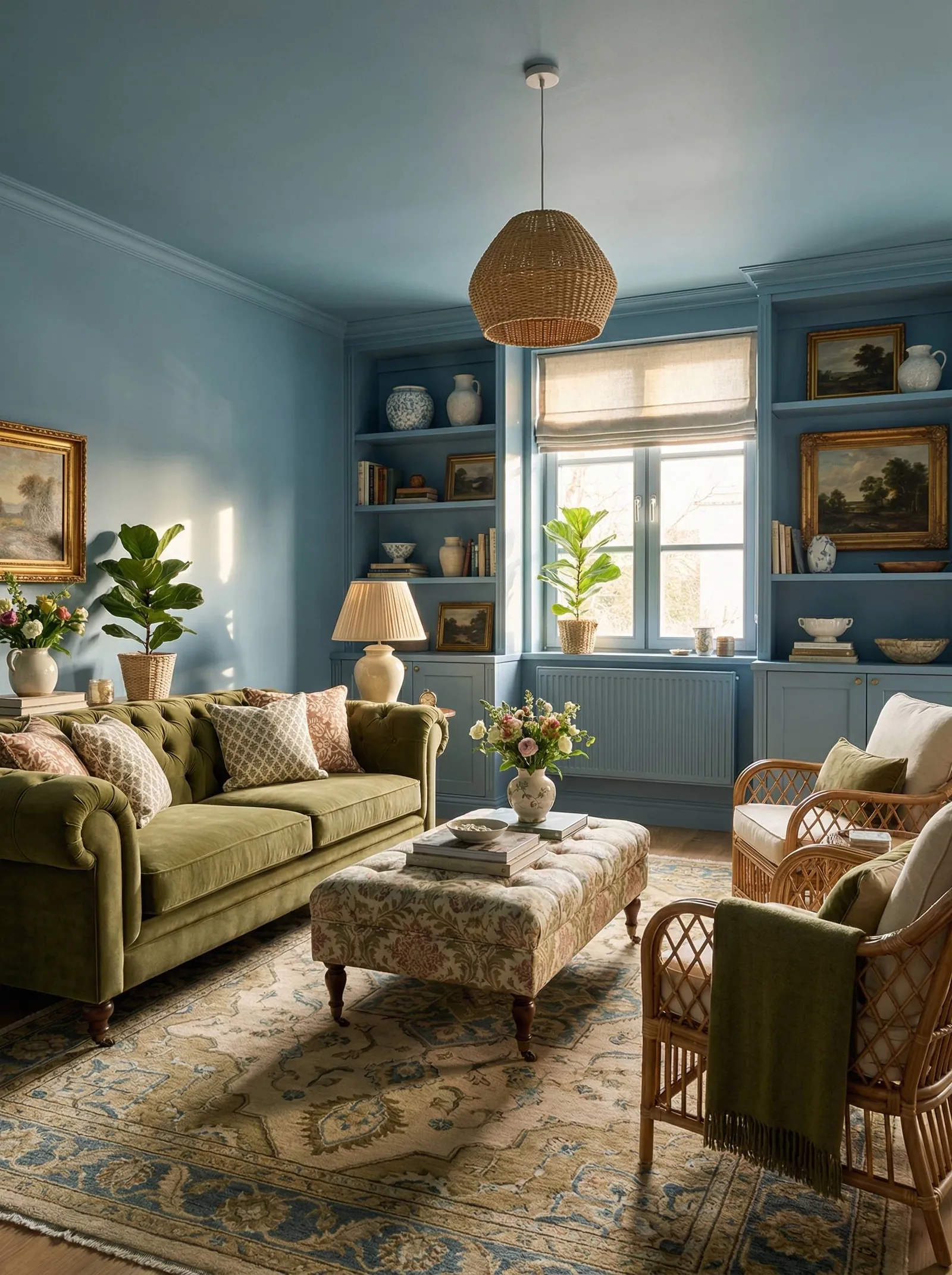
Sunset Palette
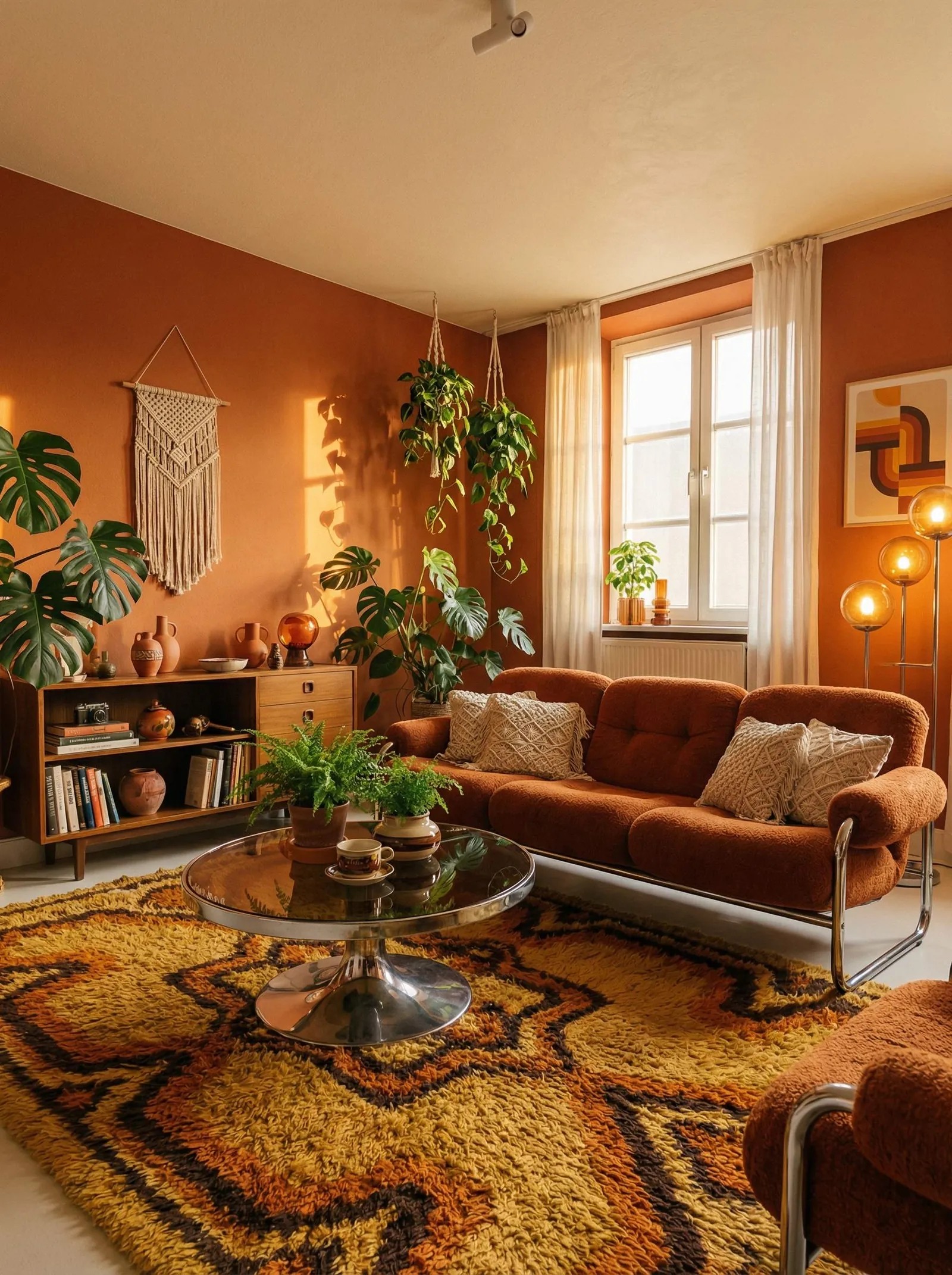
This is the achievable middle. A rust sofa, a walnut sideboard, a rattan chair standing in for the old recliner by the window, all things you order and place over a weekend. The blue Persian rug against the orange sofa is the move that makes it, and rugs like that turn up second-hand all the time. Rattan creaks and collects dust in its weave, so it is comfort with a small upkeep tax.
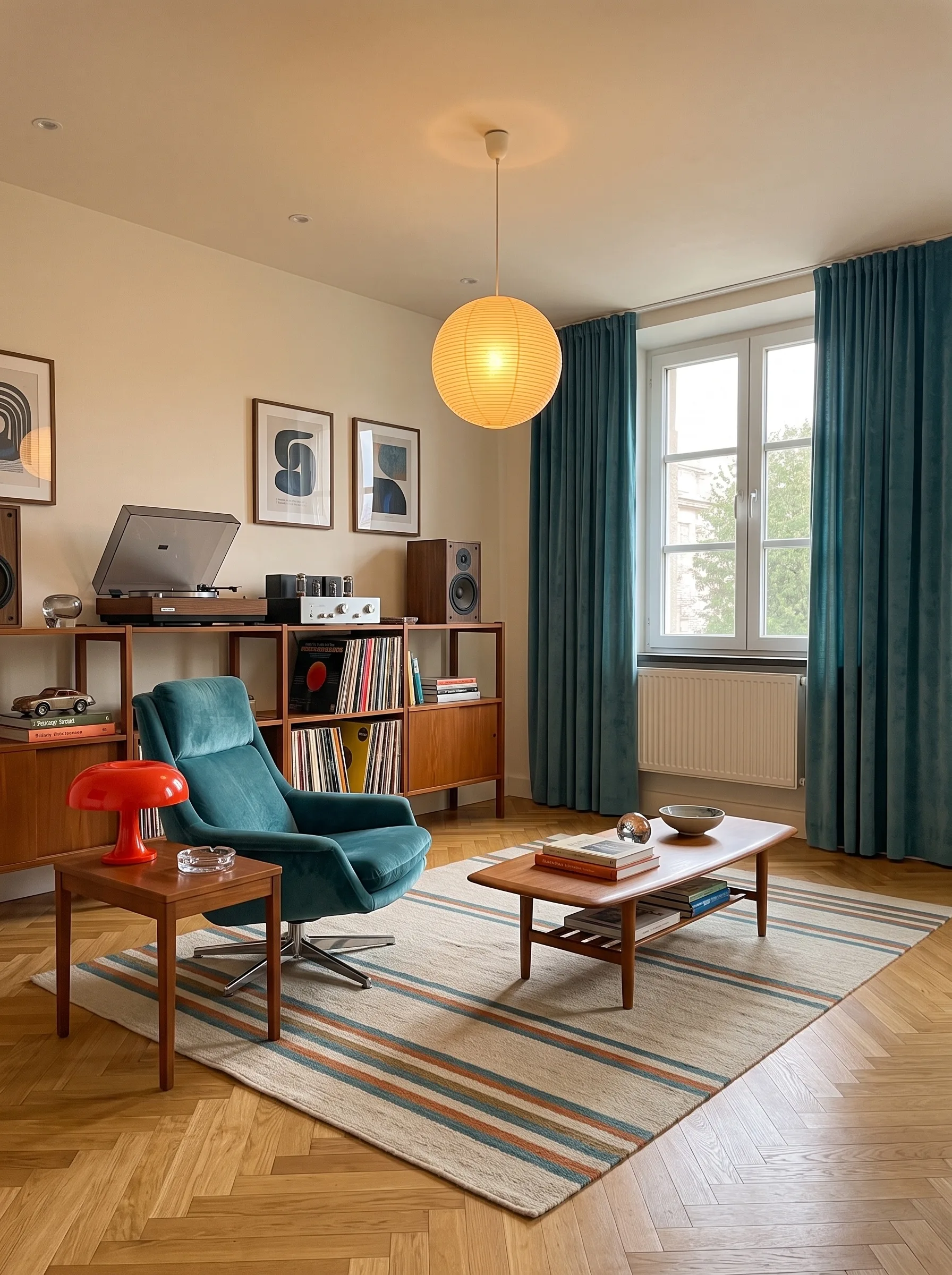
Hi-Fi Lounge
The sofa is demoted: one teal velvet swivel chair faces a teak shelving run carrying a turntable, a valve amp, two proper speakers and crates of vinyl. A red Nesso lamp, a surfboard table, a striped flatweave, teal curtains. This is the room for a person whose actual hobby is the equipment, and mid-century is the right dressing because the gear itself is period. The honest math: the shelving is a vintage hunt, and a genuine hi-fi stack costs more than every stick of furniture around it. The room is the cheap part.
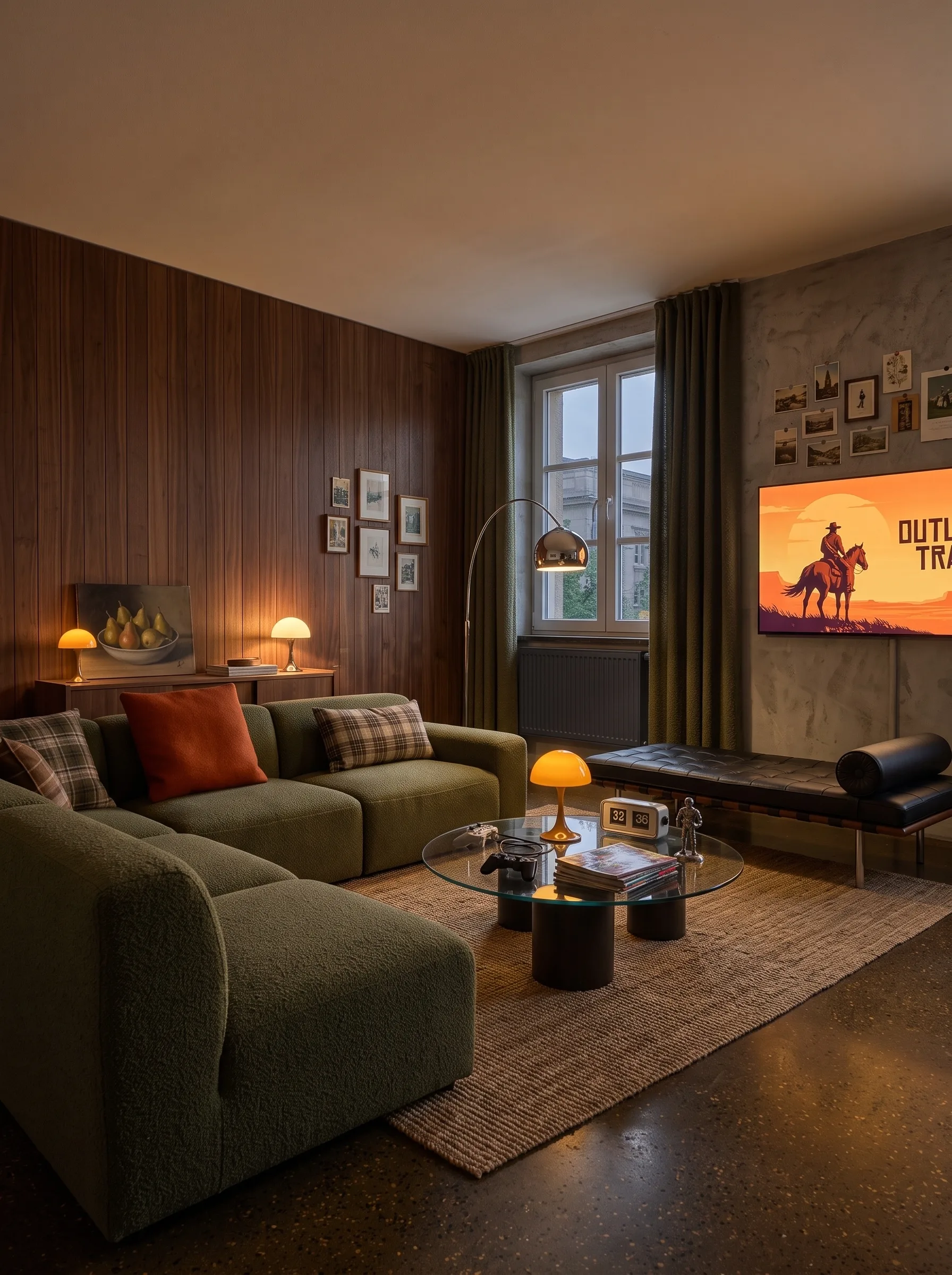
Walnut Gaming Den
Walnut panelling up one wall, an olive modular sofa, a Barcelona-style daybed under the screen, mushroom lamps in amber, and — rare on this page — the TV not only kept but on, mid-game. This is the mid-century den updated for what a den is actually for now. The panelling is the trade job and the warmth; everything else is furniture. Worth noting the controller on the glass table: this is the only render in the set honest enough to admit what the room does at nine in the evening.
See your own living room in Mid-Century Modern style
Every render on this page is one real living room, redesigned. Point Inty at yours: it reads the layout from a single photo, then rebuilds it in Mid-Century Modern and 200+ other styles. Your actual room, not a showroom.


Free to try. iPhone.
Questions
- How much does a mid-century living room actually cost?
- It depends entirely on how far you go. Prints, a rug, a lamp and cushions is a couple of hundred and a Saturday. The sofa is where real money goes, a mid-century-style sofa in velvet or leather is the biggest single line. The wood-panelled and concrete-floor versions on this page cross into trade territory, a fitter and an electrician, so those are renovations rather than refreshes.
- What is the cheapest way to get the look?
- Start with a teak or walnut sideboard, second-hand if you can, and put your existing TV on it instead of buying new. Add two framed prints and a warm rug. Those three moves read as mid-century immediately and cost less than one new sofa. Keep the sofa you own until you have saved for the right one.
- Is mid-century modern rental-friendly?
- Very. Most of the look is freestanding furniture, rugs and lamps that leave with you, no drilling needed if you lean art instead of hanging it. Avoid the versions that need paint, paneling or a new floor. A landlord will never notice a sideboard and a rug, and you take both to the next place.
- Can I see my own living room in this style before I buy anything?
- Yes, that is exactly what Inty does. It reads your room from one photo and returns the same layout restyled, so you can judge the sofa colour and the rug against your actual walls and window. It starts with a 3-day free trial and needs an account, then it is paid. Treat the result as a visualization for deciding, not a shopping list to order materials from.
- Does mid-century work in a small living room?
- It is one of the best styles for one. Low furniture on visible legs shows more floor and wall, which is most of what makes a room read bigger. The version to avoid in a small space is the Wood-Panelled Den: dark walls, carpet and downlights pull the room in around you, which is the point of a den and the opposite of what a small living room needs.
- Where does the TV go in a mid-century living room?
- On the sideboard, which is the mid-century answer to the media wall. A low teak or walnut credenza carries the screen the way the console does now, just tidier, and a gallery wall around it stops the black rectangle from being the only thing on that side. Most versions on this page hide the TV entirely, which is honest about the photos and dishonest about the evenings.