 Inty AI
5 Changes That Look Expensive and Are Not
Each of these is the cheapest honest version of its own style page. The expensive parts are named rather than hidden.
Every style on this site has a version that costs money and a version that mostly costs a Saturday, and the pages are already honest about which is which. These five are the cheap ones, pulled out and put side by side. The list is short on purpose: the test was that the cheap thing has to be the whole change, not a cheap part of an expensive picture, which is what disqualifies most "budget makeover" advice. Where a low upfront price hides a running cost — oiling, polishing, repainting — that cost is stated. Cheap that needs redoing every spring is not cheap.
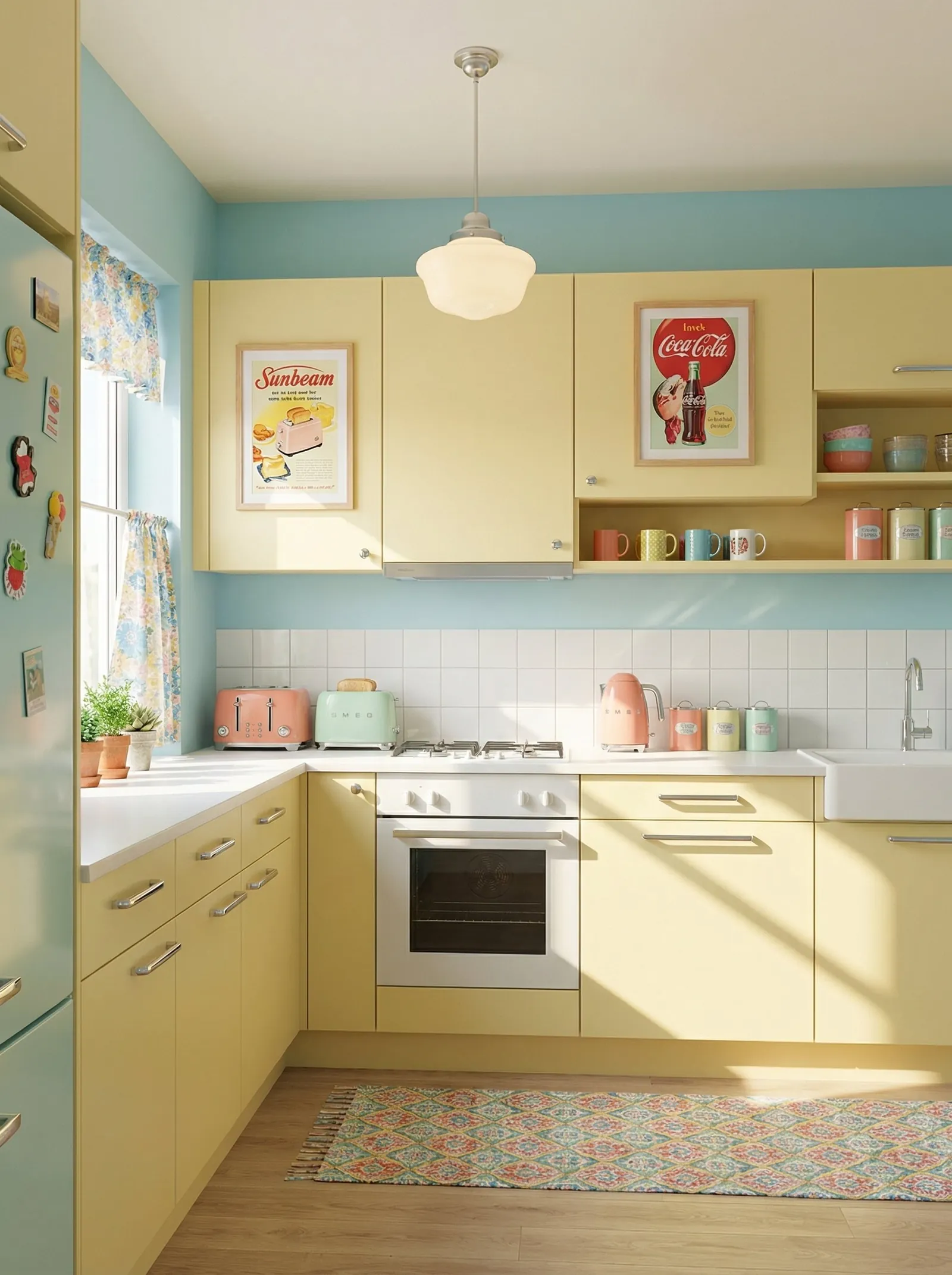
01
Paint the doors, keep the tile
Butter yellow doors, chrome handles, sky blue walls, framed vintage adverts, a mint fridge. Look at what it keeps: the white square tile from the real kitchen, completely untouched. Its own page, which shows four retro kitchens, calls this the cheapest of them by a distance, and the list is genuinely short — paint, handles, a fridge, some frames. The running cost is named too: chrome collects grease around the hob and wants wiping every week.
Retro kitchen →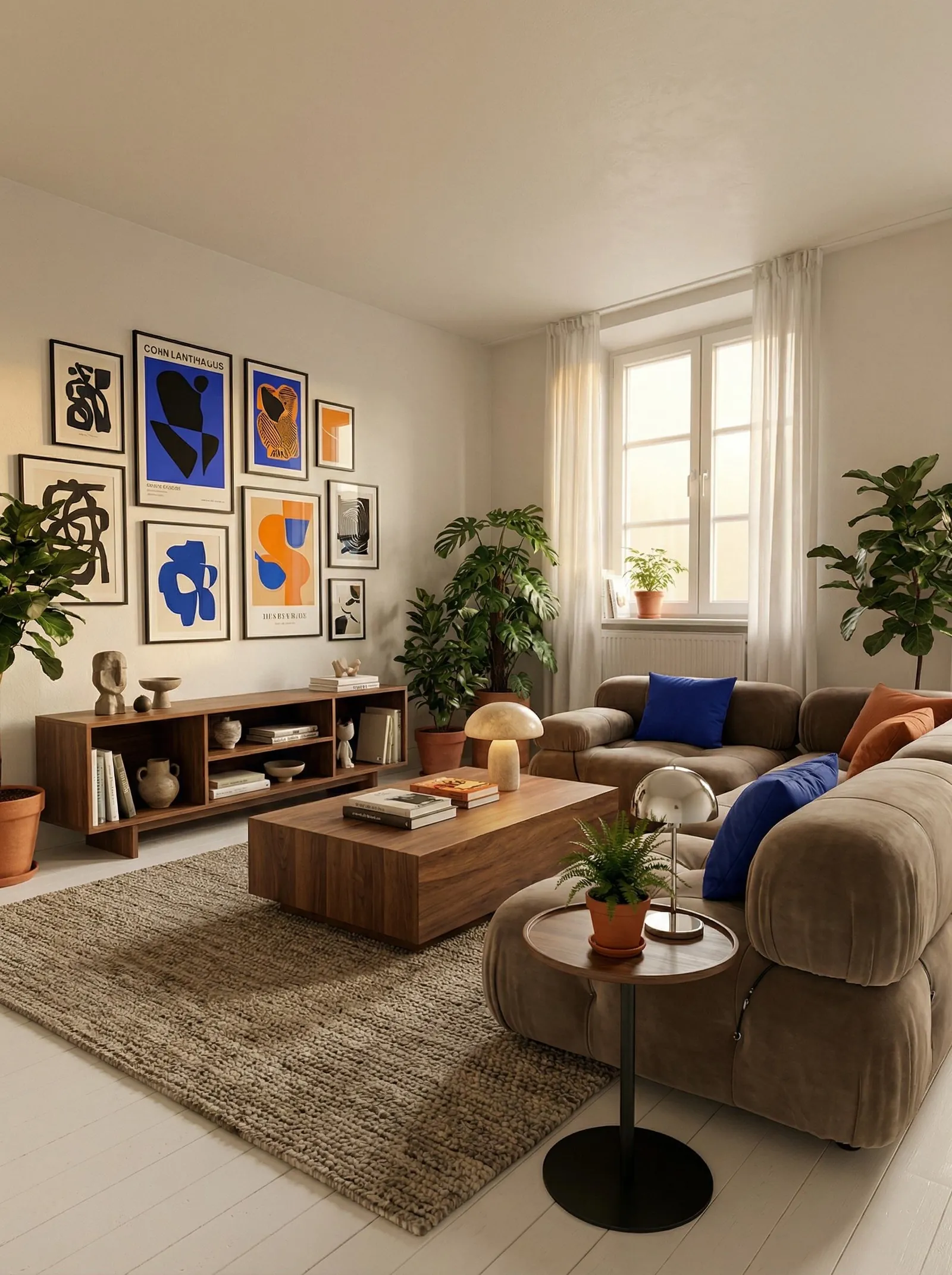
02
A gallery wall is the cheapest big gesture there is
Its page says it outright: the gallery wall is the whole idea and the cheapest big gesture in decorating — a set of prints and an afternoon with a level. It fills the largest empty surface in most living rooms for the price of frames. The caveat from the same page is worth carrying over: the white-painted floor in that render is a trap, it scuffs at every chair leg, and the puffy sofa is the real cost.
Mid-Century Modern living room →See any of this on your own room
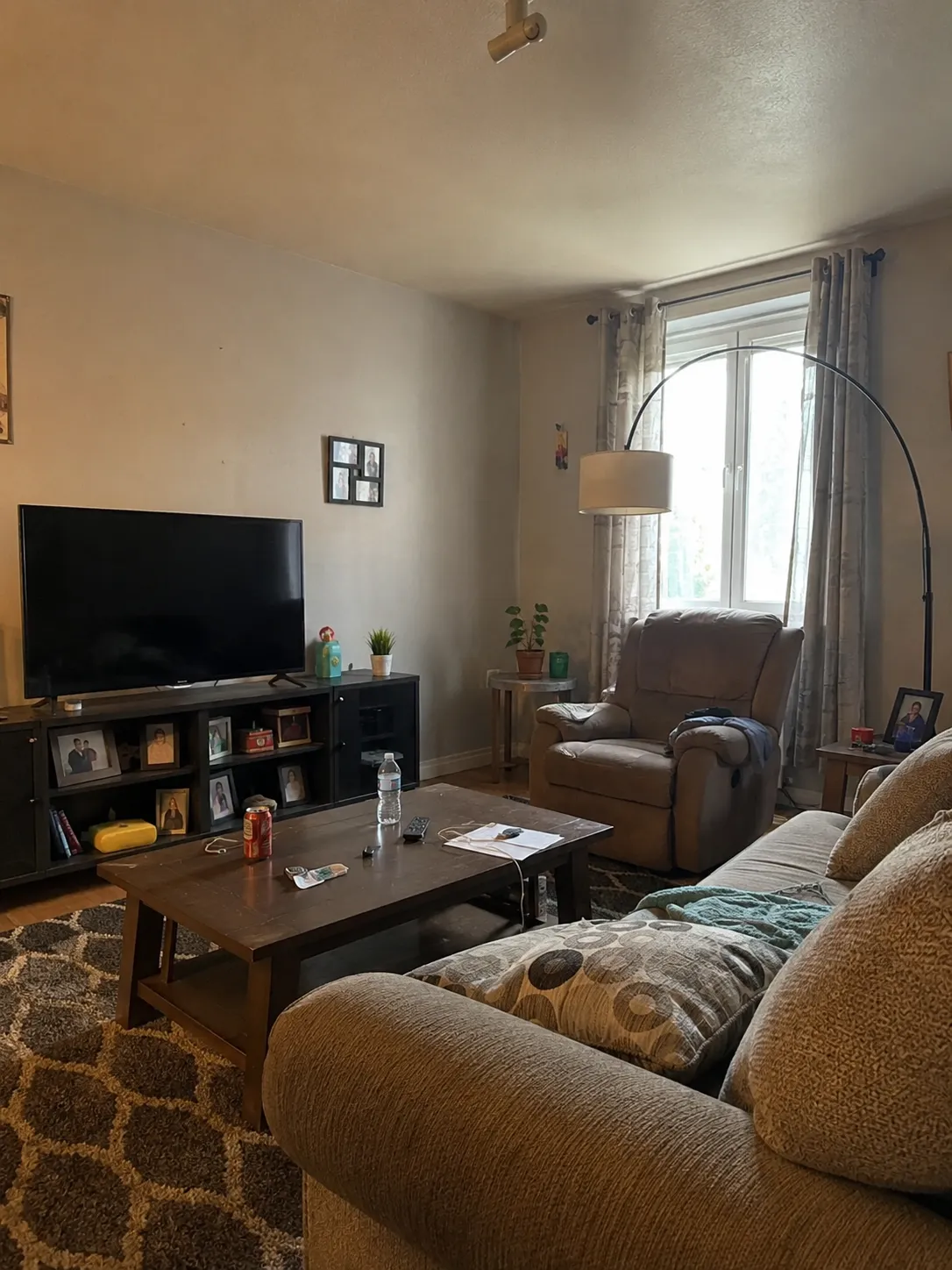
Every picture on this page is a real living room, redesigned from one photo. Point Inty at yours and it keeps your layout — your window, your door, your radiator where they are.

Free to try. iPhone.
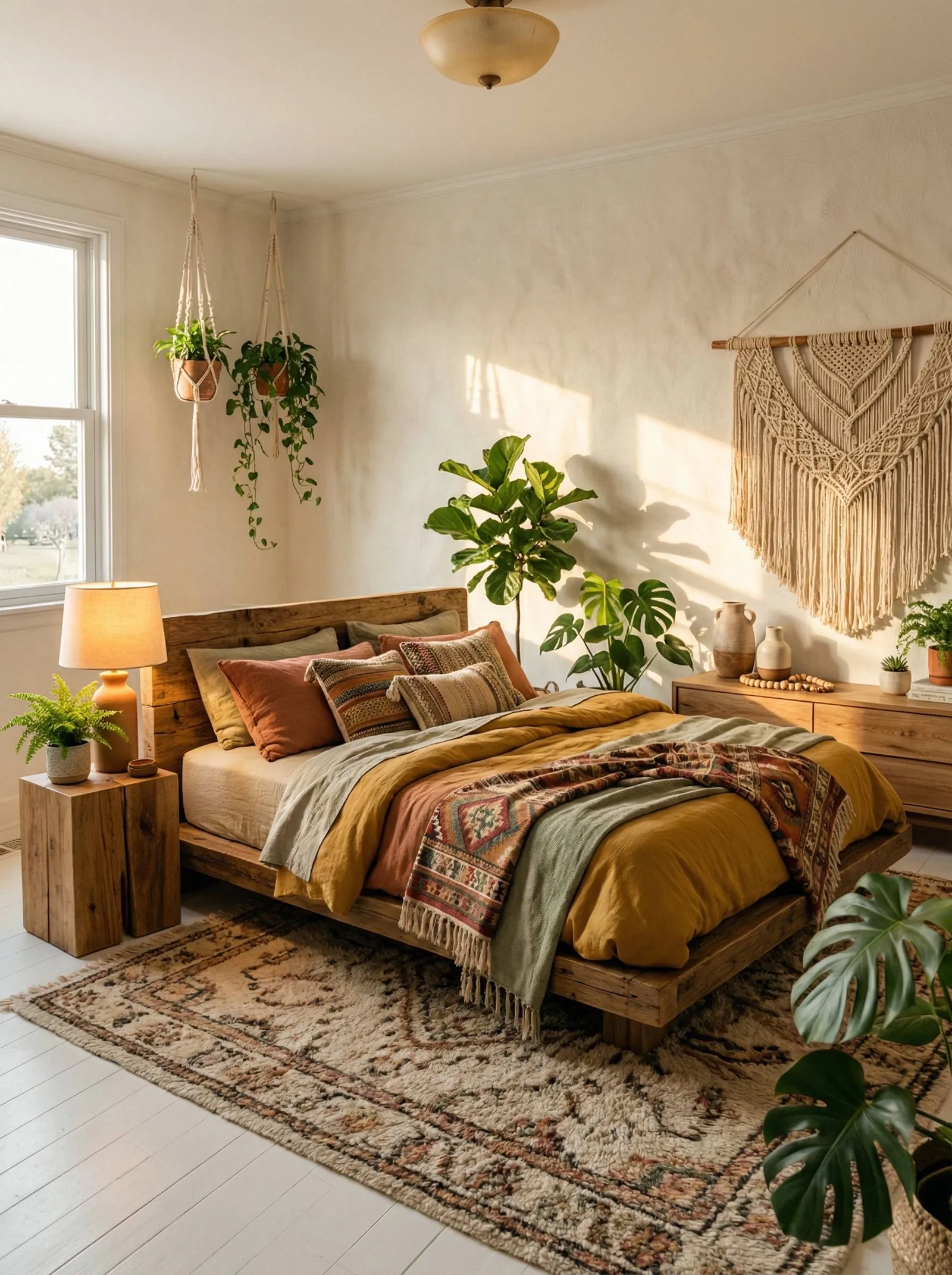
03
Limewash is the one wall texture you can do yourself
A reclaimed timber bed, mustard duvet, sage throw, a kilim across the foot, macrame on the wall, a Moroccan rug. Its page singles out the walls: limewash is the only wall texture on that page you could do yourself over a weekend. Plaster and micro-cement are trades; limewash is a brush and patience. The part that keeps costing, per the same caption, is the plants — they need a watering schedule, not a purchase.
Rustic bedroom →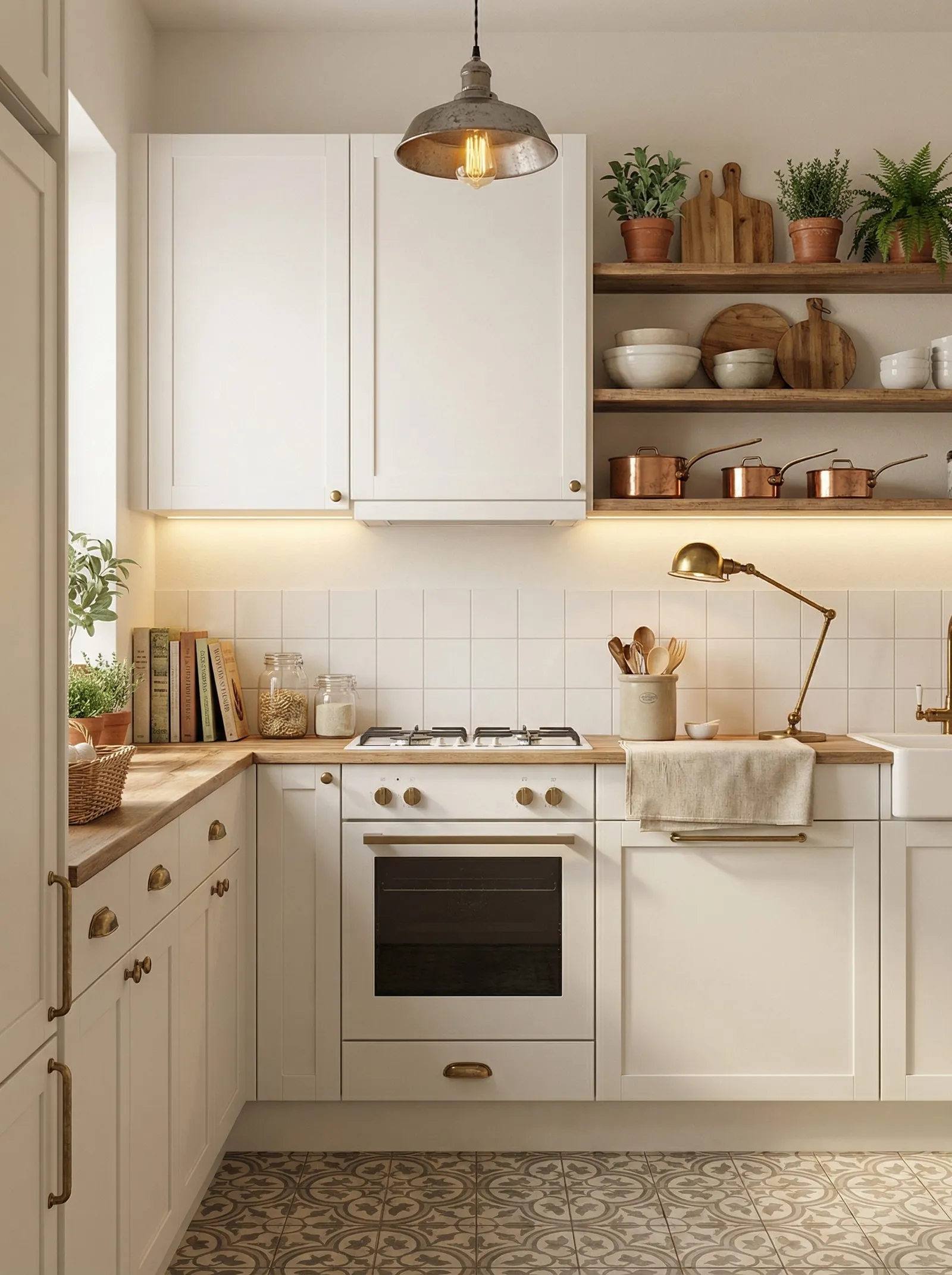
04
A timber worktop you cut yourself
Cream shaker doors, brass cup pulls, an oak block worktop, and the original white tile left exactly where it was. Its page calls this the cheapest honest version: doors and handles, plus a block top you can cut yourself. The trade-off is stated there too, and it is real — the copper pans go dull brown within a month unless you polish them, so buy them for cooking rather than for the photograph.
Farmhouse kitchen →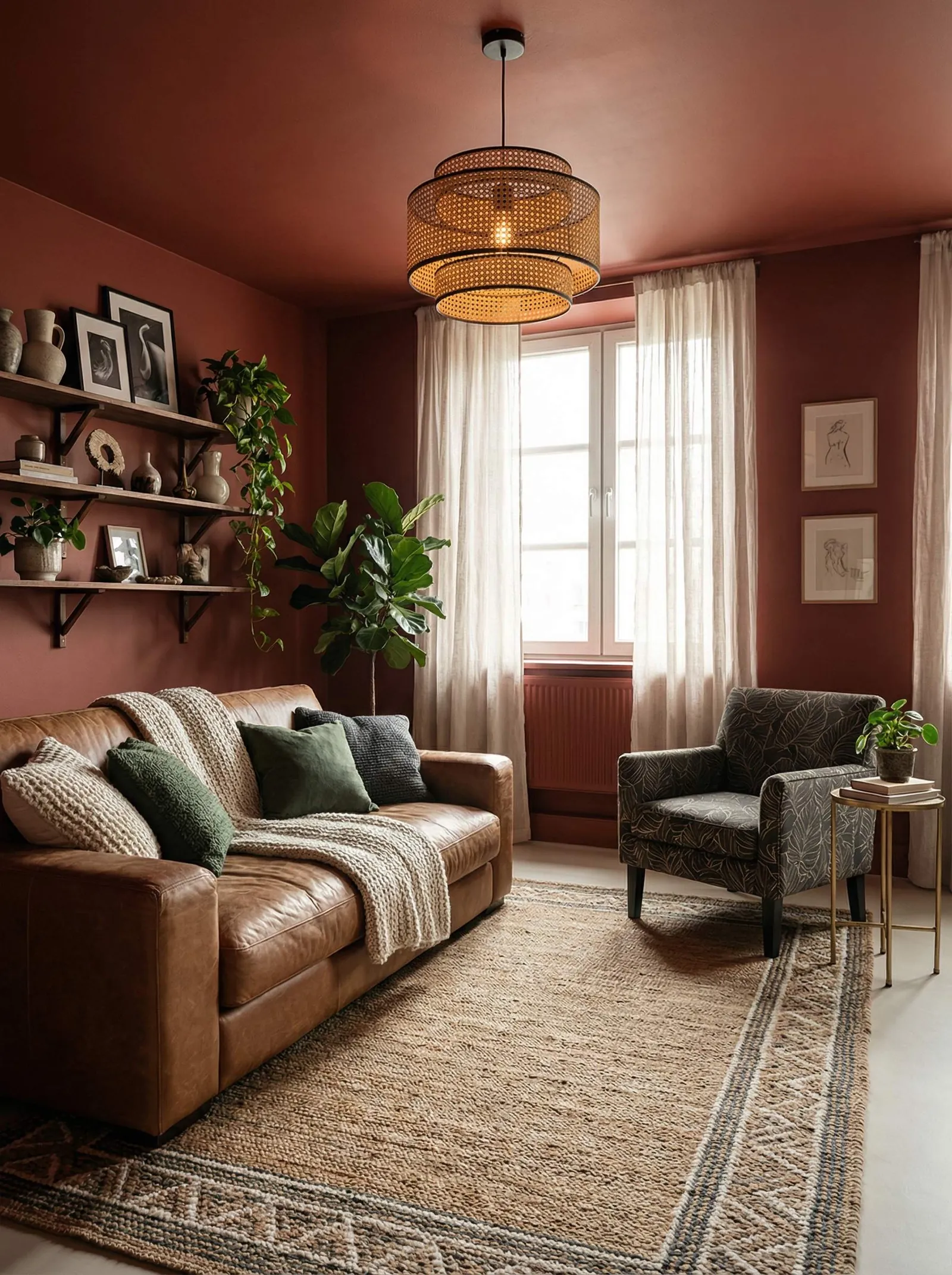
05
One deep colour, and the honest cost of it
Deep clay on the walls and the ceiling, a leather sofa, a cane pendant, a jute rug. Painting is the whole move and the whole spend, which makes it the cheapest transformation on this page in materials — and its own page is careful about what that hides: a weekend, a lot of masking, two coats minimum on a dark colour, and walls like this eat daylight, so lamps are not optional afterwards.
Boho living room →

Questions
- What gives the biggest change for the least money?
- Paint, and it is not close — a room repainted is a different room for the price of two tins and a weekend. Second is lighting, third is a rug big enough for the furniture to stand on. All three cost less than one piece of furniture and change more.
- Where is cheap a false economy?
- Anywhere water, heat or weight is involved. A cheap worktop next to a sink swells, cheap paint in a bathroom without ventilation grows mould behind the vanity, and flat-pack shelving loaded with books sags in a year. Cheap is safest in the things you look at and worst in the things you use.
- Are second-hand pieces worth the hunt?
- For rugs, sideboards and armchairs, absolutely — several pages on this site point out that a Persian rug turns up second-hand constantly and nobody can tell. For upholstery in pale fabric and anything with a mechanism, less so: reupholstery costs more than the saving.
- How do I avoid spending money on a look I end up disliking?
- See it on your own room first. Inty reads your room from a single photo and rebuilds it in a style with your layout intact, so you are judging your space rather than a showroom. It is a visualization rather than a guarantee, but it is a cheaper way to discover you hate terracotta than two tins and a weekend.
- What is the running cost nobody mentions?
- Maintenance on natural materials. Butcher block wants oiling twice a year, soapstone goes patchy grey where you chop, copper dulls in a month, limewash needs sealing in a wet room. None of them are reasons to avoid the material — they are reasons to know before, rather than after.
Your room, before you spend anything
One photo in, your actual room out — in this style or any of 200+ others. Cheaper than discovering you hate terracotta after two tins and a weekend.
Free to try. iPhone.