 Inty AI
Mid-Century Kitchen Ideas
Six mid-century versions of the same real kitchen, all shot from the same spot.
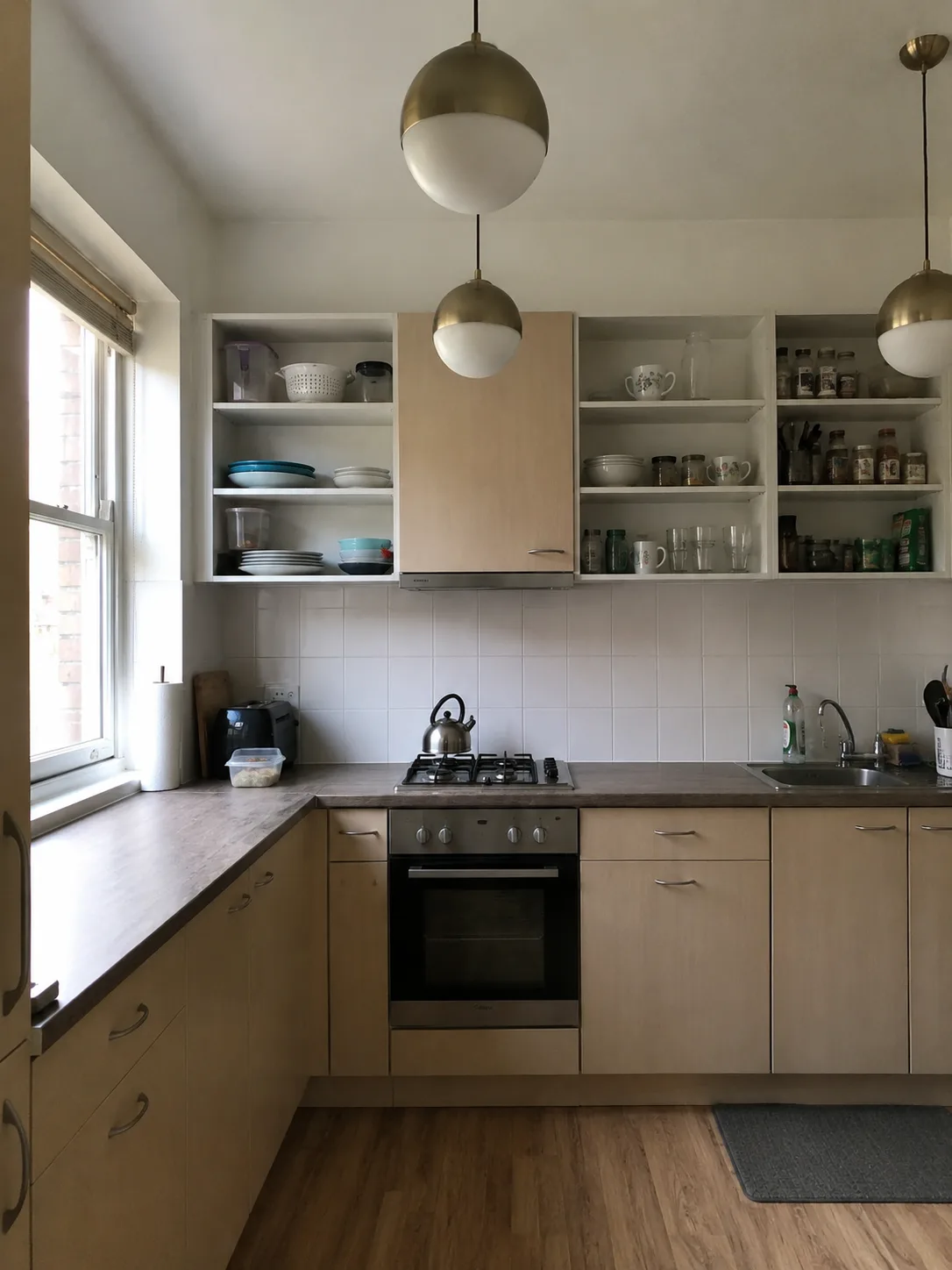 Before
Most kitchen styles need a new kitchen. Mid-century needs a door. The look lives almost entirely in a flat slab front, warm wood and a long thin handle, and the kitchen in the photo above already has flat slab fronts. They are birch laminate rather than walnut, which is a colour problem, not a carcass problem. Replacement doors on the units that are already there get you most of the way for a weekend and a delivery. Past that the ladder is honest enough. Handles and paint are a Saturday. Doors are a weekend and a delivery. Worktop and splashback want a trade. Moving the sink or the hob wants a fitter, and at that point you are buying a kitchen, not a style. The six versions below sit on different rungs. One of them is a paint job.
6 versions of mid-century
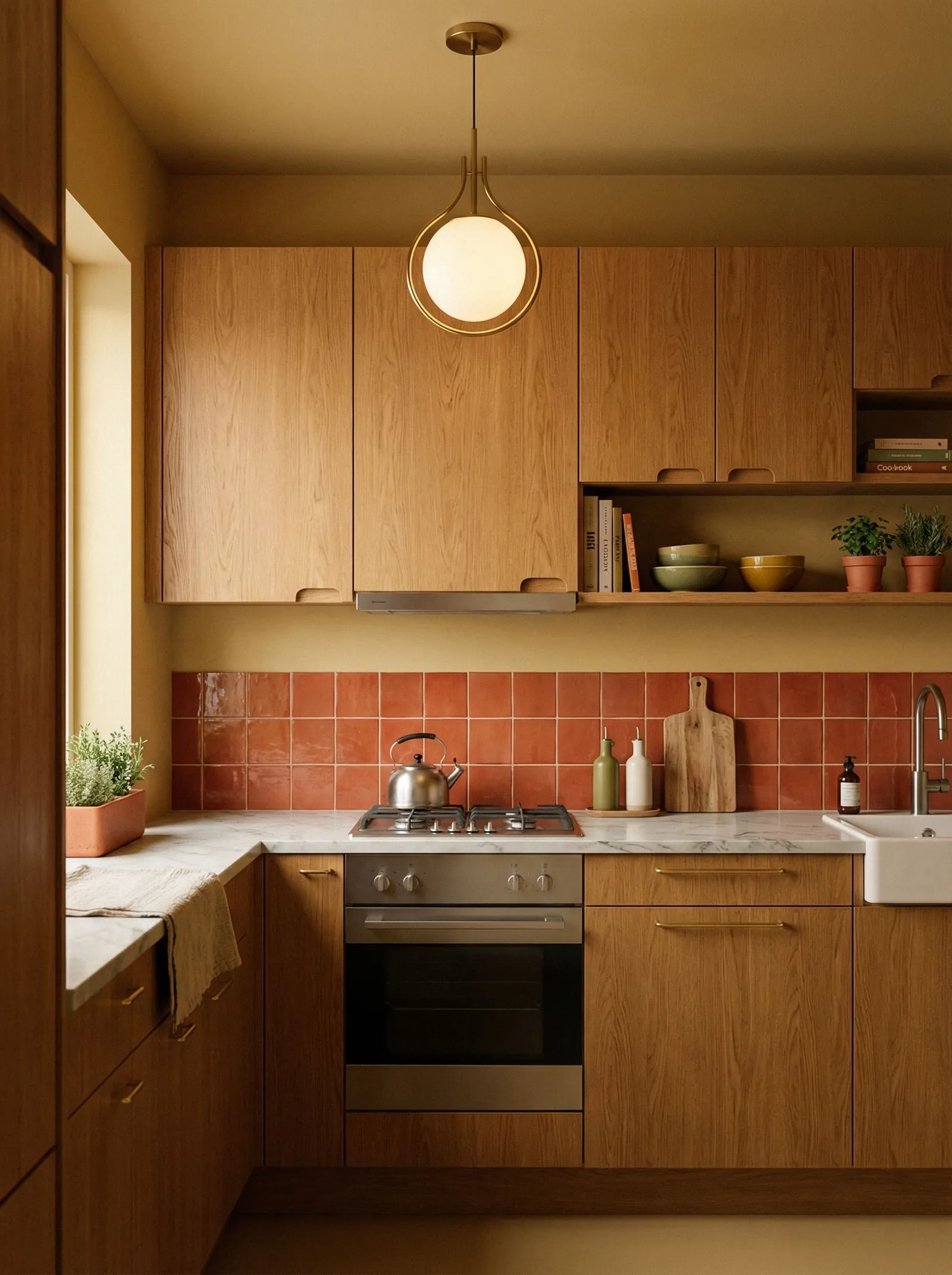
Oak and terracotta
Oak slab doors with slim brass bar handles and scooped finger pulls, glossy terracotta square tile running from worktop to shelf, a veined marble top, walls and ceiling in a dull mustard, one brass ring pendant, a white butler sink. The doors are the weekend job. The mustard ceiling is the risk. It flattens an already dim galley, and this room has one window.
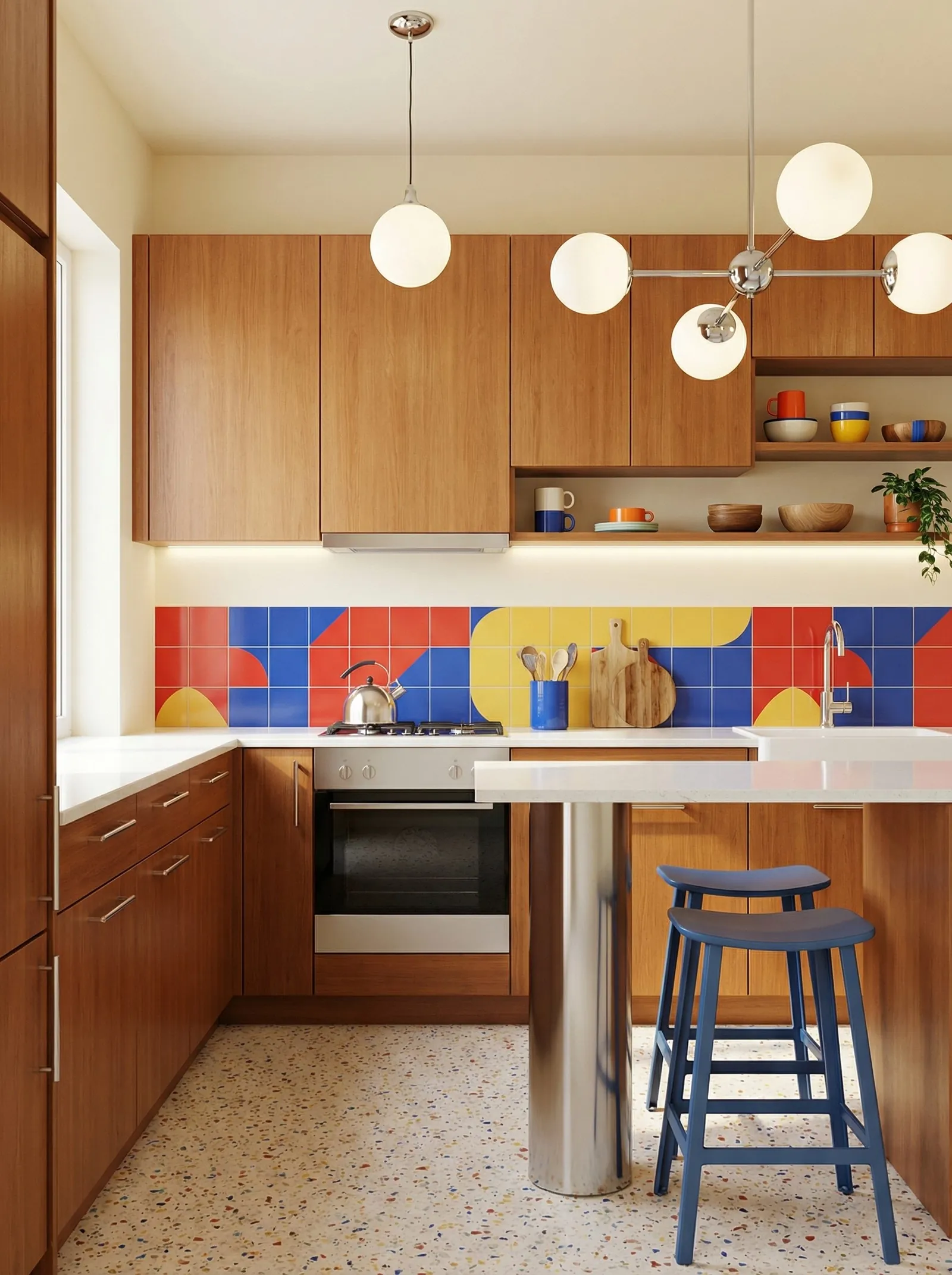
Primary-colour tile
Walnut slab doors with slim bar pulls, a red, blue and yellow splashback built from quarter-circles and blocks, white quartz, terrazzo underfoot, a chrome sputnik fitting beside a globe pendant, two blue stools pulled up to the counter. Doors and handles are the affordable part of this. The splashback is a trade job and a commitment. You cannot un-see it once the novelty goes, and it dictates every mug you own.
Sage paint
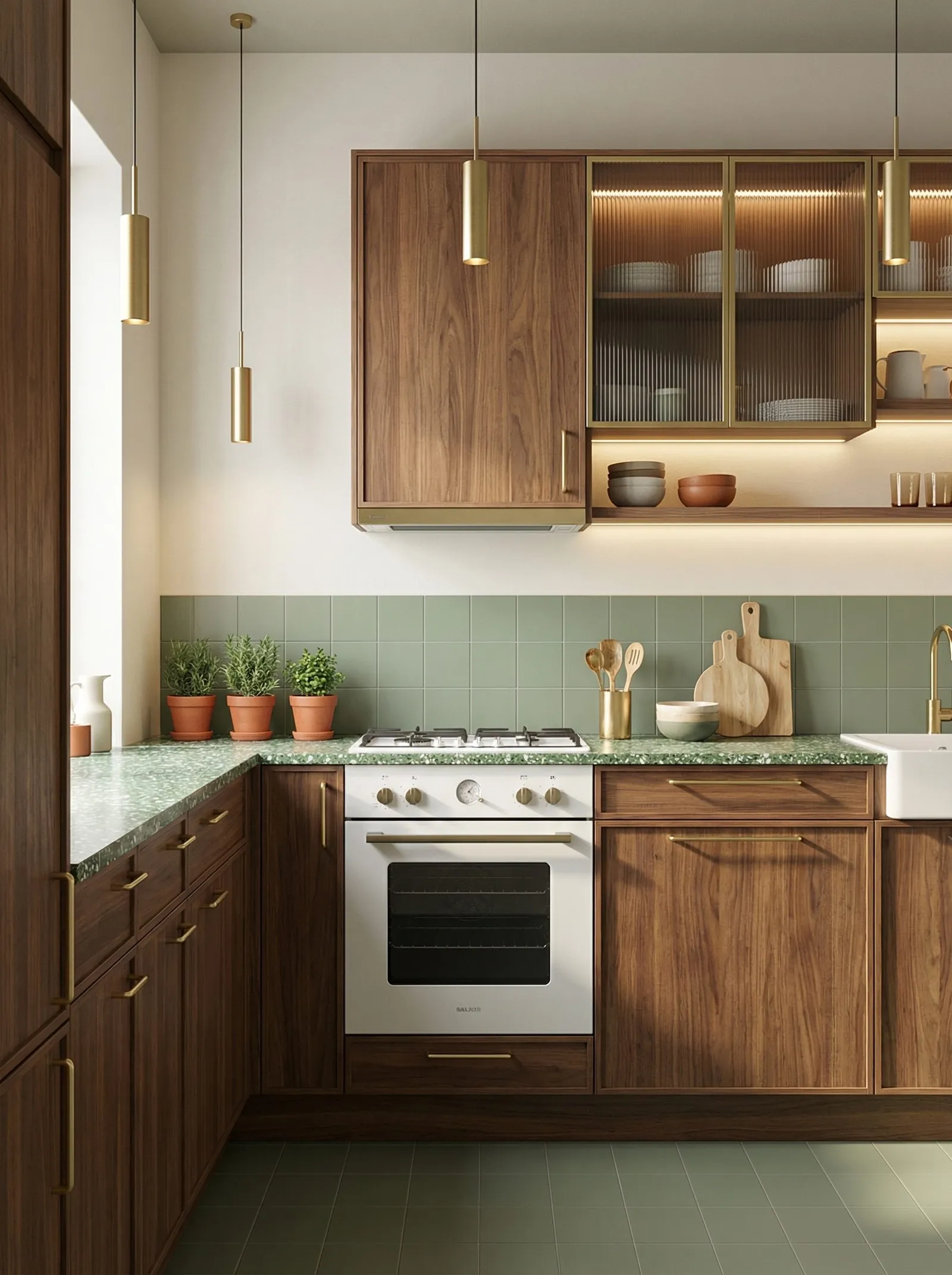
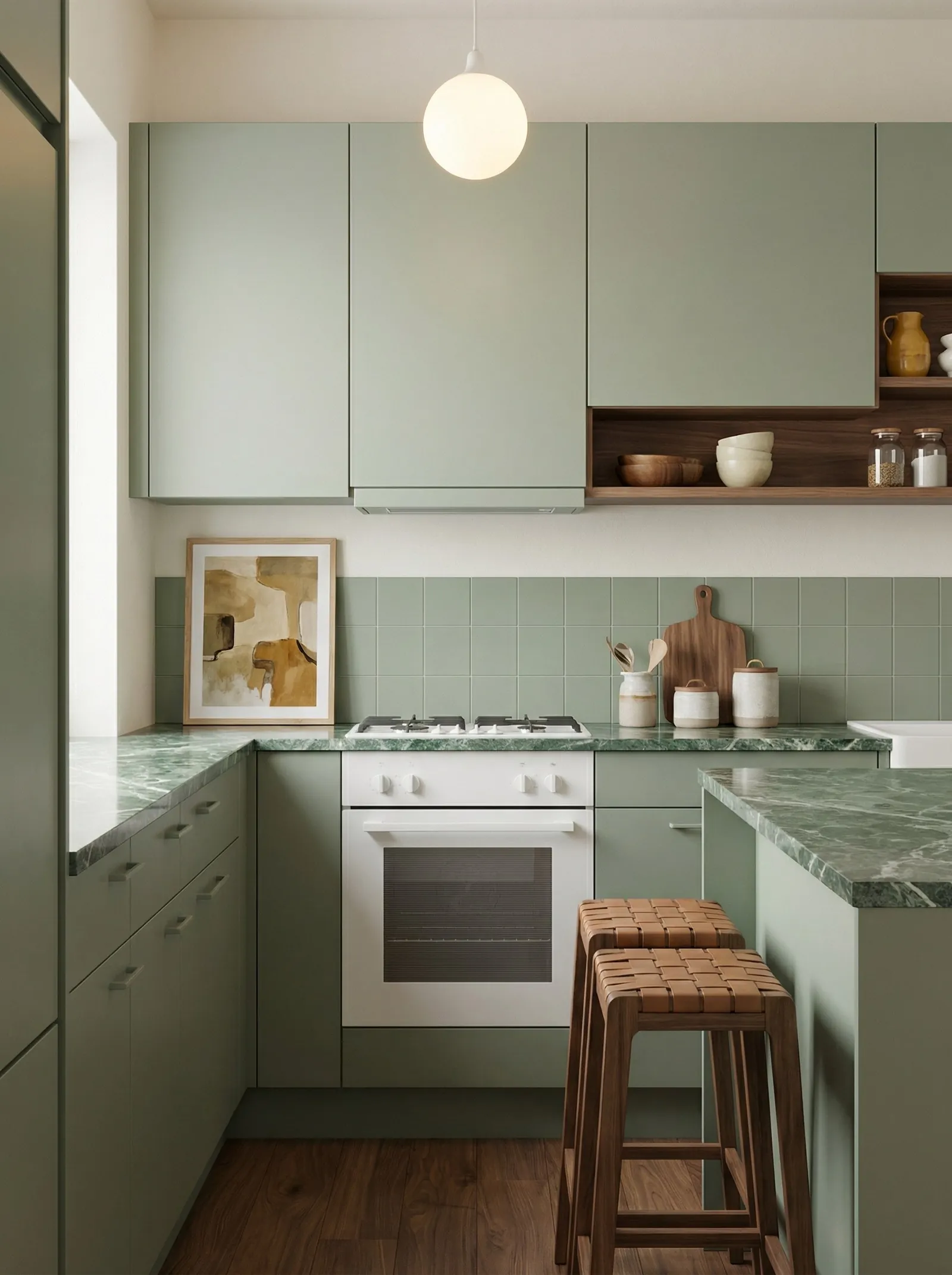
Sage green slab doors with routed finger pulls and no handles at all, sage tile on the same square grid as the white tile already up there, green marble tops, walnut shelf boxes, a white hob, a white oven, one opal globe pendant, woven leather stools. This is the paint rung of the ladder. The marble is not. And white appliances against sage will show every splash you make.
Turquoise and white gloss
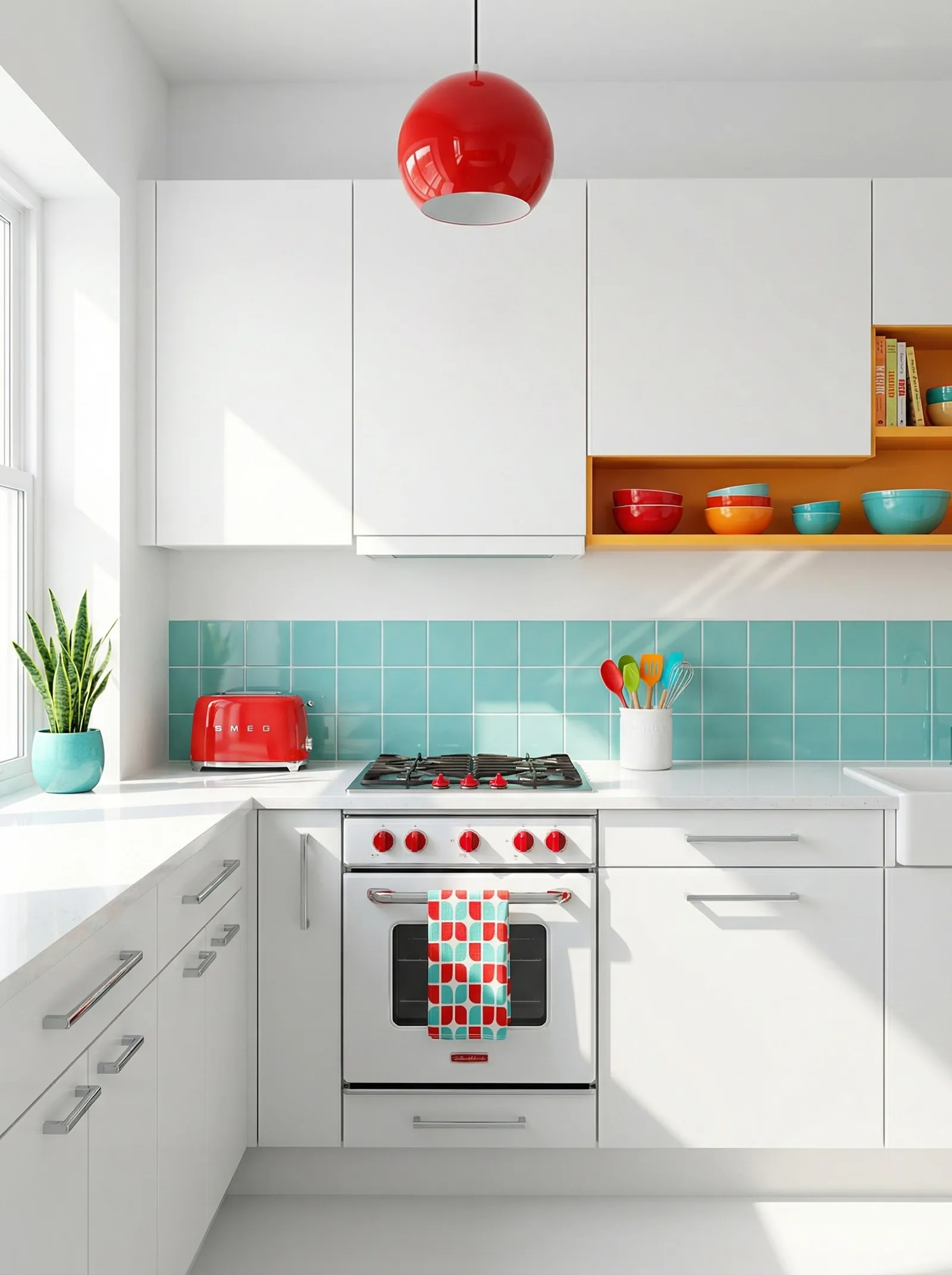
White gloss slab doors, chrome bar handles, turquoise square tile, white quartz, a shelf box lined in orange with red and turquoise bowls stacked in it, a red glass globe pendant, a red toaster, a white oven with red knobs. Almost all the colour is in things you could carry out of the flat, which makes this the rental version. White grout behind a gas hob goes grey inside a year.
Walnut and glossy black
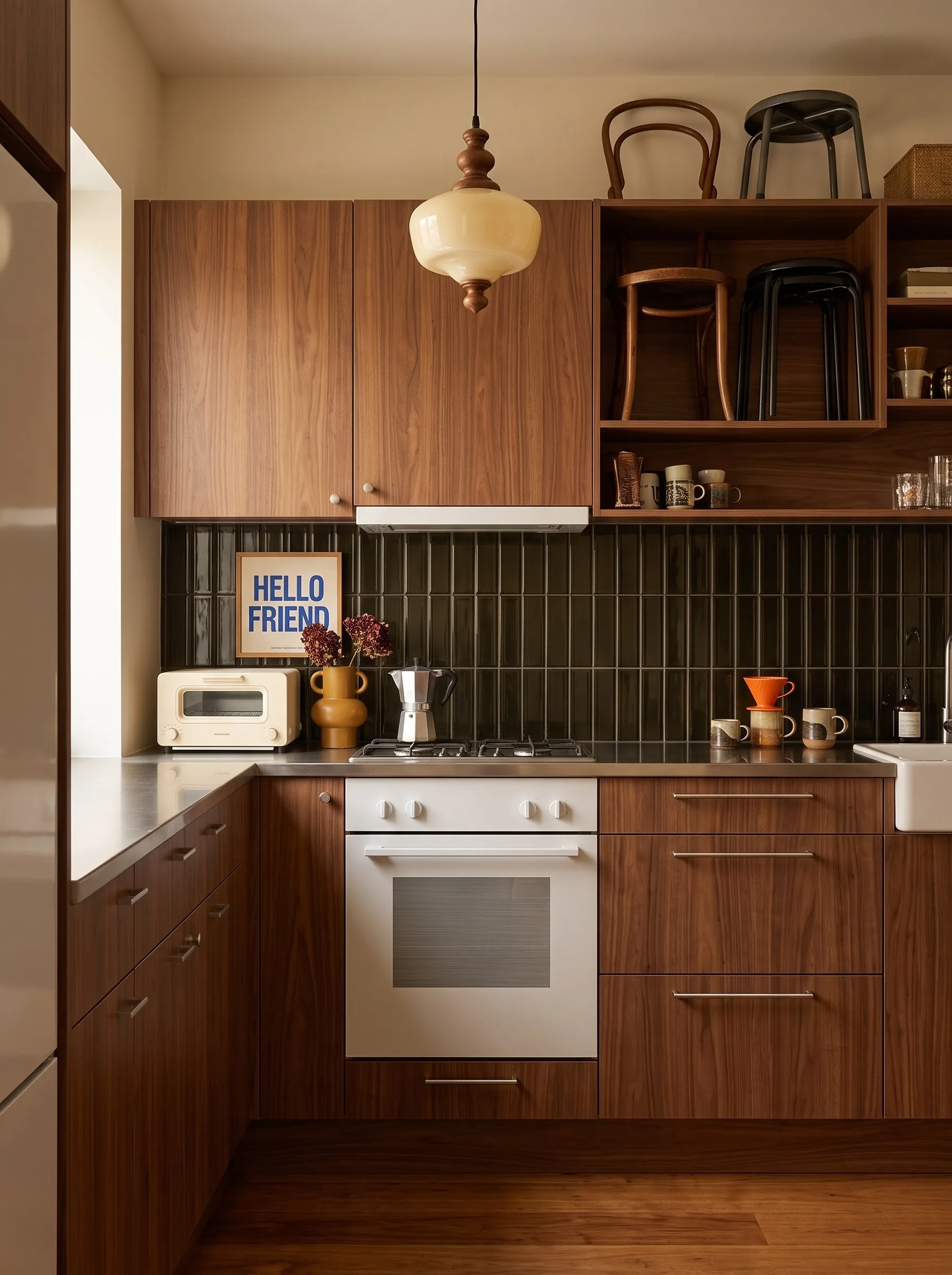
Walnut slab doors, near-black tile laid vertically and glossy enough to hold the window in it, a stainless steel worktop, a black cone pendant, open walnut shelves with a family of striped retro mugs. This is mid-century at night school: same grammar as the oak version, darker vocabulary. Stainless is the honest worktop choice — it was the period material and it forgives a hot pan — but dark gloss tile shows condensation streaks in a kitchen that actually cooks.
Amber coffee nook
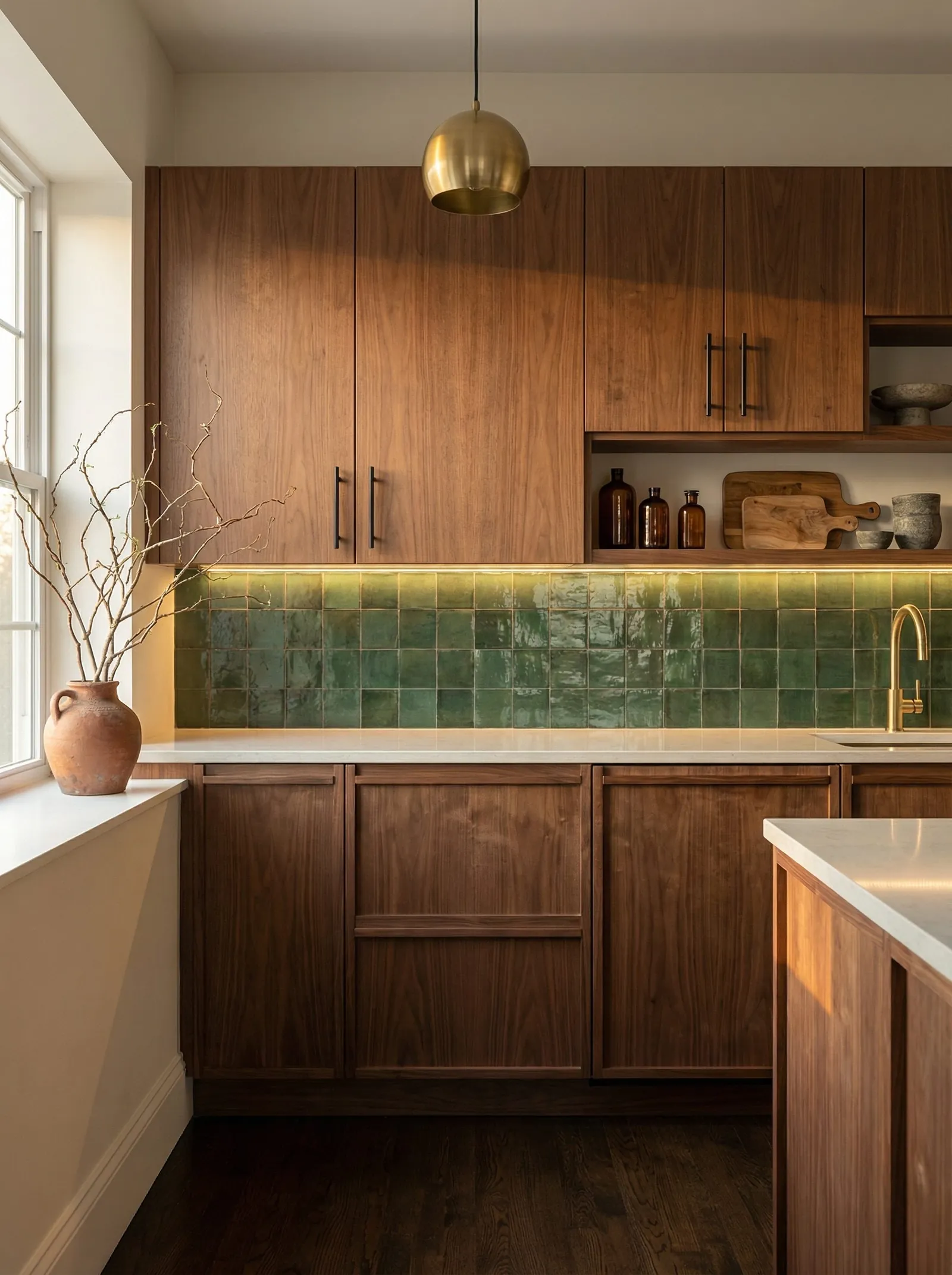
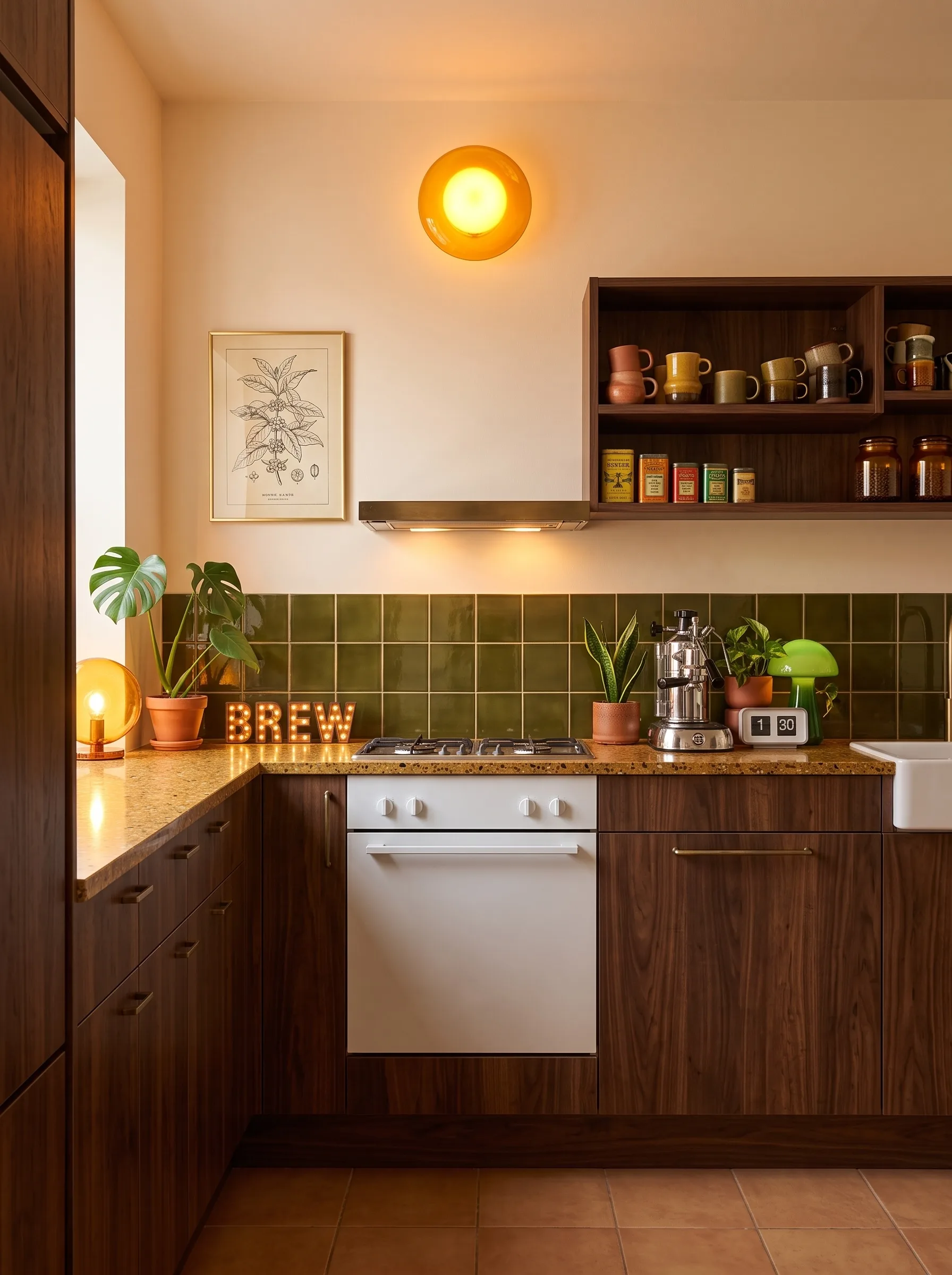
Walnut doors, olive square tile, a terrazzo worktop flecked gold, and then the corner grows a personality: a lit marquee sign reading BREW, a mushroom lamp, a flip clock, grinder and pour-over gear lined up like a shrine. The joke is deliberate and the joke is the point — this is the version for the person whose kitchen is really a café with a fridge. Strip the sign and the lamp out and a straight mid-century kitchen is left underneath, which is the safety net.
See your own kitchen in Mid-Century style
Every render on this page is one real kitchen, redesigned. Point Inty at yours: it reads the layout from a single photo, then rebuilds it in Mid-Century and 200+ other styles. Your actual room, not a showroom.


Free to try. iPhone.
Questions
- Do I have to replace the whole kitchen to get a mid-century look?
- No, and for this style you mostly should not. The units above already have flat slab doors, which is the hard part. Oak and terracotta is a door swap on the carcasses that are already there. Sage paint does not even go that far: same fronts, sprayed, handles off and finger pulls routed in. Neither touches the plumbing.
- What is the cheapest change that actually reads as mid-century?
- Handles. Long thin bar pulls instead of the bowed chrome ones currently on those birch doors. A Saturday and a screwdriver, and it changes the line of every door in the room. Turquoise and white gloss is close to that plus colour you can carry: the toaster, the bowls, the pendant.
- Does this work in a rental?
- Turquoise and white gloss is the one that survives a tenancy, because its colour lives in objects rather than grouted to a wall. Primary-colour tile is the opposite. That splashback is fixed, it is a trade job to remove, and you will not be taking it with you when you go.
- Will bold mid-century colour date badly?
- Yes, so choose which surface takes the risk. Primary-colour tile puts it on a splashback you look at every time you boil a kettle and cannot undo without a tiler. Sage paint puts it on doors you can repaint over a weekend when you tire of it. Colour on something reversible ages better than colour on something grouted.
- Does mid-century suit a small kitchen?
- It was drawn for one. Flat slab fronts, no mouldings and long thin handles keep the sightlines clean, which is most of what makes a galley feel bigger than it is. The move to avoid in a dim room is the mustard ceiling in Oak and terracotta — its own caption admits it flattens a galley with one window.
- What is the difference between mid-century and retro?
- Mid-century is a furniture language — slab fronts, warm wood, thin handles — and it survives being quiet, which Sage paint proves. Retro is a decade worn openly: colour on the doors, a themed fridge, the year visible from the doorway. Primary-colour tile is this page drifting into retro, and the splashback is the tell.