 Inty AI
Minimalist Kitchen Ideas
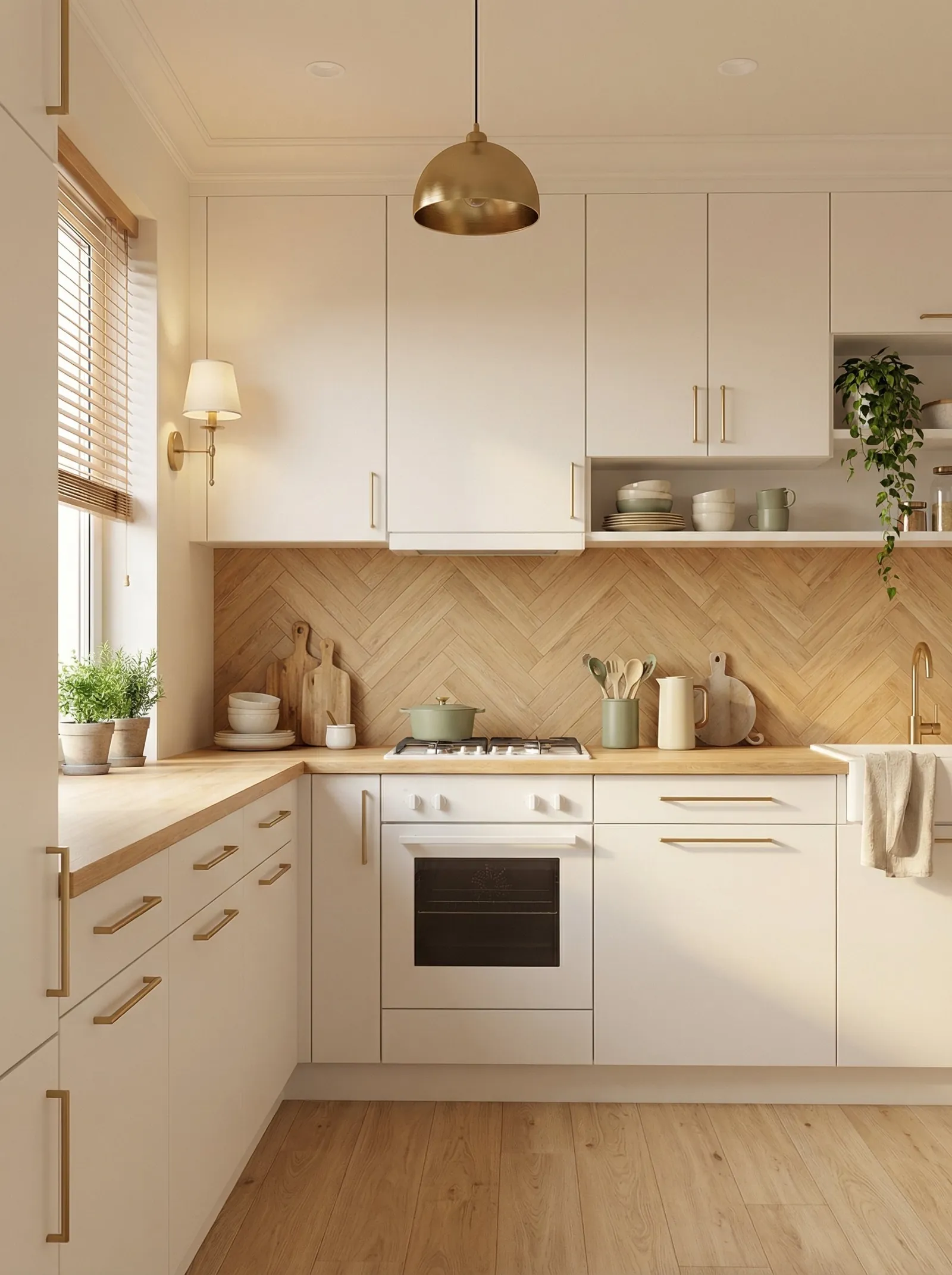
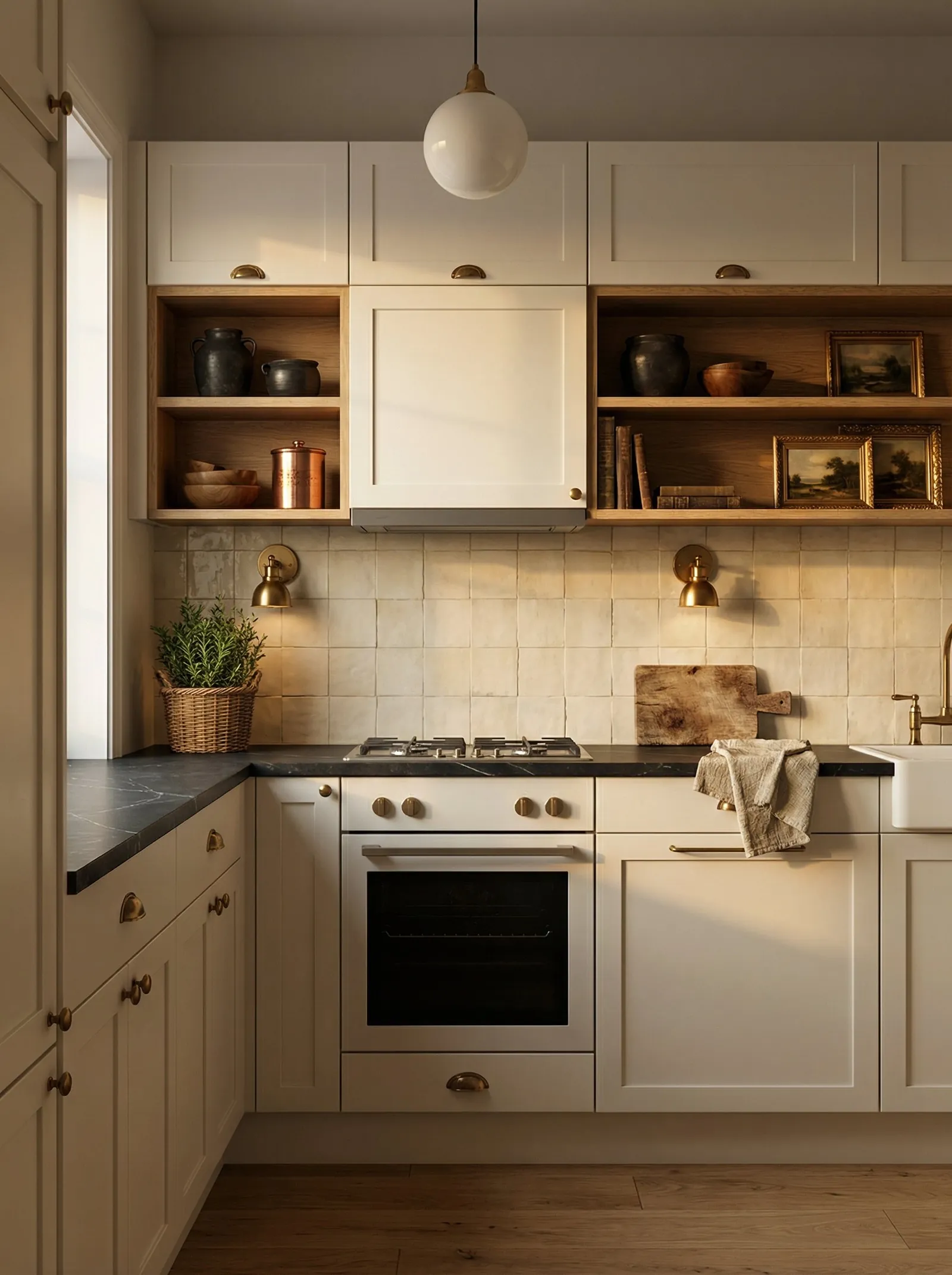
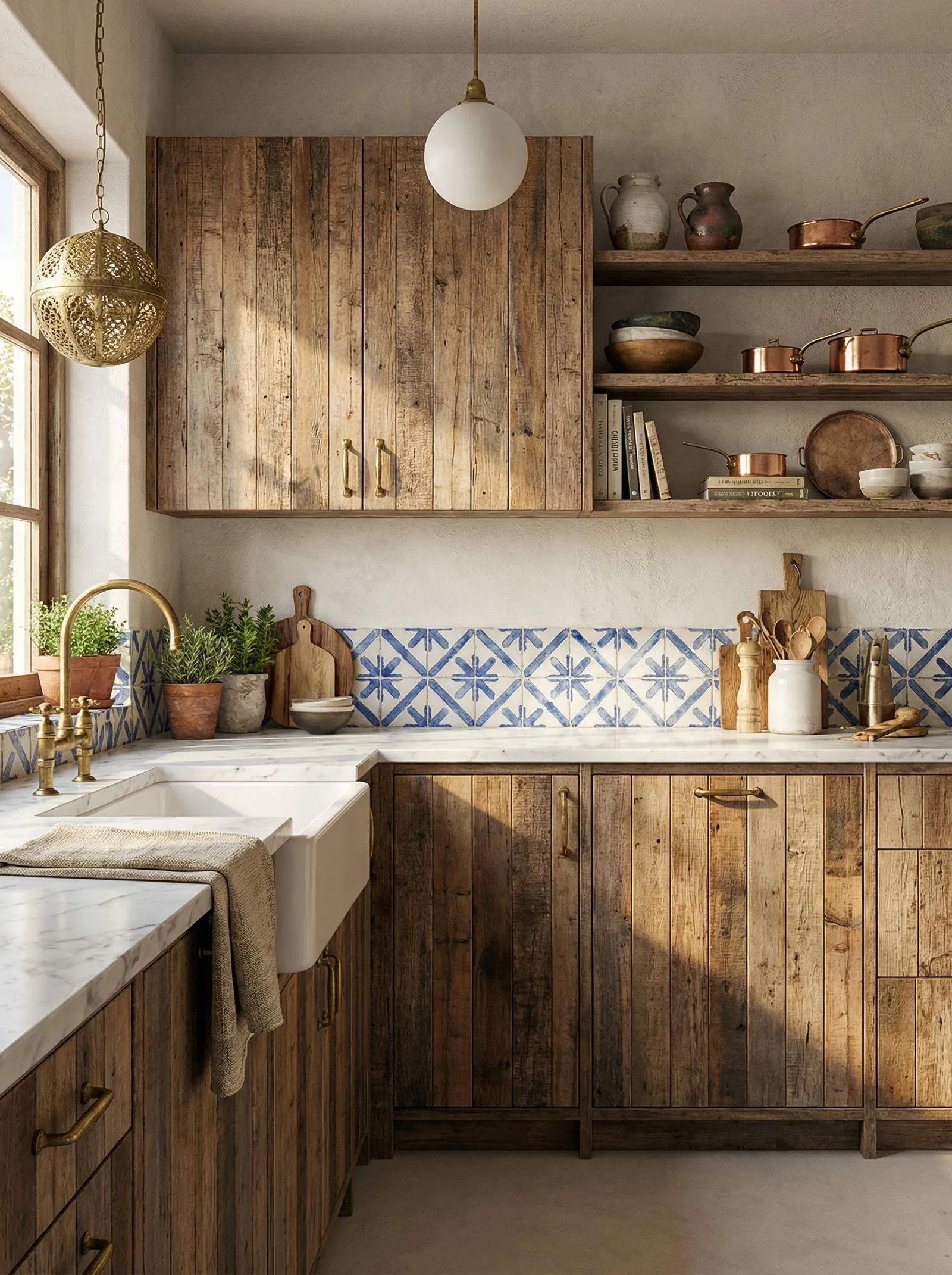
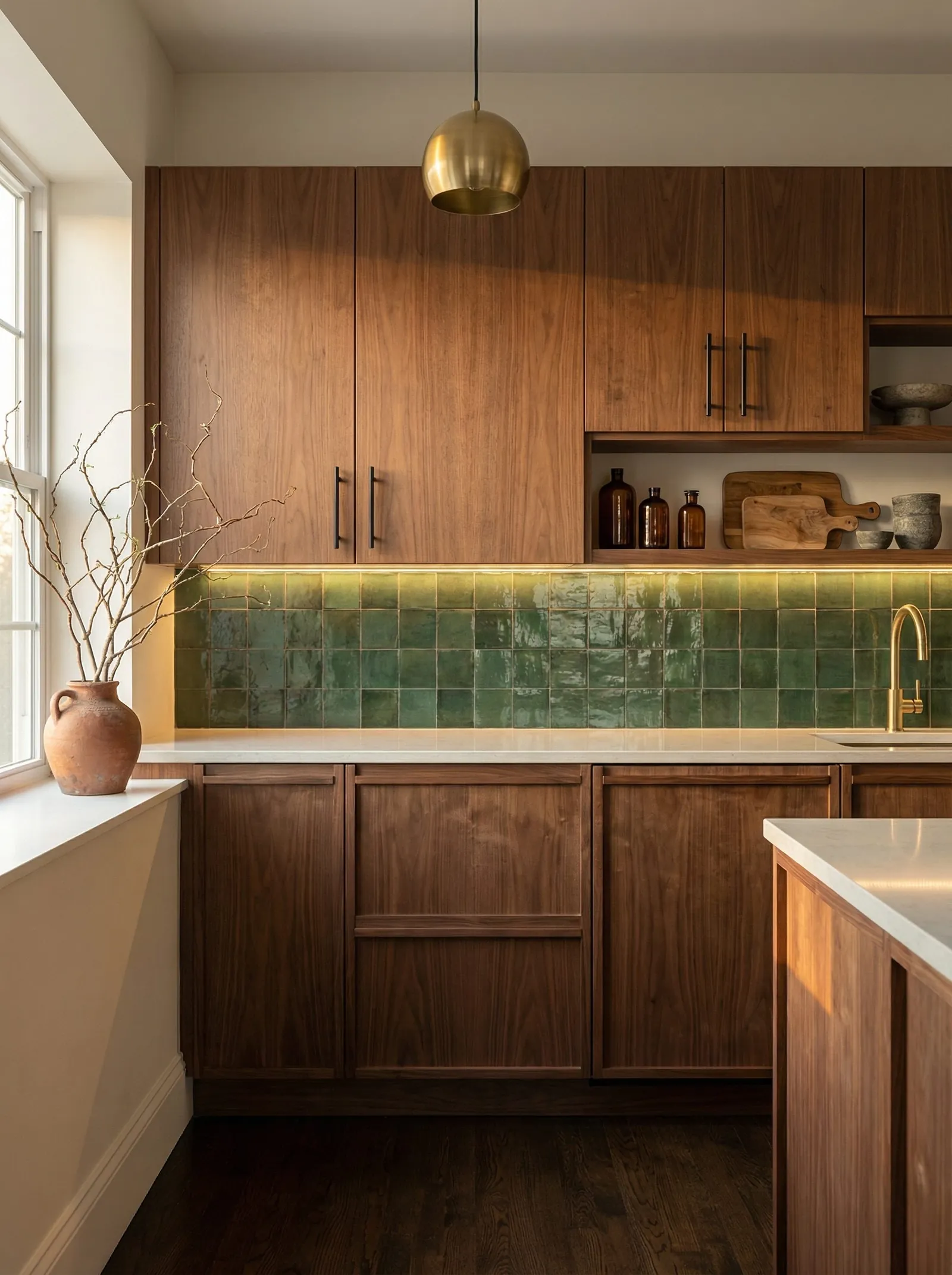
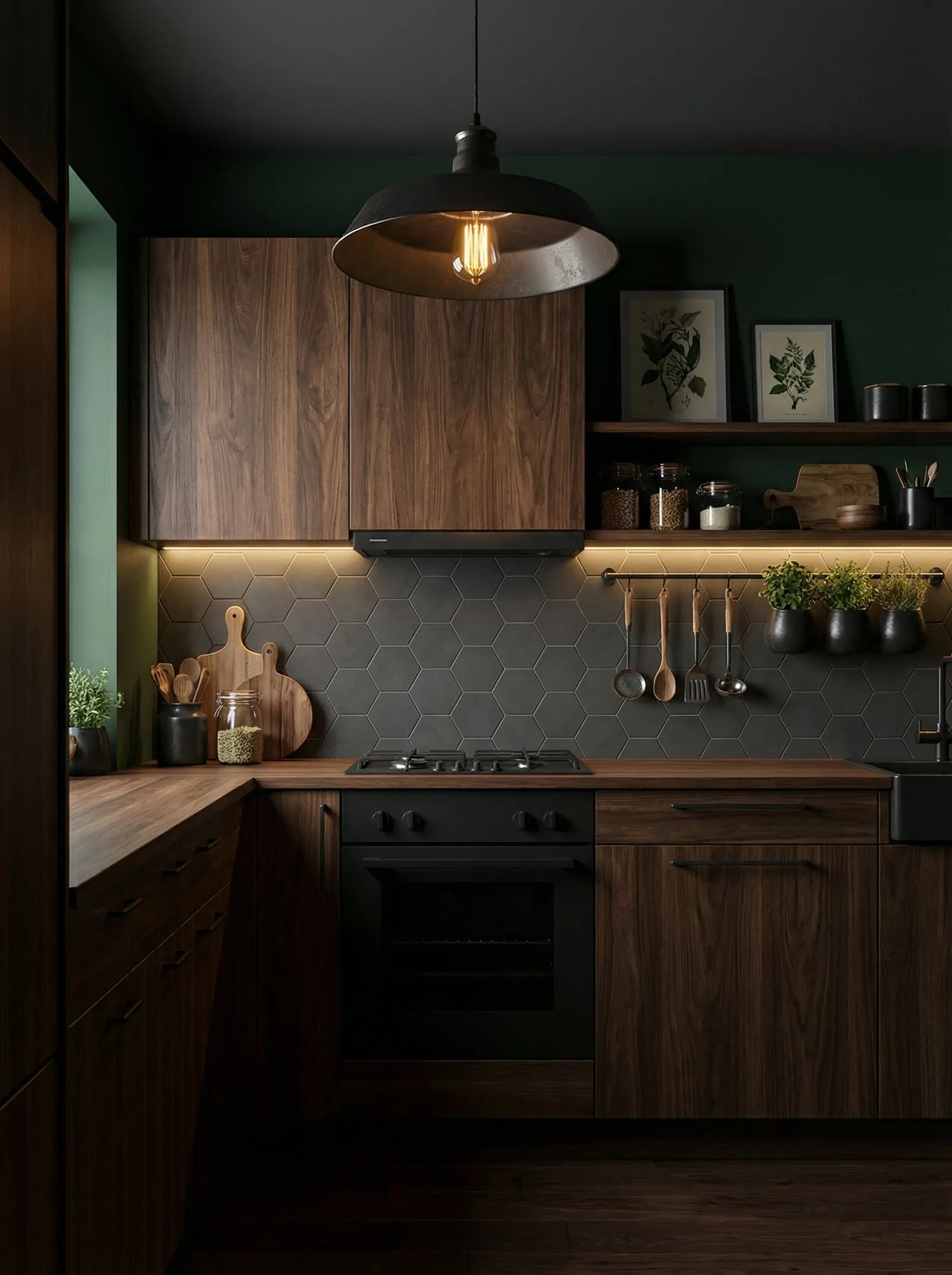
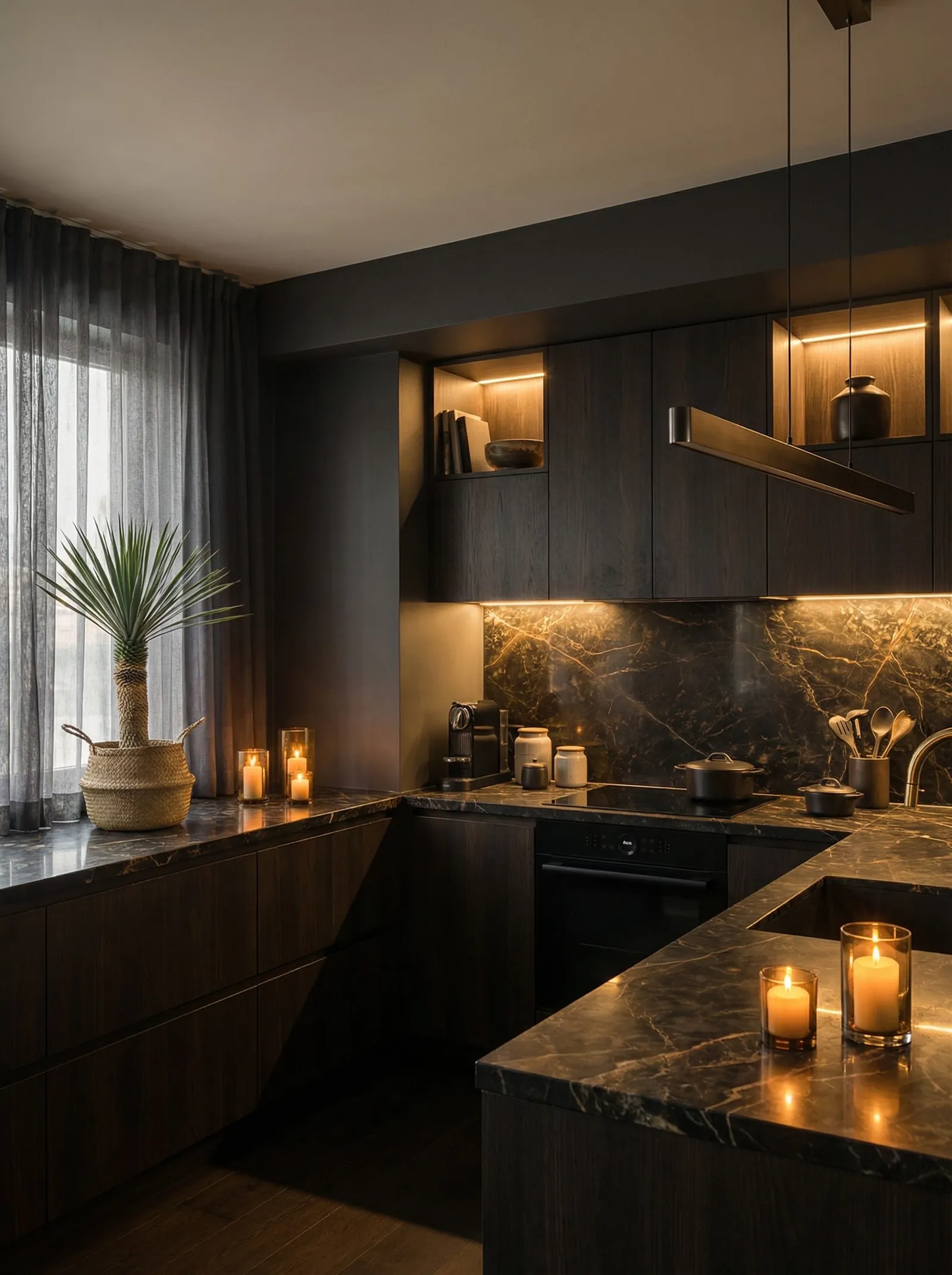
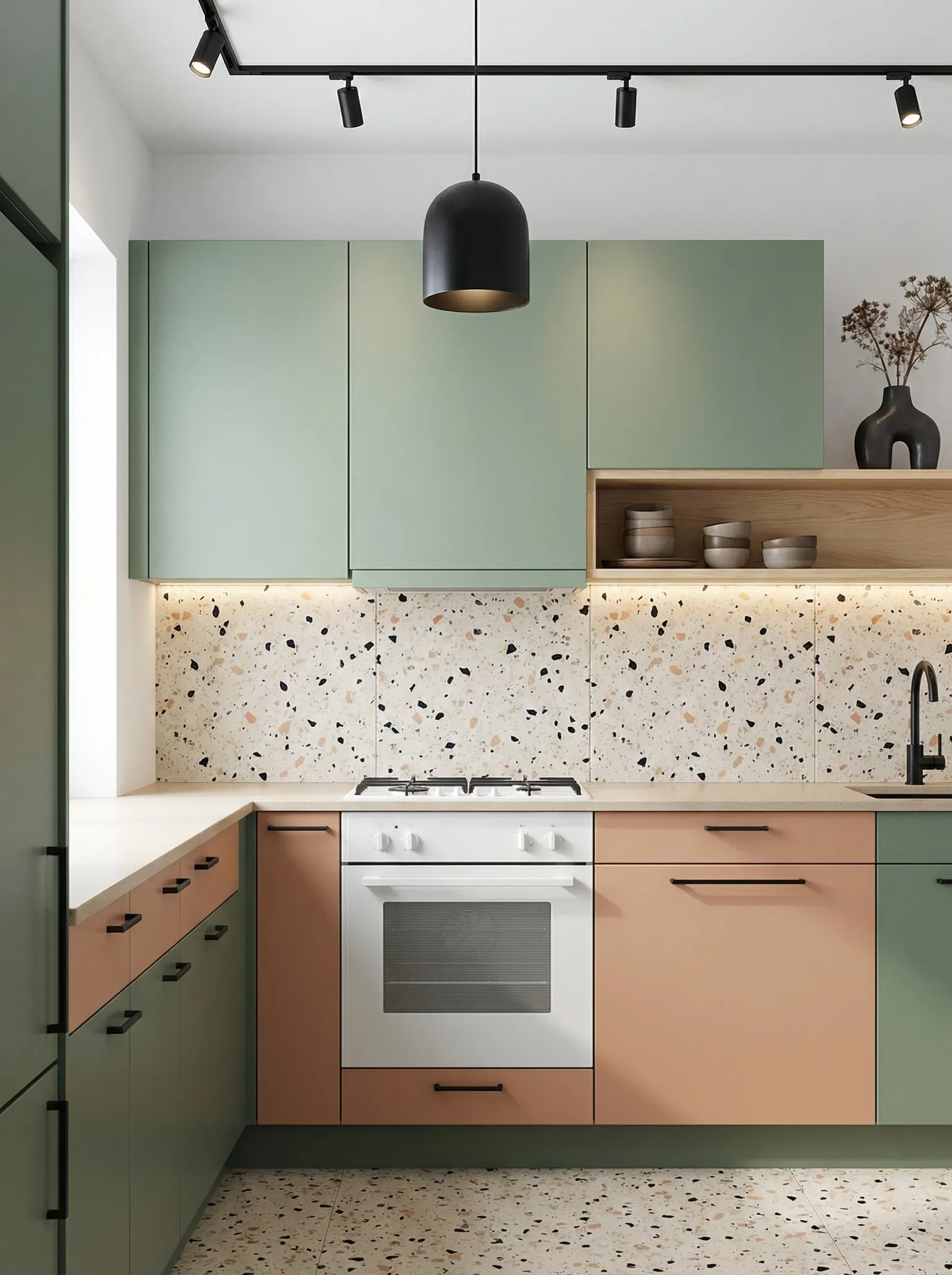
Three minimalist takes on the same real kitchen, all shot from the same spot.
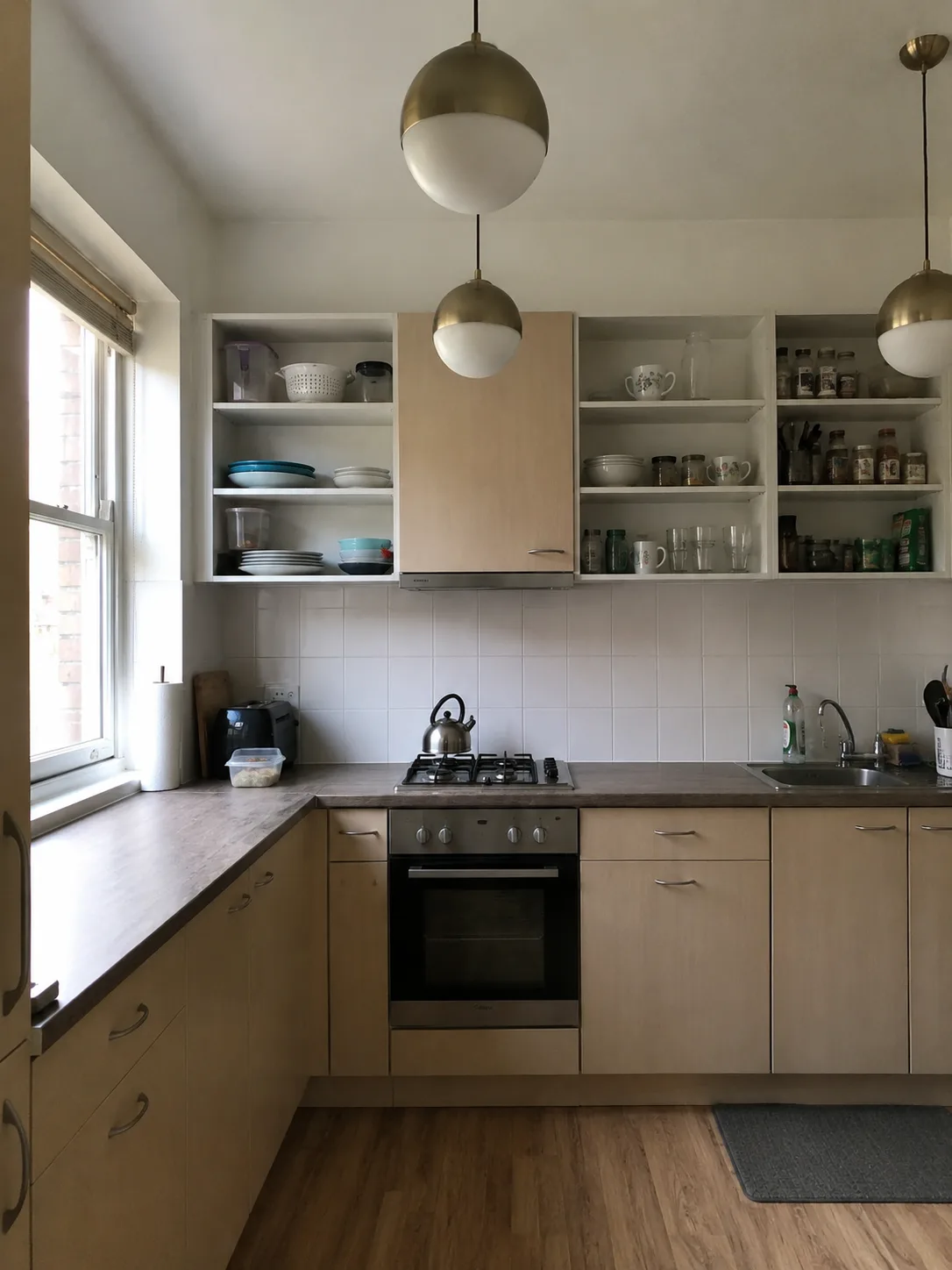 Before
This kitchen is the opposite of minimalist, and you can see why at a glance: the upper doors are off, so every jar, tub and mismatched bowl is on display, with a kettle, a toaster and a roll of kitchen paper out on the worktop. Minimalist doesn't add anything to a galley like this. It takes away. Flat handleless or slim-pull fronts, one or two materials, and counters with nothing on them. Look at the three and the shift is doors, worktop, splashback, and what you're willing to hide. The spend is real: handleless fronts and a new worktop bring in a trade. Paint and a hard declutter cost almost nothing and do half the work. The catch nobody photographs is that an empty counter is a storage problem, not a decorating one. The stuff has to go somewhere, and handleless doors are what reads minimalist fastest.
3 versions of minimalist
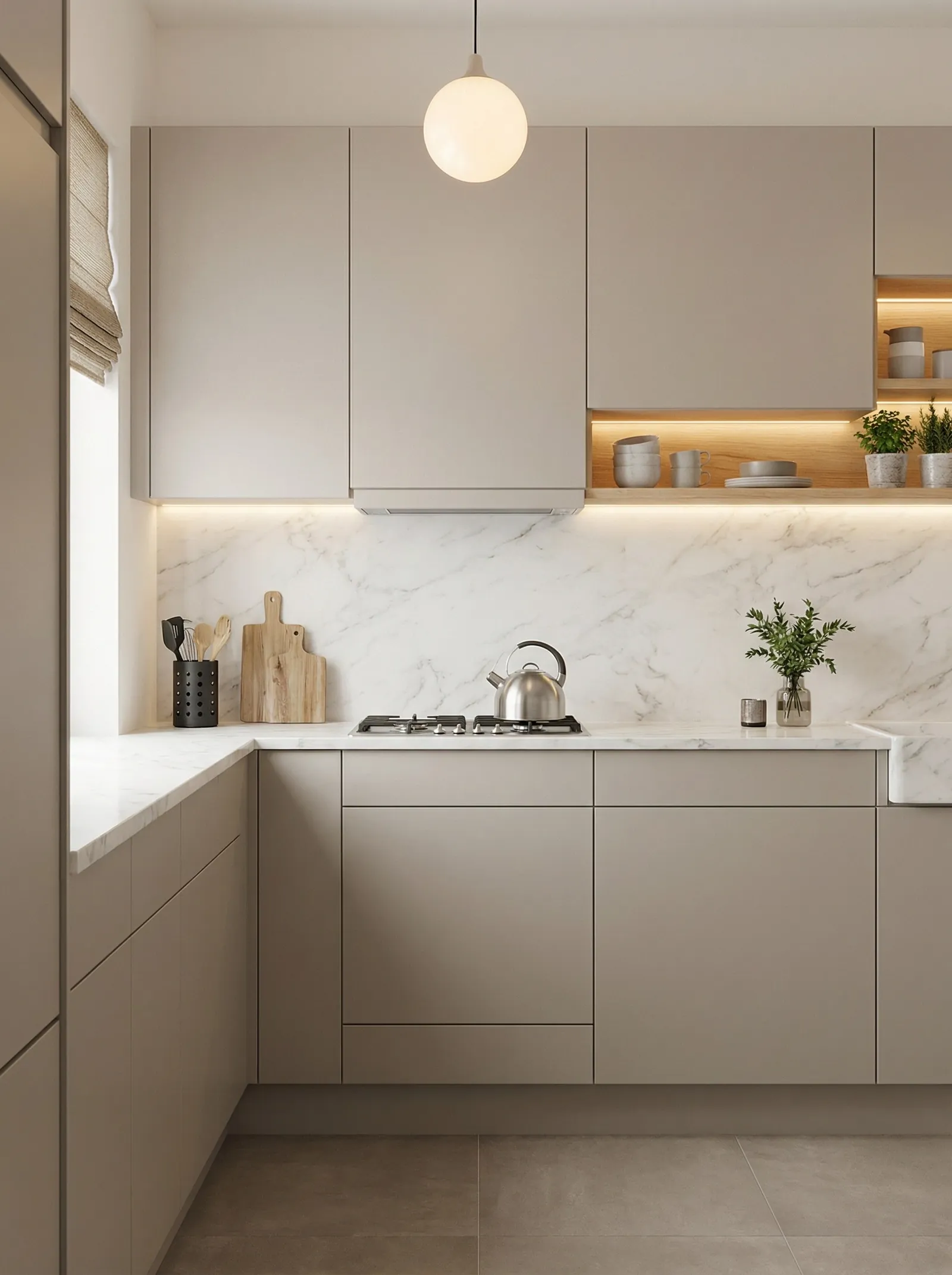
Greige handleless, marble
Warm greige flat-slab fronts with no handles at all, just push-catch and routed grips, a white marble splashback that runs straight up the wall and folds over into the worktop, one opal globe over the hob, and a slim oak shelf lit from below. The extractor is boxed in the same greige so it disappears. This is the expensive end: handleless doors and a slab of marble are both a trade and a delivery, not a weekend. Marble also stains from lemon and wine right where you cook, and 'no handles' means push-catch or a routed lip on every door, which is a full refront rather than new knobs.
Japandi oak and putty
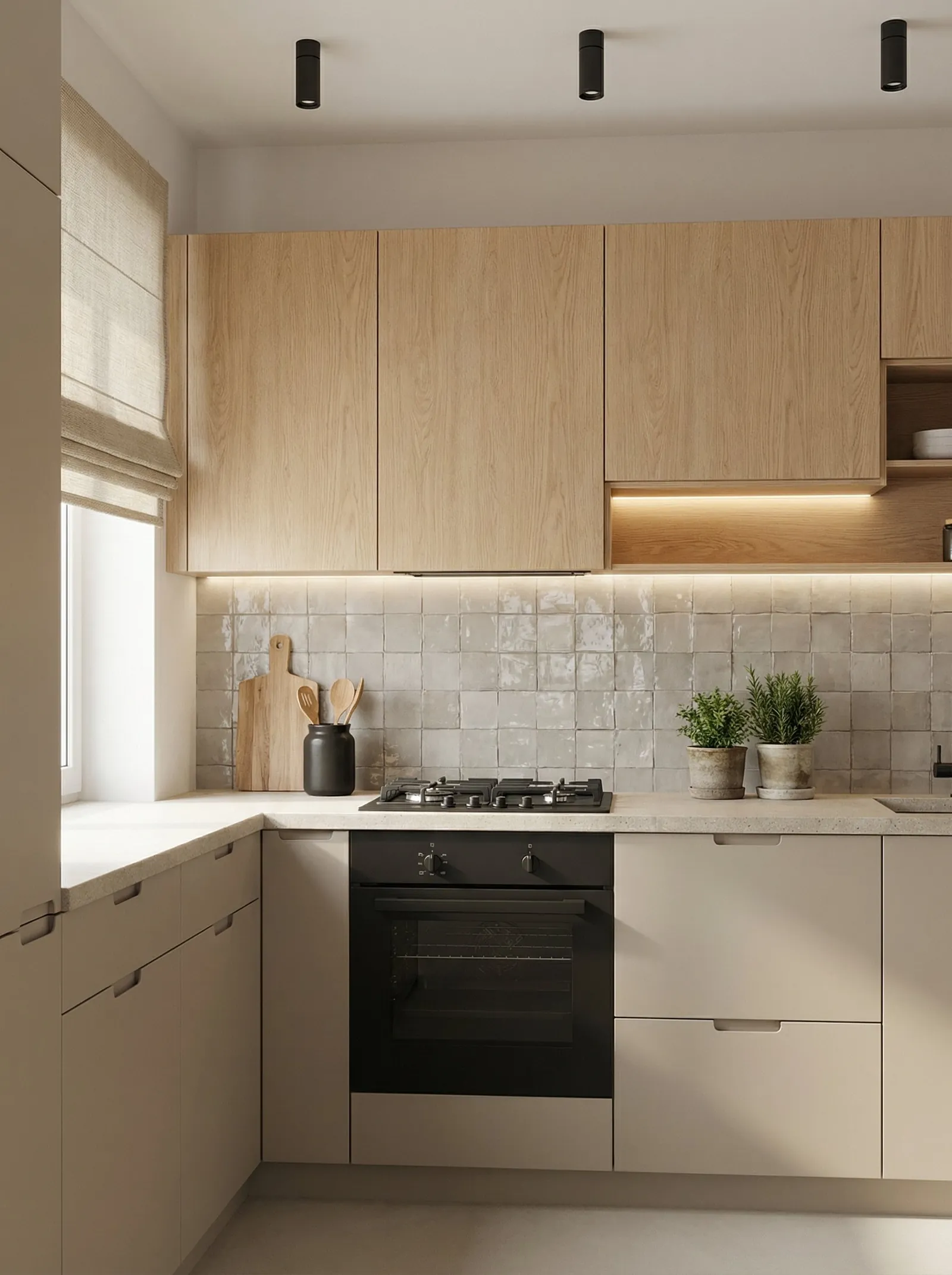
Warm oak wood-grain uppers over putty-grey handleless bases with routed grip pulls, a handmade off-white zellige splashback with visible variation, a speckled cream stone worktop, and black doing the contrast: a black built-in oven, black gas hob, black utensil jar and black cylinder spots on the ceiling. Two potted herbs and a linen blind keep it soft. This is the warmest of the three and the one that hides clutter best, because the wood grain and textured tile give the eye something to do. Oak fronts and stone are mid-to-high spend, and the zellige is a tiler that sits behind a gas hob, so you'll be sealing it. The black hardware and spots are the cheap part that sells the look.
See your own kitchen in Minimalist style
Every render on this page is one real kitchen, redesigned. Point Inty at yours: it reads the layout from a single photo, then rebuilds it in Minimalist and 200+ other styles. Your actual room, not a showroom.


Free to try. iPhone.
Questions
- What actually makes a kitchen read as minimalist?
- Flat fronts with no visible handles, one or two materials, and empty counters. Greige handleless, marble does it with push-catch doors and a single marble; Japandi oak and putty does it with routed grip pulls instead. The ornament a kitchen usually carries, meaning knobs, a mixed splashback and things left on the worktop, is exactly what gets removed. Handleless or slim-pull fronts are the single fastest signal: the eye reads an uninterrupted surface as minimalist before it notices anything else.
- Is minimalist just a white kitchen?
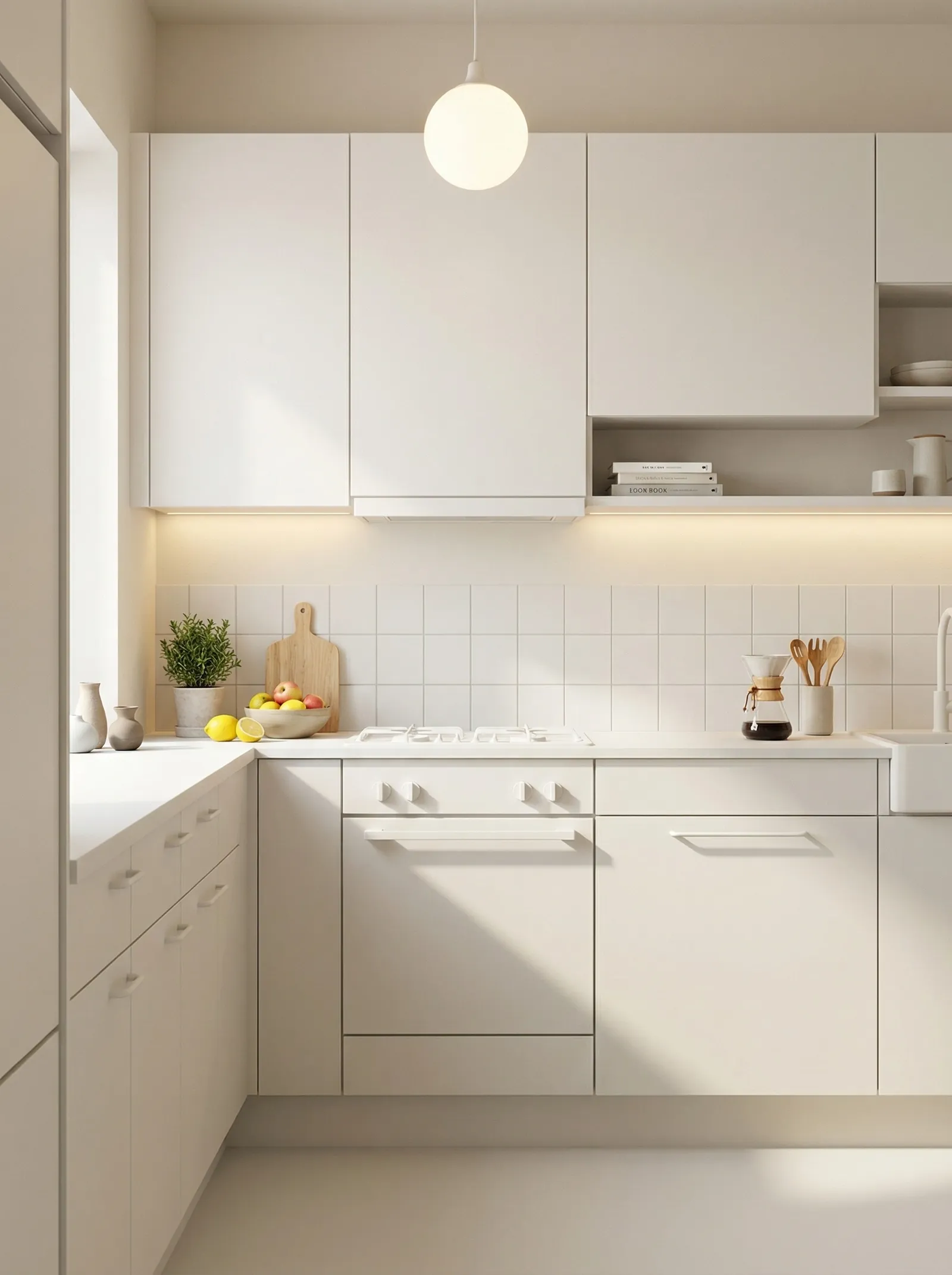
- No. Soft white, hidden pulls is the all-white version, but Greige handleless, marble is warm greige and Japandi oak and putty leans on oak and putty with black accents. Minimalist is about how few materials and interruptions there are, not the colour. A warm wood kitchen is still minimalist as long as the fronts are plain and the counters are clear.
- What's the cheapest change that reads minimalist?
- Clearing the counter and repainting the existing fronts in one flat colour. Soft white, hidden pulls is mostly off-white paint and a bare worktop once you set aside the integrated appliances. You won't get true handleless fronts without new doors, but swapping fussy handles for slim edge pulls and hiding everything currently on show gets you most of the look for very little.
- Minimalist means empty counters. Where does all my stuff go?
- That is the honest catch: an empty counter is a storage problem, not a decorating one. The kettle, toaster, jars and tubs in the real kitchen have to move behind a door, which usually means the upper cabinets go back on, since they're currently off, and the lower drawers get organised. Budget for the storage before the fronts, or you'll have a beautiful worktop with a toaster back on it in a week.
- Is a minimalist kitchen expensive?
- It can be the priciest look to do properly, because the two things that sell it, handleless fronts and a run of stone, are both a trade job, as in Greige handleless, marble. But you don't have to guess whether it's worth it. Inty visualizes your own kitchen in a style like this from a single photo: it reads the layout from the picture and shows a redesign, which is a visualization rather than a guarantee of any exact product. There is a 3-day trial, it is paid after that, and it needs an account. Seeing Japandi oak and putty on your actual walls costs less than a designer's first sketch.
- What's the difference between minimalist and scandi?
- They overlap, but scandi keeps warmth and a little personality, meaning wood, one muted colour, plants and things on an open shelf, while minimalist strips those interruptions out. Japandi oak and putty is the closest of the three to scandi because of the wood, but its counters are bare and its fronts are handleless, which scandi doesn't insist on. If you like the wood of scandi but not the clutter it tolerates, minimalist is where you land.