 Inty AI
Industrial Kitchen Ideas
Five industrial takes on the same real kitchen, all shot from the same spot.
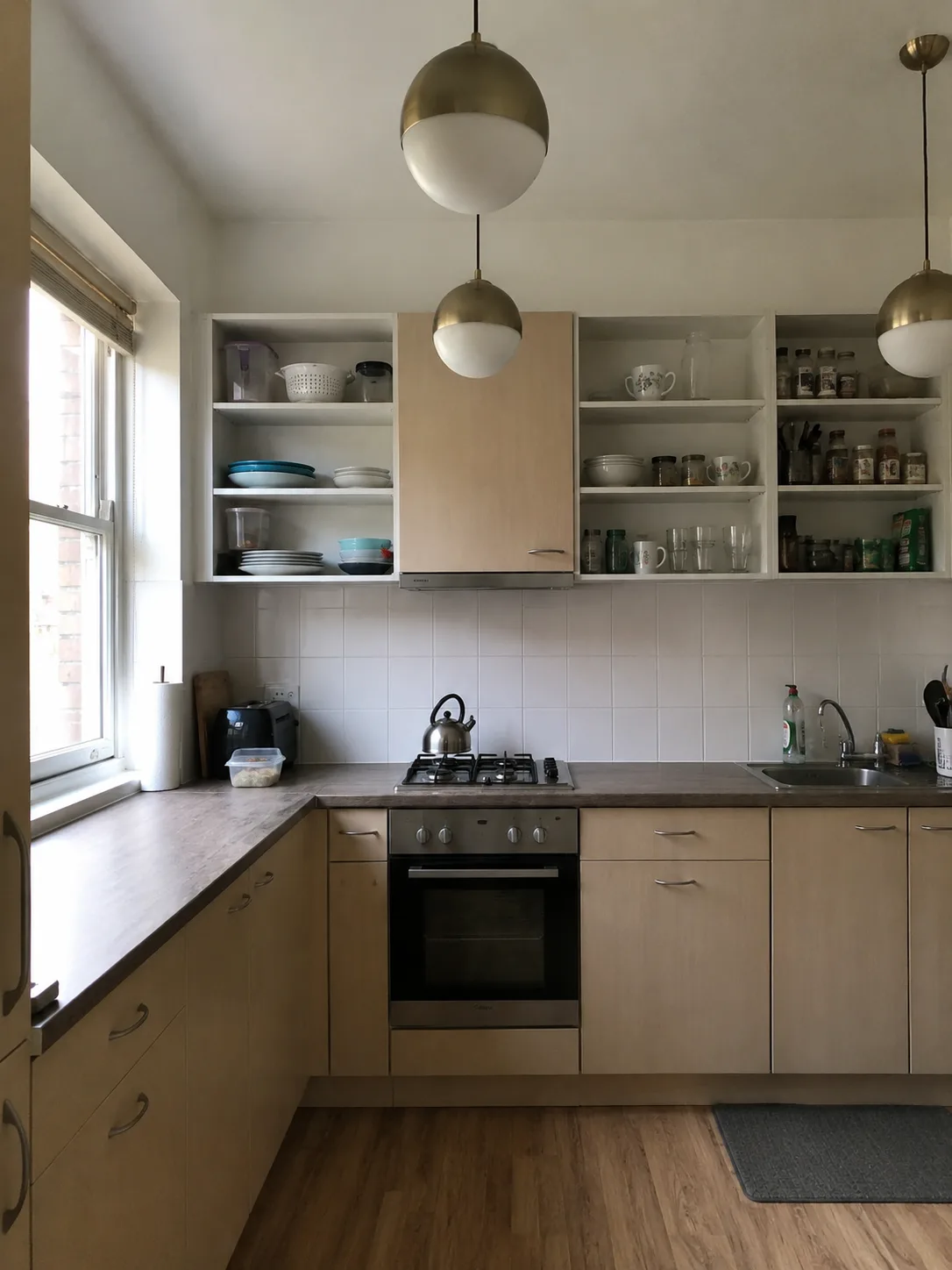 Before
The before is a small L-shaped galley: birch laminate doors, white tile, one window on the left, the hob tucked under the extractor, the upper doors already off. Industrial suits it better than you would think, because a plain box reads as deliberate the moment you put hard surfaces on it. The cheap way in is a tin of dark paint on the fronts, one open metal shelf, metal bar handles and a filament bulb on a cord, a weekend that already looks like a different room. The expensive way is the real thing: brick slips or exposed brick behind the hob, a concrete-look worktop, black-metal door fronts, a polished concrete floor. That last lot is a trade and a mess. The catch is light. This is a one-window galley and industrial eats light, so go too dark and you are cooking under a strip by two in the afternoon.
5 versions of industrial
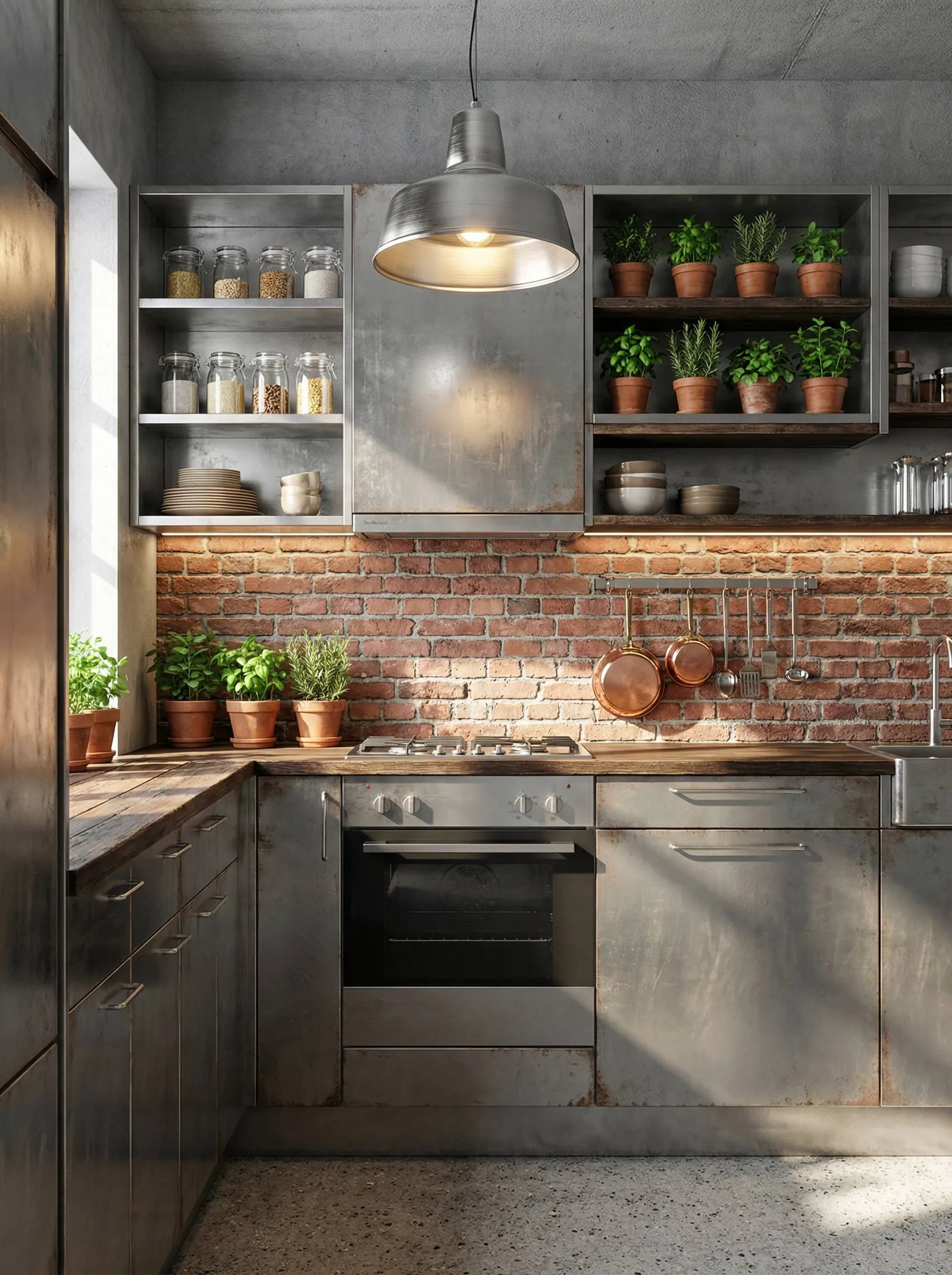
Steel and Red Brick
Raw steel cabinet fronts with a rusted patina, a red exposed-brick splashback, a solid reclaimed-wood worktop and grey metal shelving stacked with jars and potted herbs. A big brushed-aluminium dome hangs over the hob and copper pans hang off a rail on the brick. This is the full trade job, and every expensive move is here at once: real brick or brick slips, a ground or poured concrete floor, a timber worktop, metal-fronted units. It photographs like a warehouse conversion and costs like one, but the brick and copper keep it warm rather than clinical.
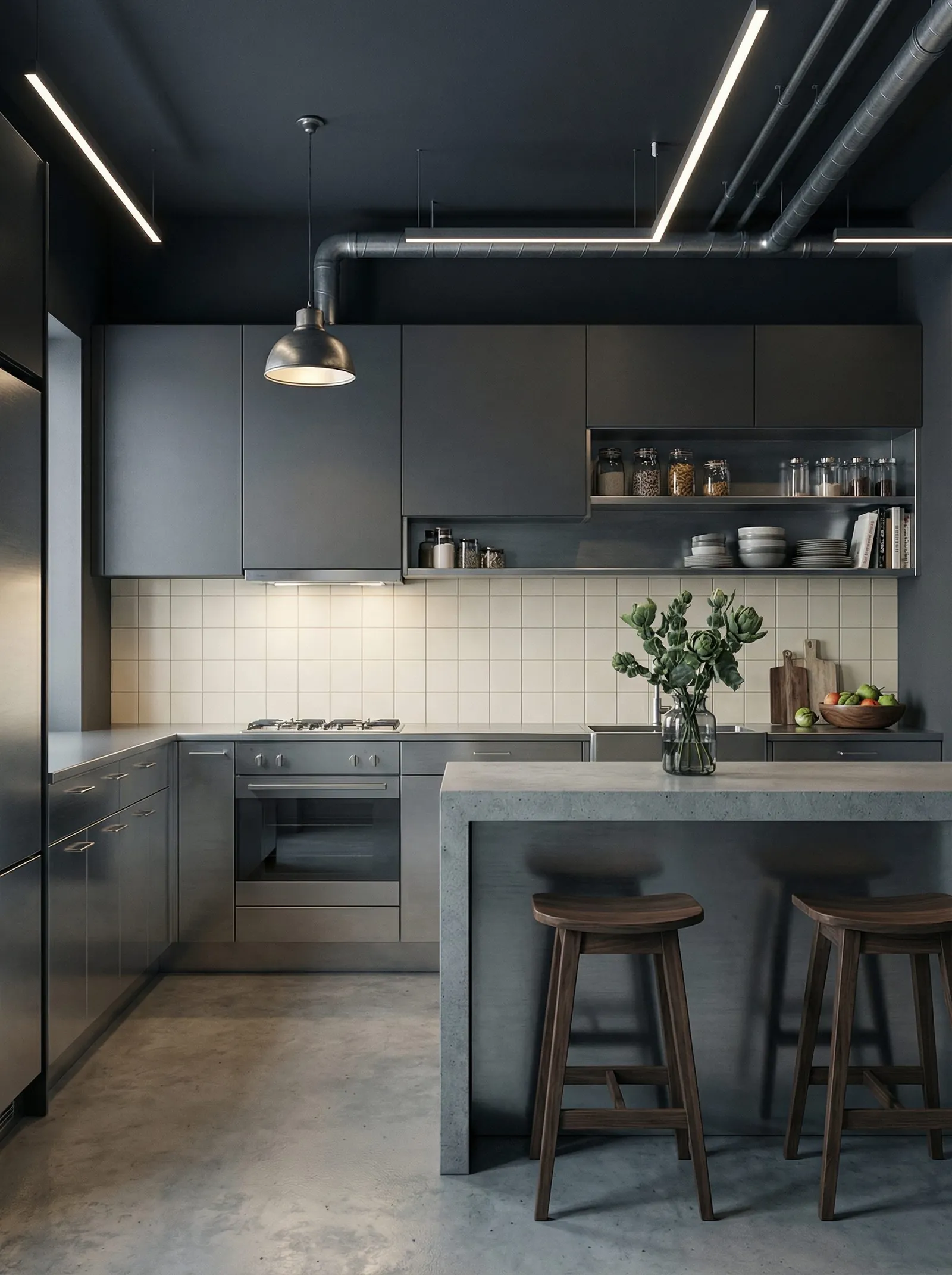
Charcoal Utility
Charcoal flat-slab doors top and bottom, a near-black ceiling with exposed grey ductwork and linear LED strips, a cream square-tile splashback and a concrete worktop that wraps into a small peninsula with two dark stools. One metal dome over the hob, an open shelf of jars and cookbooks. The exposed ducting is the signature, and the honest part is that most of the cost is paint and lighting while the concrete worktop and the peninsula are the real spend. It is the darkest of the five, and in a one-window galley that means the LED strips are doing a full-time job, not a decorative one.
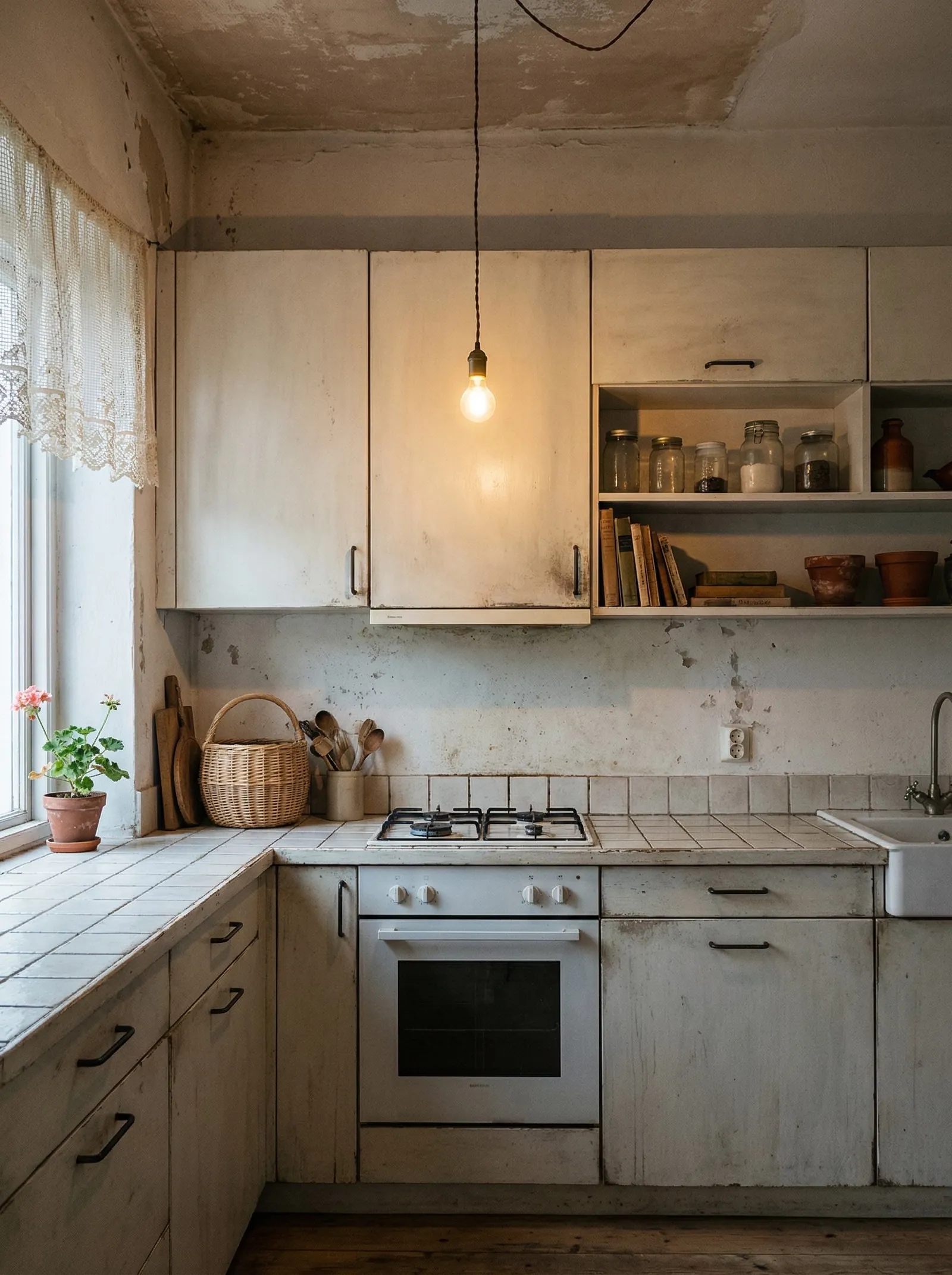
Worn Paint, Bare Bulb
Worn cream painted cabinets, distressed plaster above a white tile counter and splashback, a single bare filament bulb on a twisted cord, a lace curtain and a geranium at the window. A wicker basket, wooden boards, a crock of spoons and mason jars on an open shelf do the styling. This is the cheapest way into the look and barely a job at all, patina, a bulb and collected objects rather than a trade. The catch is that the bare bulb is the only light, so it is atmospheric in a photo and genuinely dim to actually cook in.
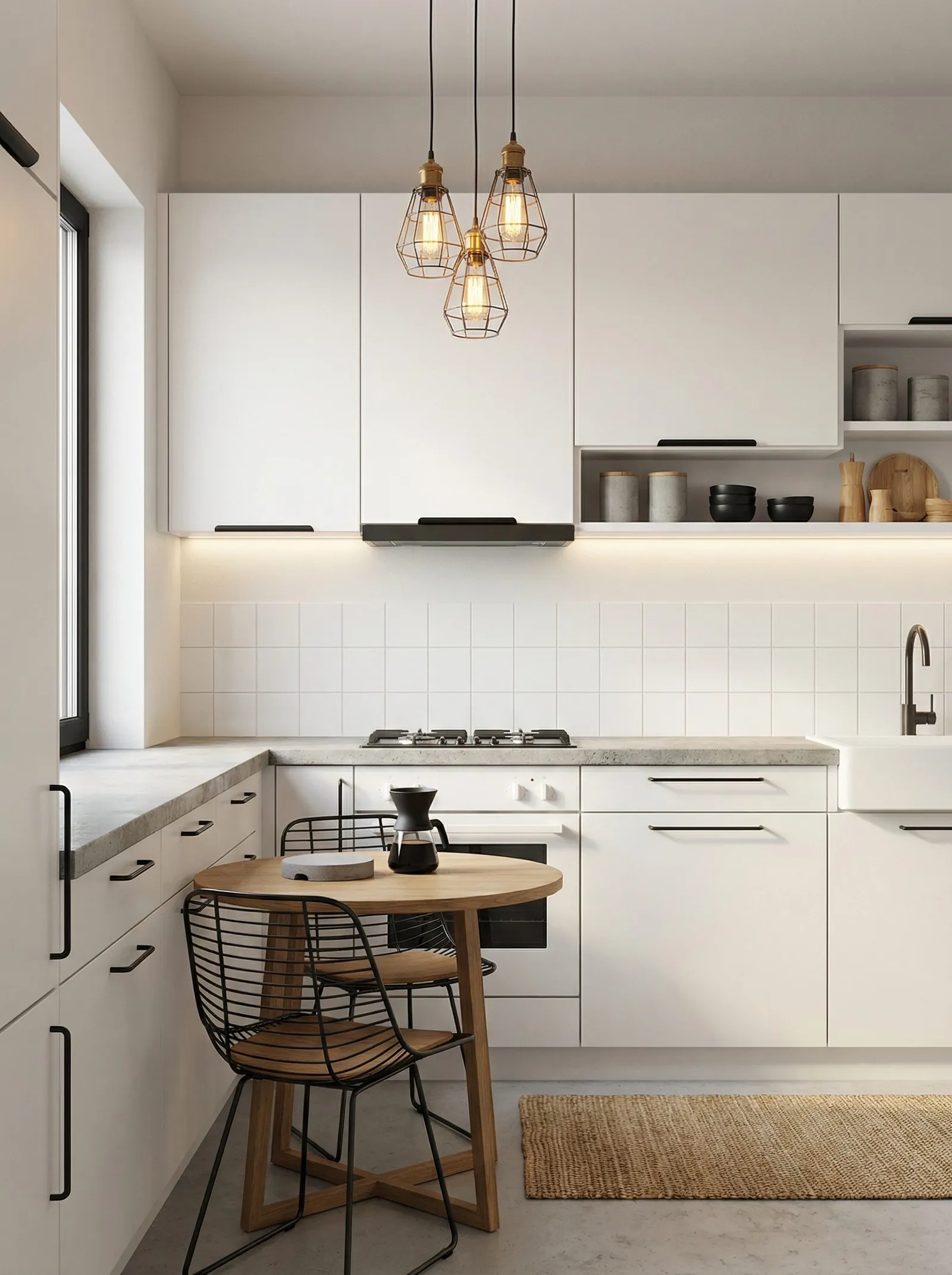
White and Cage Bulbs
All-white flat-slab doors, black bar handles, white square tile with grey grout, a concrete-look worktop and a black-framed window over a white belfast sink. Three caged filament bulbs cluster on black flex above a little round oak table with a black wire chair. This is the industrial-scandi hybrid and the cheapest to fake convincingly, because the white tile is already close to what you have, so the whole industrial read comes from black handles, black frames and the cage bulbs. It keeps the single window's light instead of eating it, which is the trade for being the least industrial of the five.
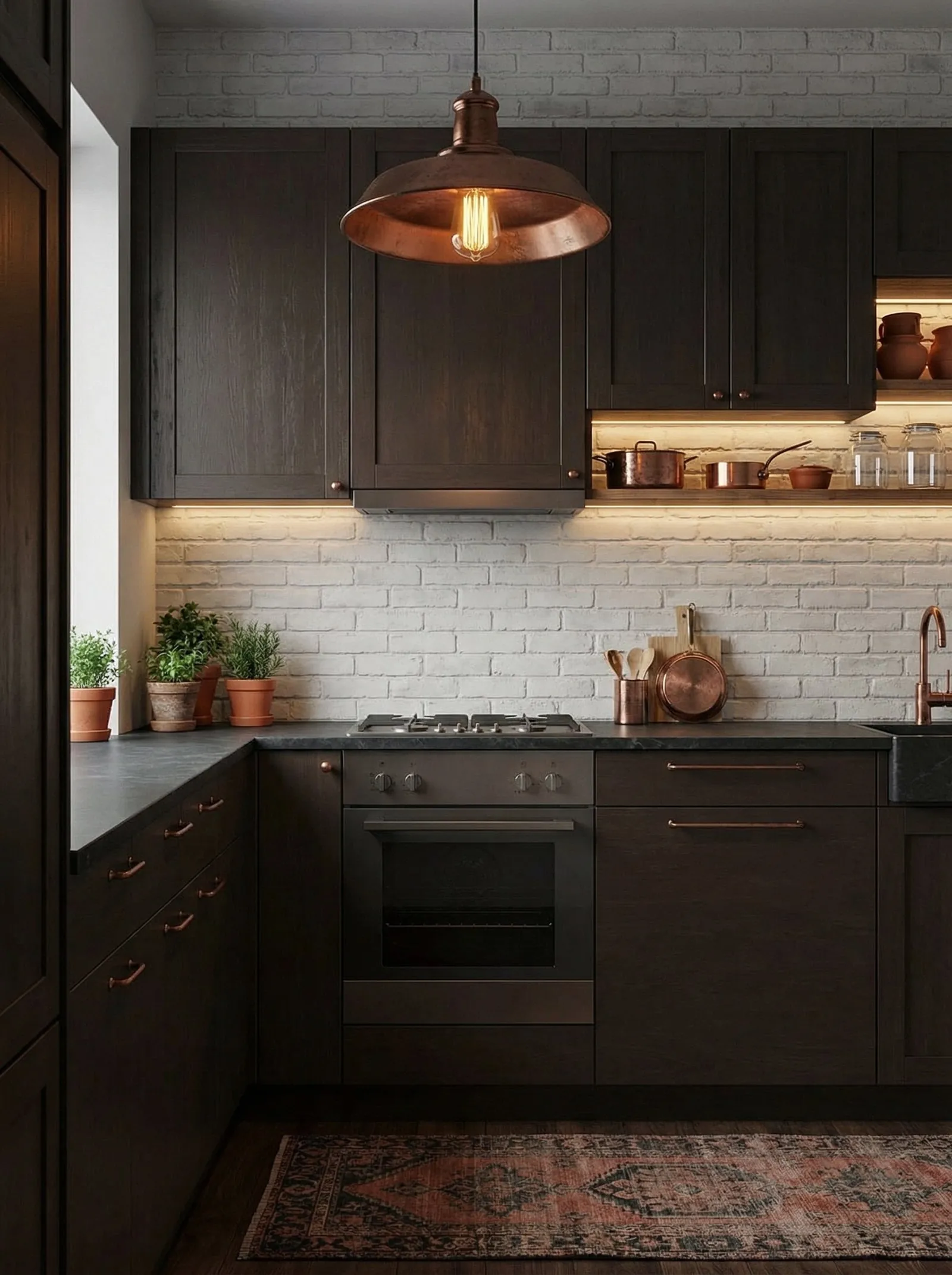
Dark Wood and Copper
Near-black shaker doors top and bottom with copper handles, a whitewashed brick splashback, a black soapstone worktop and an aged-copper dome with a filament bulb over the hob. Copper tap, copper pans and warm strip lighting under the shelf. This is a full trade job like the loft but warm instead of raw, dark timber and black stone softened by all that copper and a faded Persian runner. Handsome and the most expensive-feeling here, but dark wood down both walls of a small galley is a lot of dark, so it leans hard on the under-shelf lighting after about three in the afternoon.
See your own kitchen in Industrial style
Every render on this page is one real kitchen, redesigned. Point Inty at yours: it reads the layout from a single photo, then rebuilds it in Industrial and 200+ other styles. Your actual room, not a showroom.


Free to try. iPhone.
Questions
- Does an industrial kitchen need a loft or a big space?
- No. This is a small L-shaped galley and every version here still reads industrial. The trick is to scale the cues down, one brick or concrete surface instead of four, metal and worn wood, a filament or cage bulb for light. You do not need factory windows or a double-height ceiling, and forcing them into a normal galley looks staged. Steel and Red Brick gets there with one brick wall behind the hob, not a warehouse.
- How much does exposed brick actually cost?
- It depends how you get it. Hacking the plaster off to find real brick is messy, dusty and usually a trade, and there is no promise the brick behind is worth showing. Brick slips glued onto the existing wall fake it over a weekend, which is what a splashback like the one in Steel and Red Brick would really be. If you already have brick, whitewashing it the way Dark Wood and Copper does is a Saturday.
- What is the cheapest change that actually reads industrial?
- Dark paint on the door fronts, metal bar handles, one open metal shelf and a filament bulb on a cord. Worn Paint, Bare Bulb is almost entirely that, patina and a single bulb, with no trade involved. White and Cage Bulbs gets most of its industrial read from black handles and three caged bulbs over tile you basically already have. Handles and a bulb move the room more than a new worktop does, and cost a fraction of one.
- Will a dark industrial kitchen feel smaller?
- In a one-window galley, yes, and you should plan for it. Charcoal Utility and Dark Wood and Copper both run dark surfaces down both walls, and both lean on strip lighting well before evening because the single window on the left cannot keep up. If your kitchen is small and you want the look without the gloom, White and Cage Bulbs keeps pale tile and white doors and lets the black metal do the talking instead of the paint.
- Is an industrial kitchen expensive?
- It ranges more than the photos suggest. Dark paint, handles, an open shelf and a filament bulb is a cheap weekend, the Worn Paint, Bare Bulb end. The costly versions are real building work, brick, a concrete-look worktop, black-metal fronts and a polished concrete floor, as in Steel and Red Brick. Before you commit to any of it, it is worth taking one photo of your kitchen into Inty, which reads the layout from that single photo and returns it restyled so you judge your own window and proportions. It starts with a 3-day free trial and needs an account, then it is paid, and the image is a visualization to help you decide, not a guarantee of the finished room.
- What is the difference between an industrial and a rustic kitchen?
- They overlap, and two versions here sit right on the line. Worn Paint, Bare Bulb is really the rustic end, aged paint, a wicker basket, a lace curtain and collected jars, soft and cottage-ish. Dark Wood and Copper is industrial-rustic, the hard black stone and metal of industrial warmed up with timber, whitewashed brick and copper. Pure industrial, like Charcoal Utility, is colder and harder, concrete and exposed ducting with nothing cosy about it. Rustic is about age and warmth, industrial is about raw materials.