 Inty AI
Small Rooms: 7 Moves That Buy Back Space
None of these add a square metre. They change what the room looks like it has, which is the only lever a small room gives you.
Advice about small rooms is nearly always the same three words — light, mirrors, minimalism — and nearly always demonstrated in a room that was never small. These seven come from real rooms: a bathroom with a plastic tub and a socket on the tile, a bedroom with one nightstand, a galley kitchen with a window at one end. Each one is a specific move you can point at, not a mood, and two of them are about deliberately doing the opposite of what small-room advice usually says.
01
Get everything off the floor
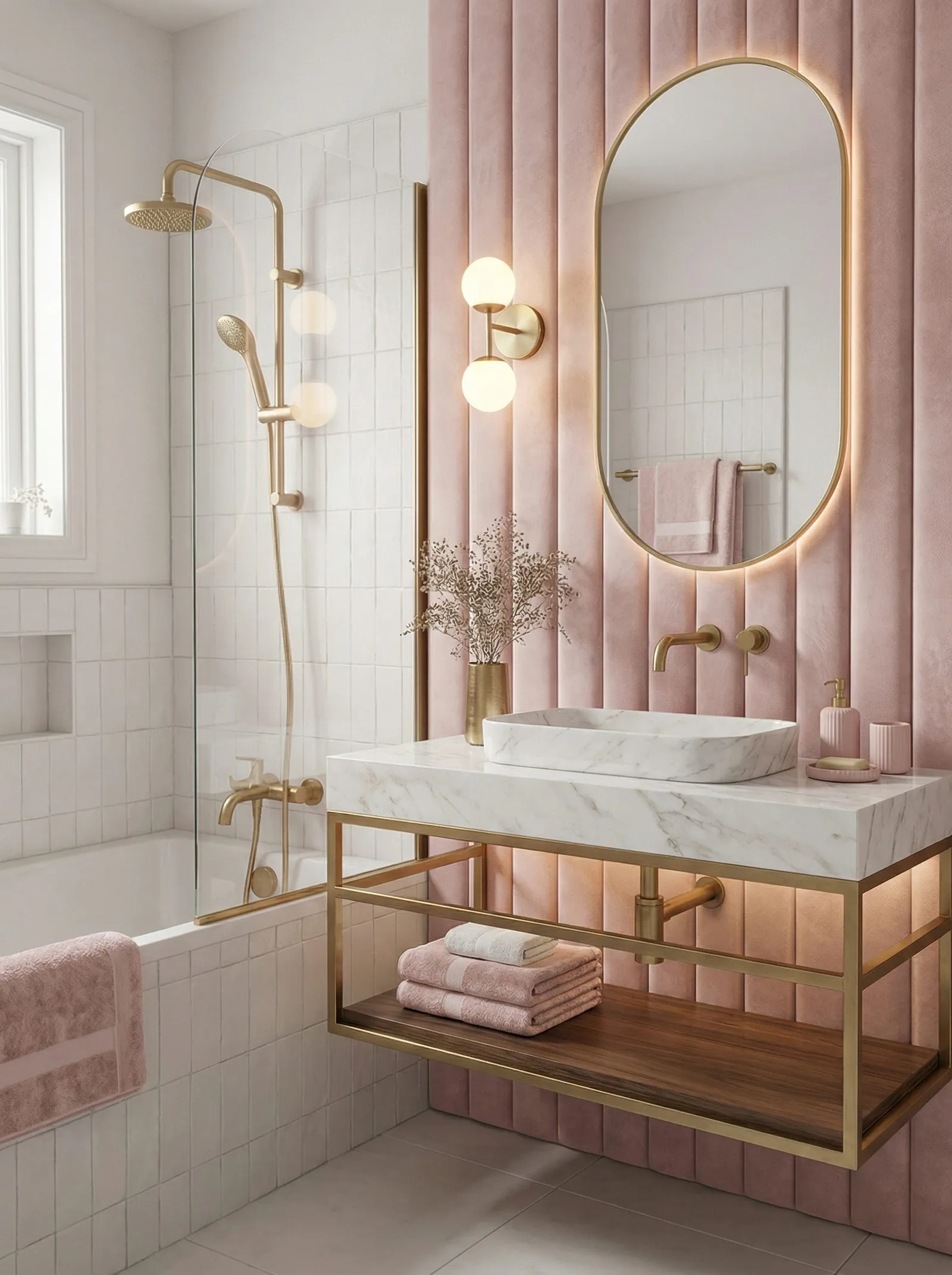
A vanity trimmed back to a brass frame holding a slab of marble, a walnut shelf under it, and nothing touching the floor at all. Its own page names this as the trick, and it is the single most reliable move in a small bathroom: visible floor reads as space, and a floating vanity gives you back a strip of it that a plinth eats. The same logic applies to a shelf instead of a cabinet, and to a wall-hung anything.
Glam bathroom →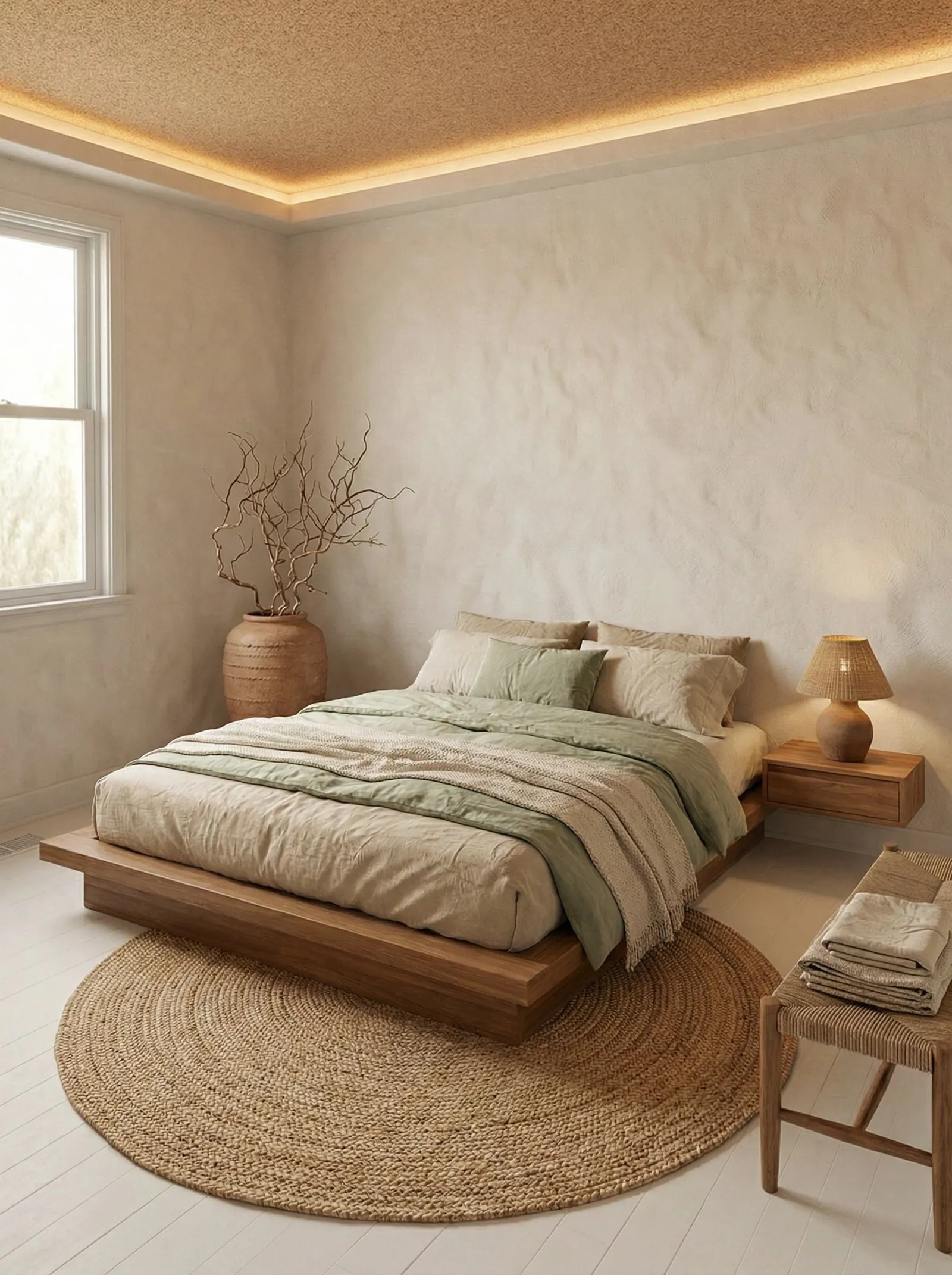
02
Lower the furniture, raise the wall
A low walnut platform with a lip wide enough to sit on, one floating nightstand carrying a single small lamp, a round jute rug. Dropping the height of the bed adds wall above it, and wall above the bed is what a small bedroom reads as headroom. The floating nightstand matters for the same reason as the vanity above: the floor stays continuous under it instead of being chopped into pieces.
Japandi bedroom →See any of this on your own room
Every picture on this page is a real bedroom, redesigned from one photo. Point Inty at yours and it keeps your layout — your window, your door, your radiator where they are.

Free to try. iPhone.
03
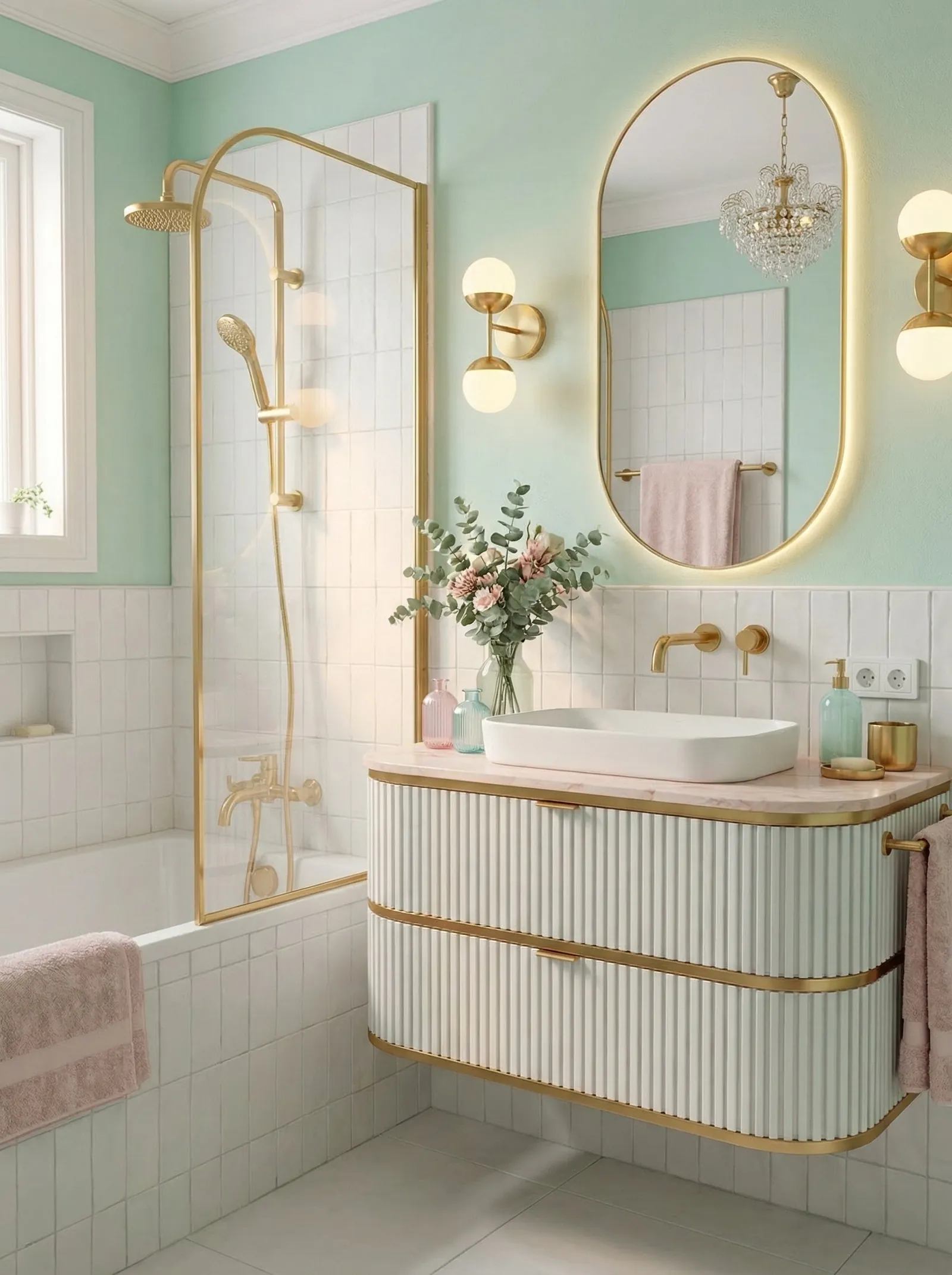
Colour can push a wall back, not just close it in
Mint walls, white tile, gold fittings, a blush marble counter. The caption on its page makes the point precisely: the pale green pushes the walls back rather than closing them in. This is the correction to the usual advice. A small room does not need white, it needs a pale colour, and a pale colour with some saturation in it does the job of white while looking like a decision rather than a default.
Art Deco bathroom →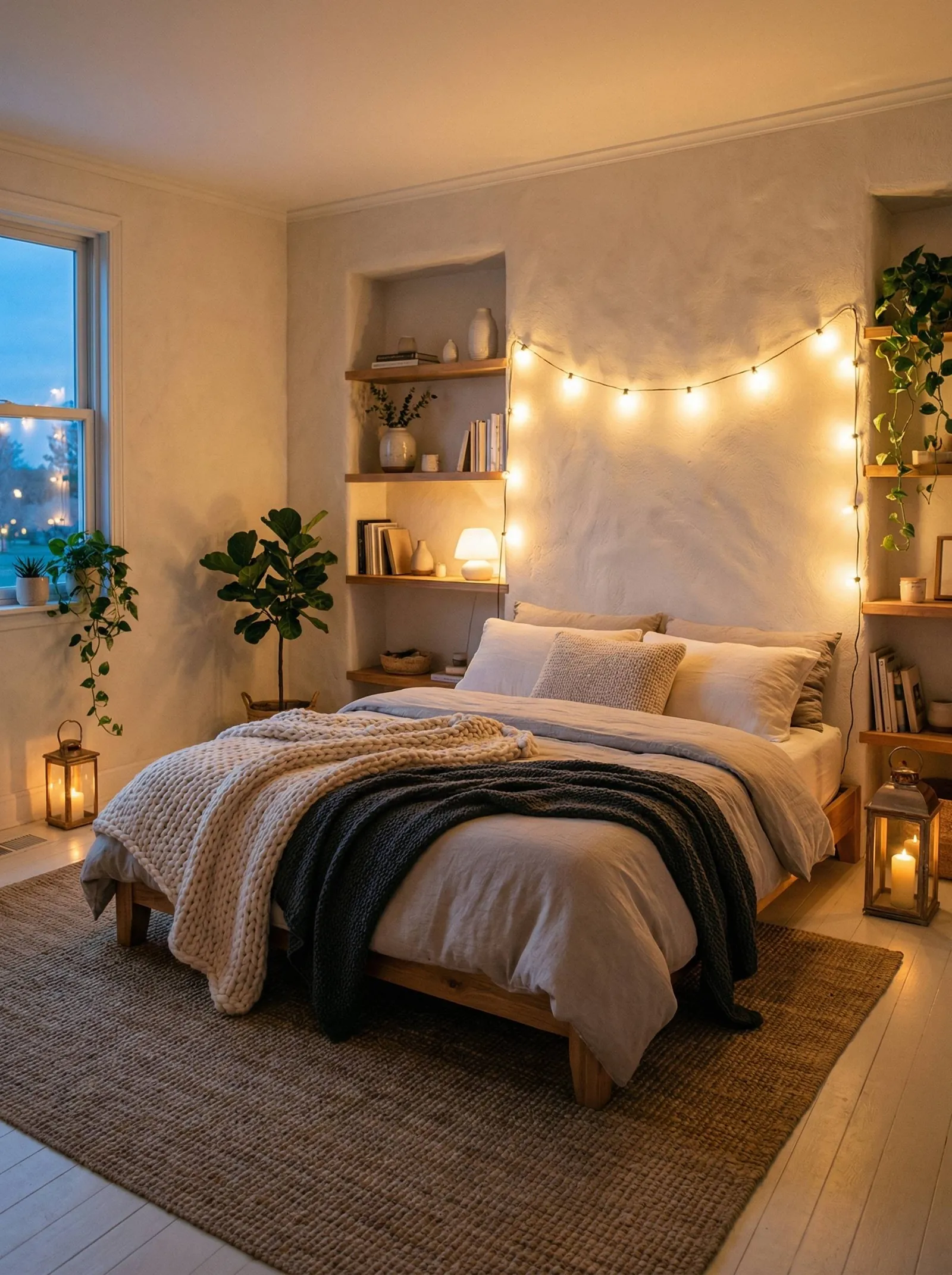
04
Put storage in the wall, not against it
Two plaster niches flank the bed, fitted with oak shelves, books and a small lamp, and no nightstand stands on the floor at all. This is the most expensive item on this page and the most effective: a recess gives you the surface without the footprint. In a room where a nightstand is the difference between walking past the bed and squeezing past it, that trade is worth the trade work.
Rustic bedroom →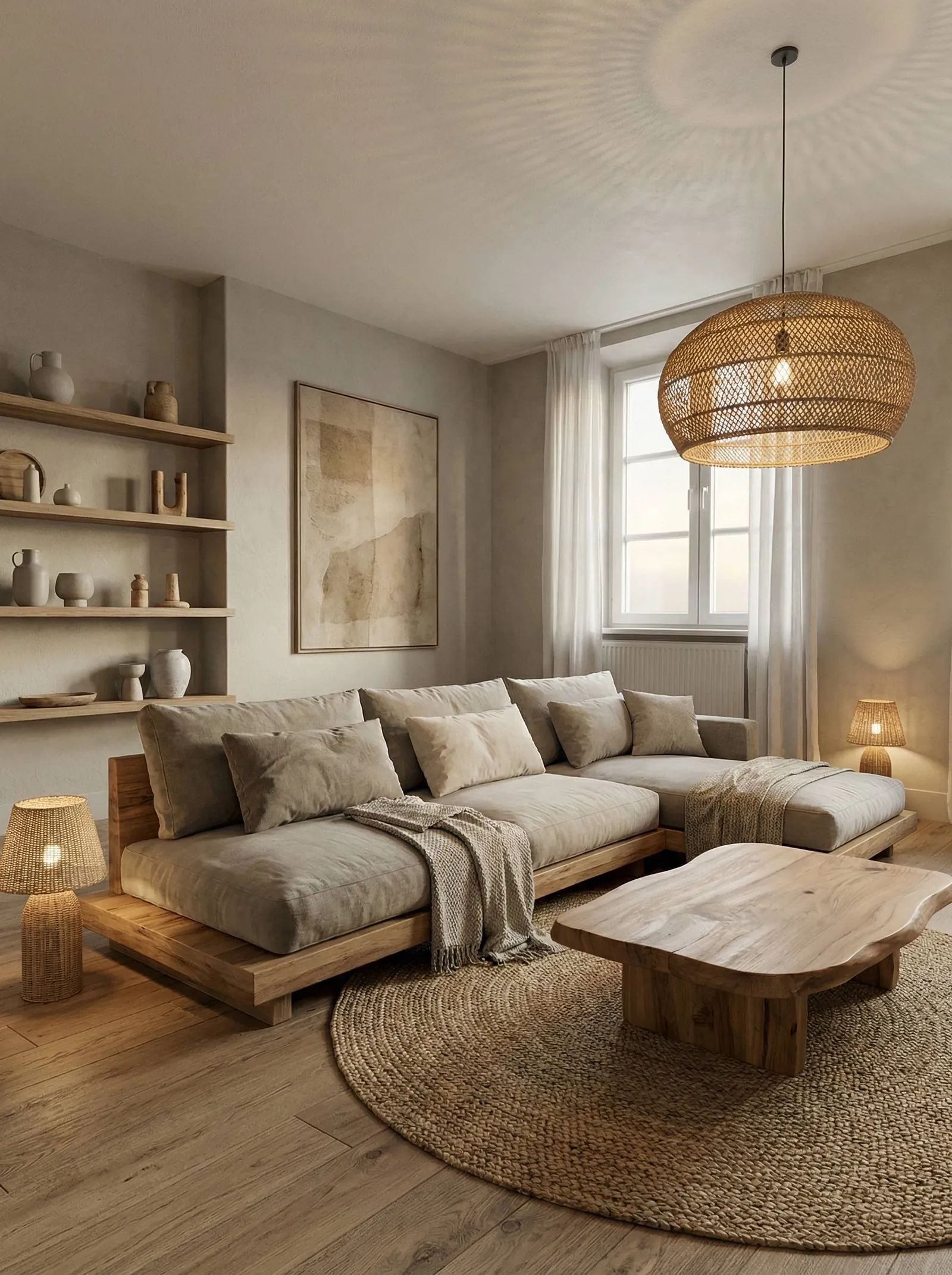
05
One large object beats several small ones
A low platform sectional in flax linen wrapping a live-edge slab on a round jute rug, with floating shelves in the alcove. The instinct in a small living room is to buy small furniture, and it backfires: five small pieces cut a room into five pieces. One low sectional and one table read as calm, and low seating leaves more wall visible above it, which is the same trick as the bedroom above applied to the room you sit in.
Wabi-Sabi living room →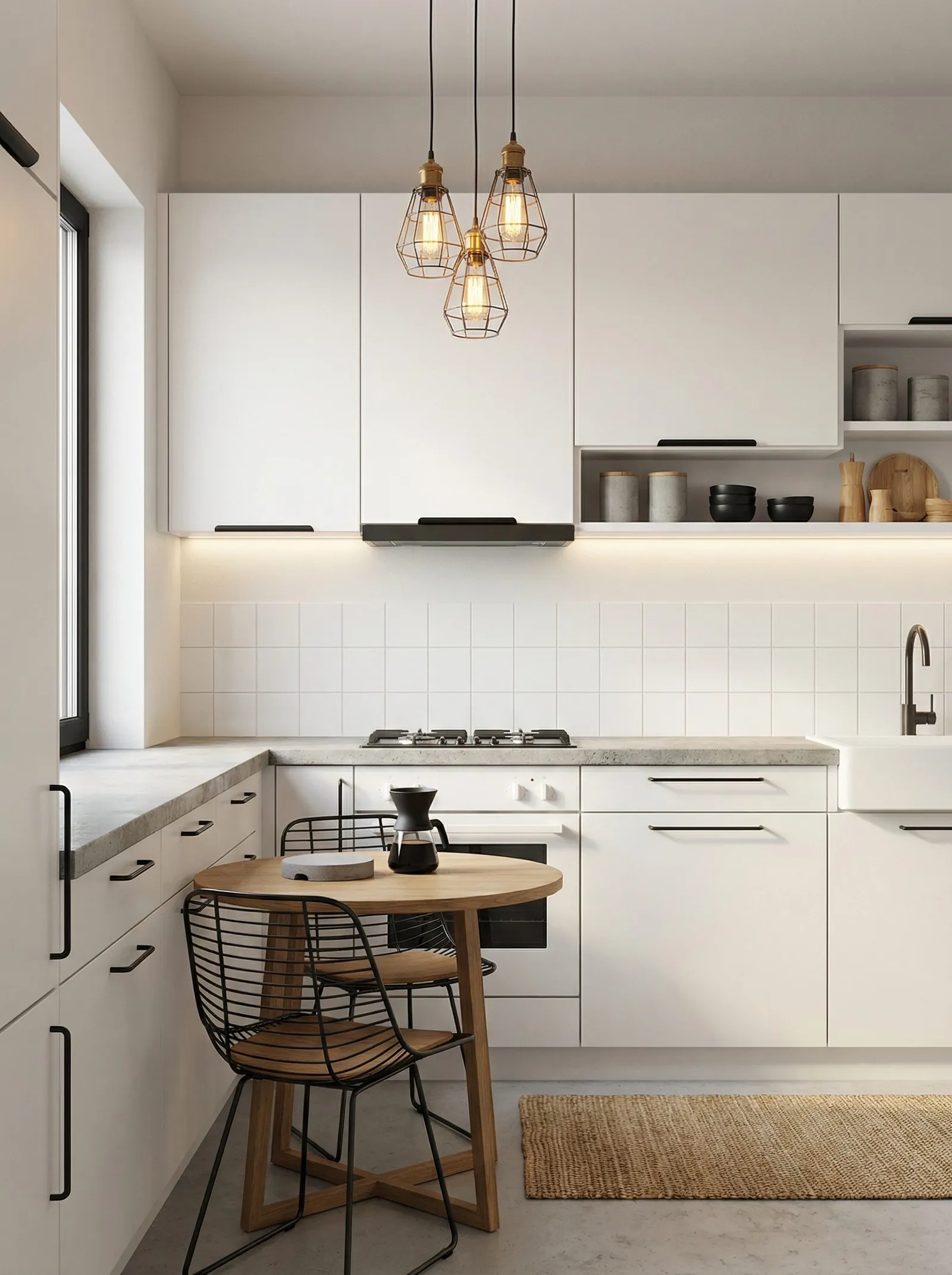
06
A galley wants brightness more than it wants warmth
All-white doors, white tile with grey grout, a concrete-look worktop, black bar handles and caged bulbs. Its page calls this the coldest of the nine and the cheapest to fake, since the tile is already there. In a narrow kitchen that trade is usually correct: warmth is what you want in a room you sit in, and a galley is a room you stand in for eleven minutes. Note the honest catch from that page — the round table parks in front of the oven door, and you will stop moving it.
Scandi kitchen →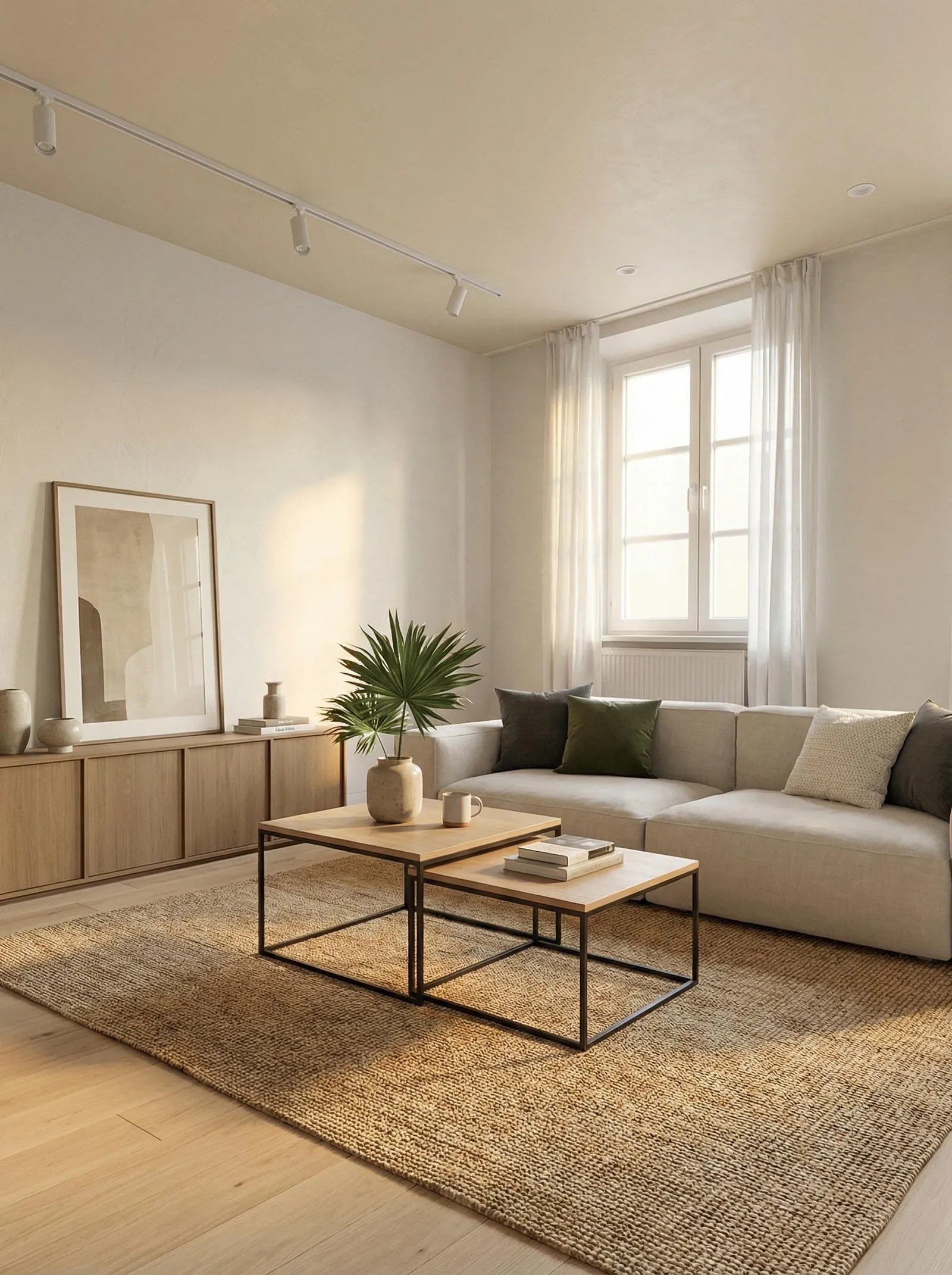
07
Push the seating into the corner the window makes
A greige linen sectional tucked into the corner under the window, nesting tables in front of it, low sideboards along the wall. Corners are the part of a small room people leave empty and then complain about, and a sectional that turns into one converts dead floor into seating. Nesting tables matter more than they look: two surfaces when you need them, one footprint the rest of the week.
Scandi living room →

Questions
- Does a small room have to be white?
- No, and the mint bathroom above is the argument. What a small room needs is a pale value, not an absence of colour — a soft green, a warm grey or a dusty blue all reflect nearly as much light as white while looking deliberate. The rule that actually holds is contrast: the fewer hard edges between wall, floor and furniture, the bigger the room reads.
- Do dark colours always shrink a small room?
- They close it in, which is not the same as ruining it. A small room painted dark stops pretending to be big and becomes a deliberate cave, and in a bedroom that can be the better outcome. The version that goes wrong is dark walls with one bright ceiling light. If you go dark, budget for several small warm lamps.
- Are mirrors actually worth it?
- One large mirror opposite or beside a window, yes. Several small mirrors, no — they read as decoration rather than depth. The bathroom above gets more out of the floating vanity than it would from another mirror, which is the general rule: floor beats glass.
- What is the most expensive move here, and can I skip it?
- The plaster alcoves, and yes. It is the only item on this page that needs a trade. The cheap version of the same idea is a wall-mounted shelf beside the bed instead of a nightstand: you lose the storage underneath and keep the floor, which is the part that was doing the work.
- Will Inty show these on my own small room?
- It works from a photo of your room and keeps your layout, so the result reflects your actual proportions rather than a showroom. It is a visualization rather than a guarantee, and it will occasionally give a small room a metre it does not have — the layout is the part to check with a tape measure, the palette and materials are the part that transfers.
Your room, before you spend anything
One photo in, your actual room out — in this style or any of 200+ others. Cheaper than discovering you hate terracotta after two tins and a weekend.
Free to try. iPhone.