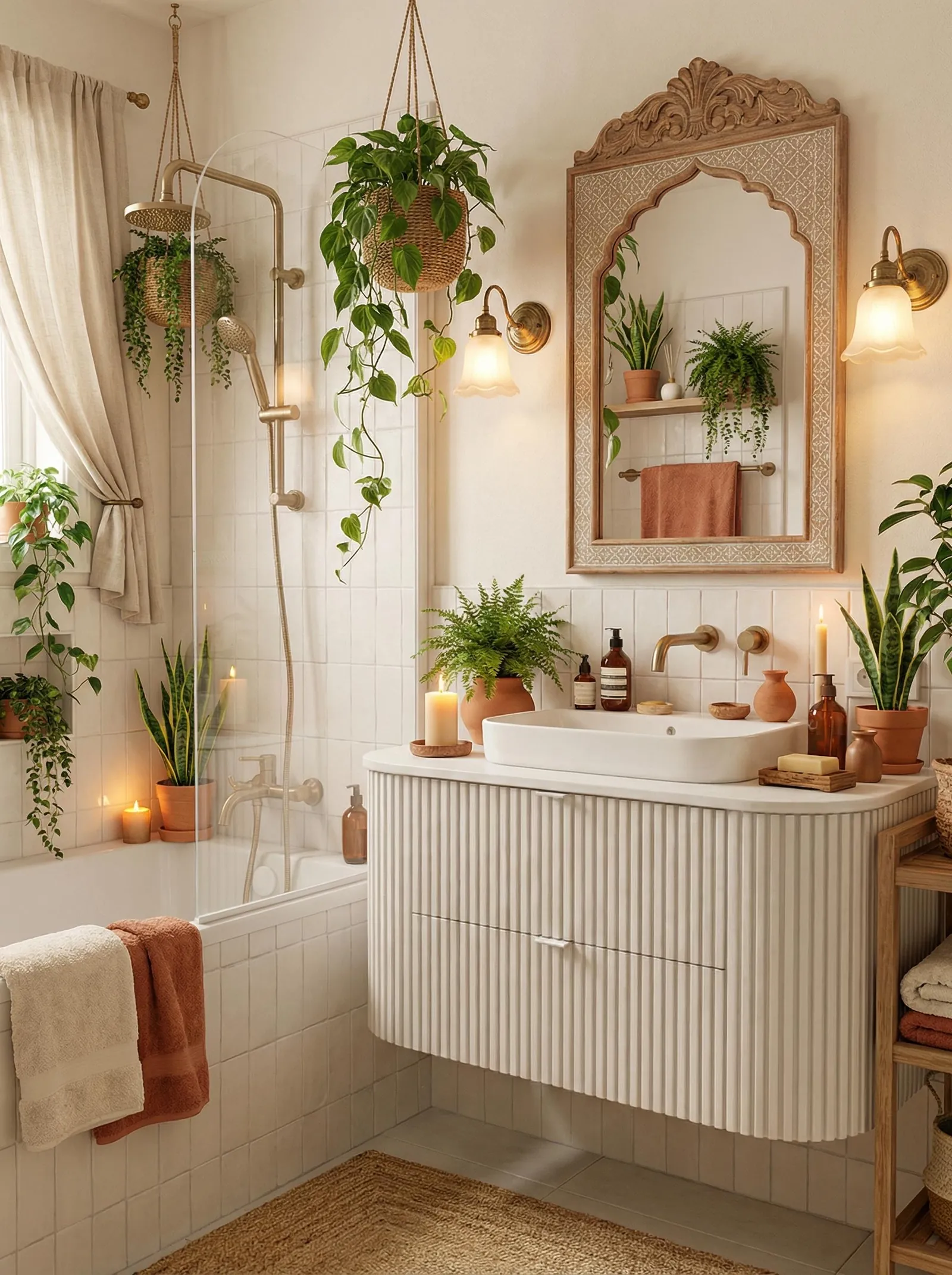
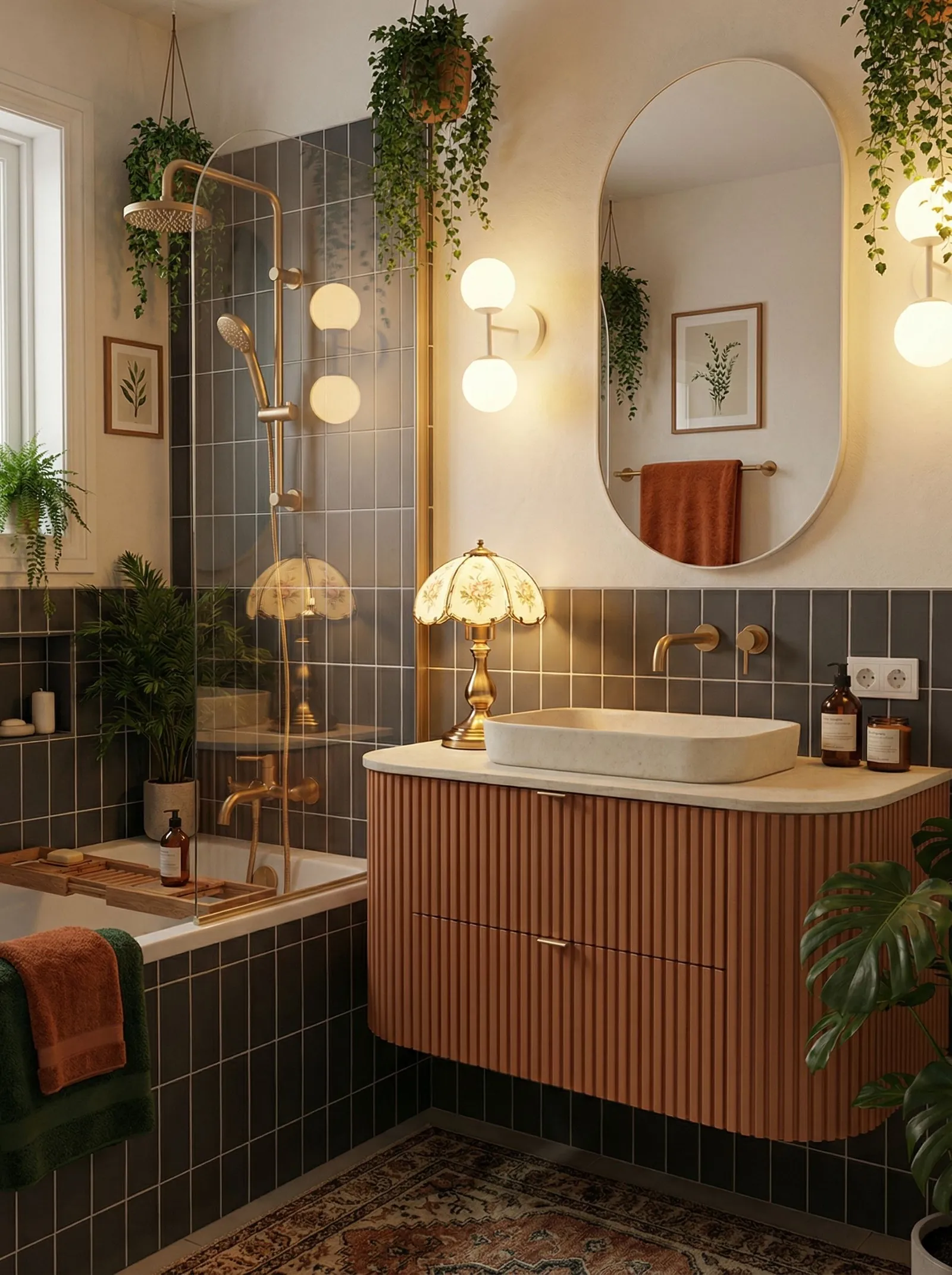
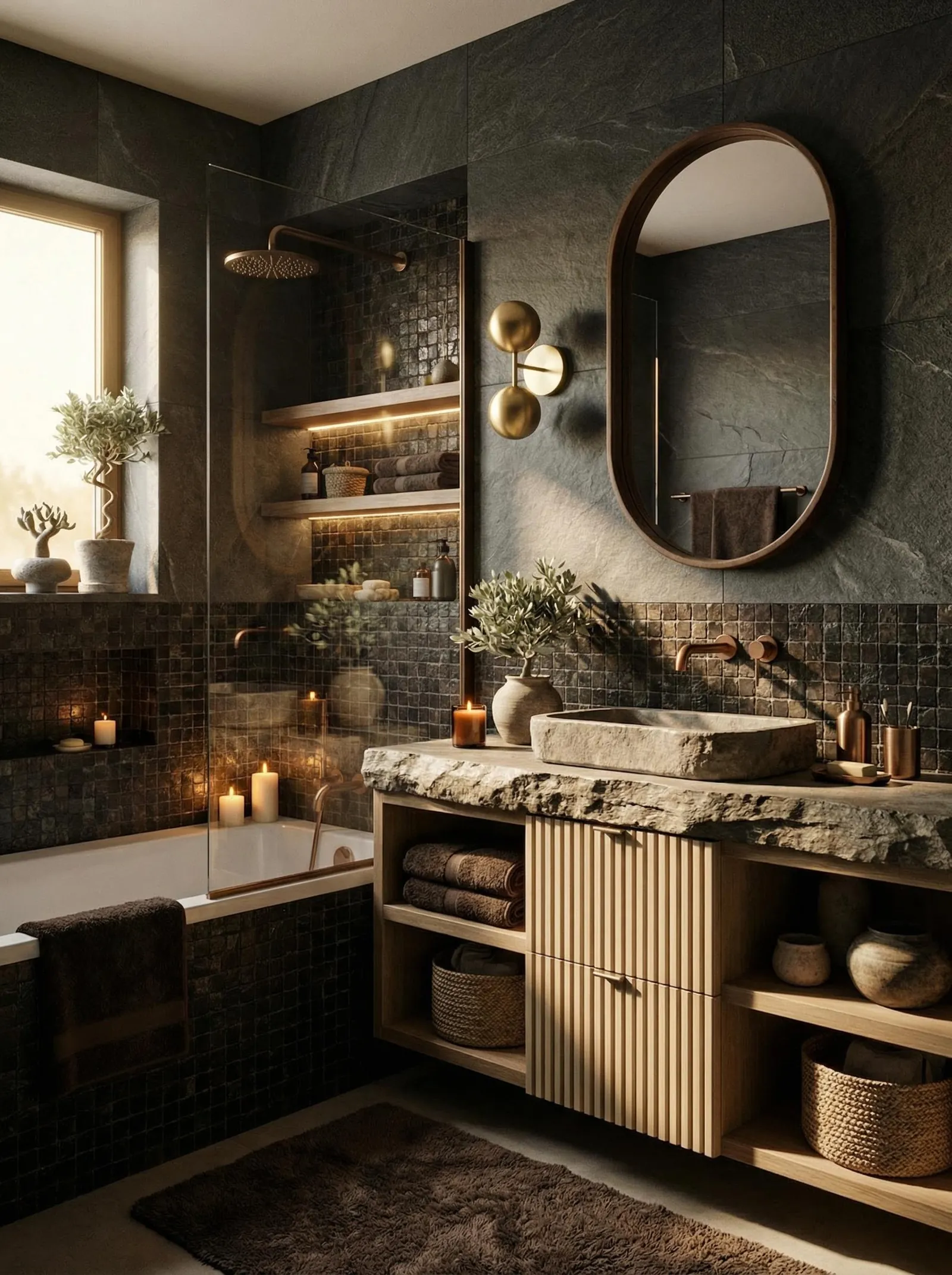
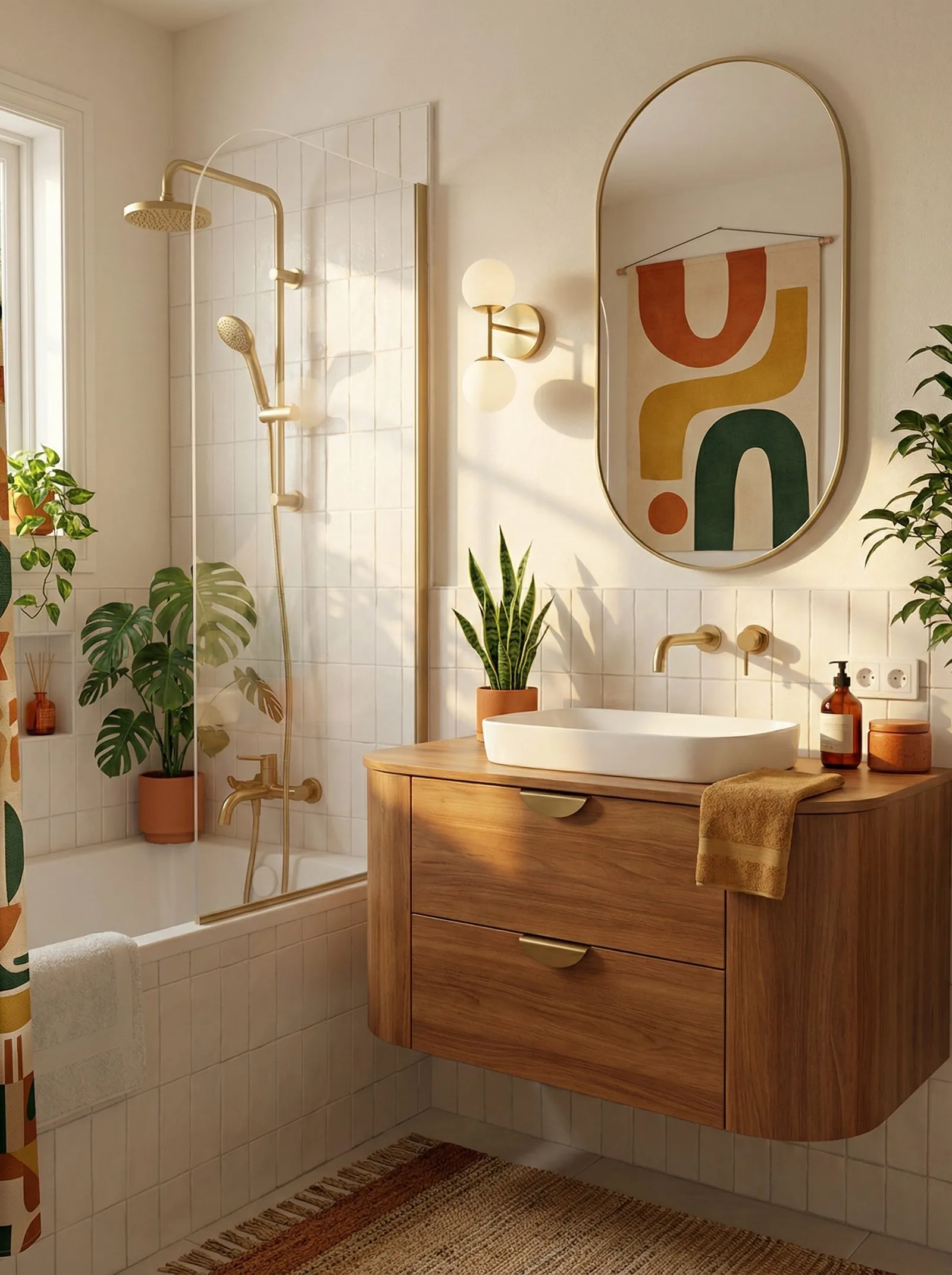
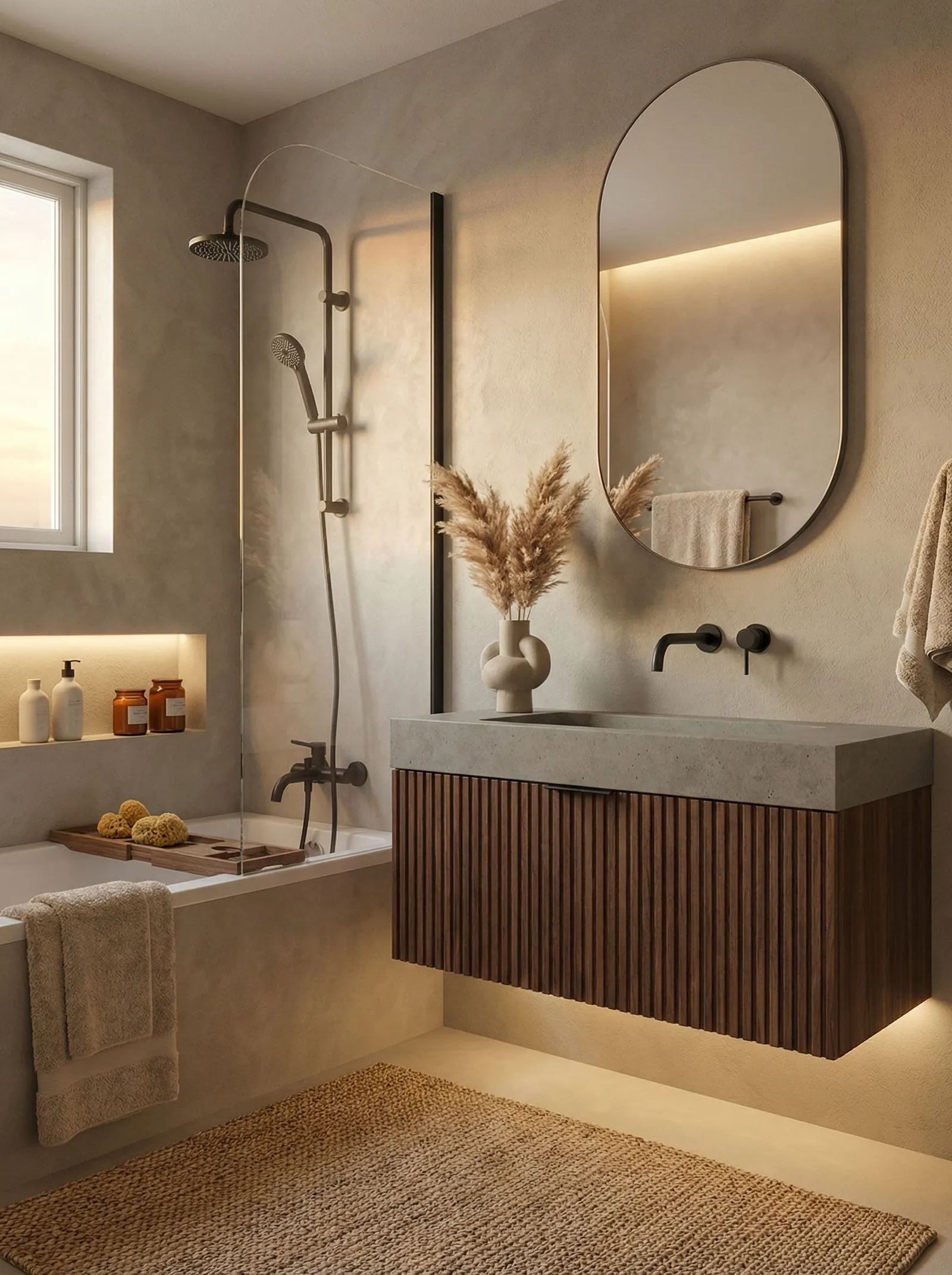
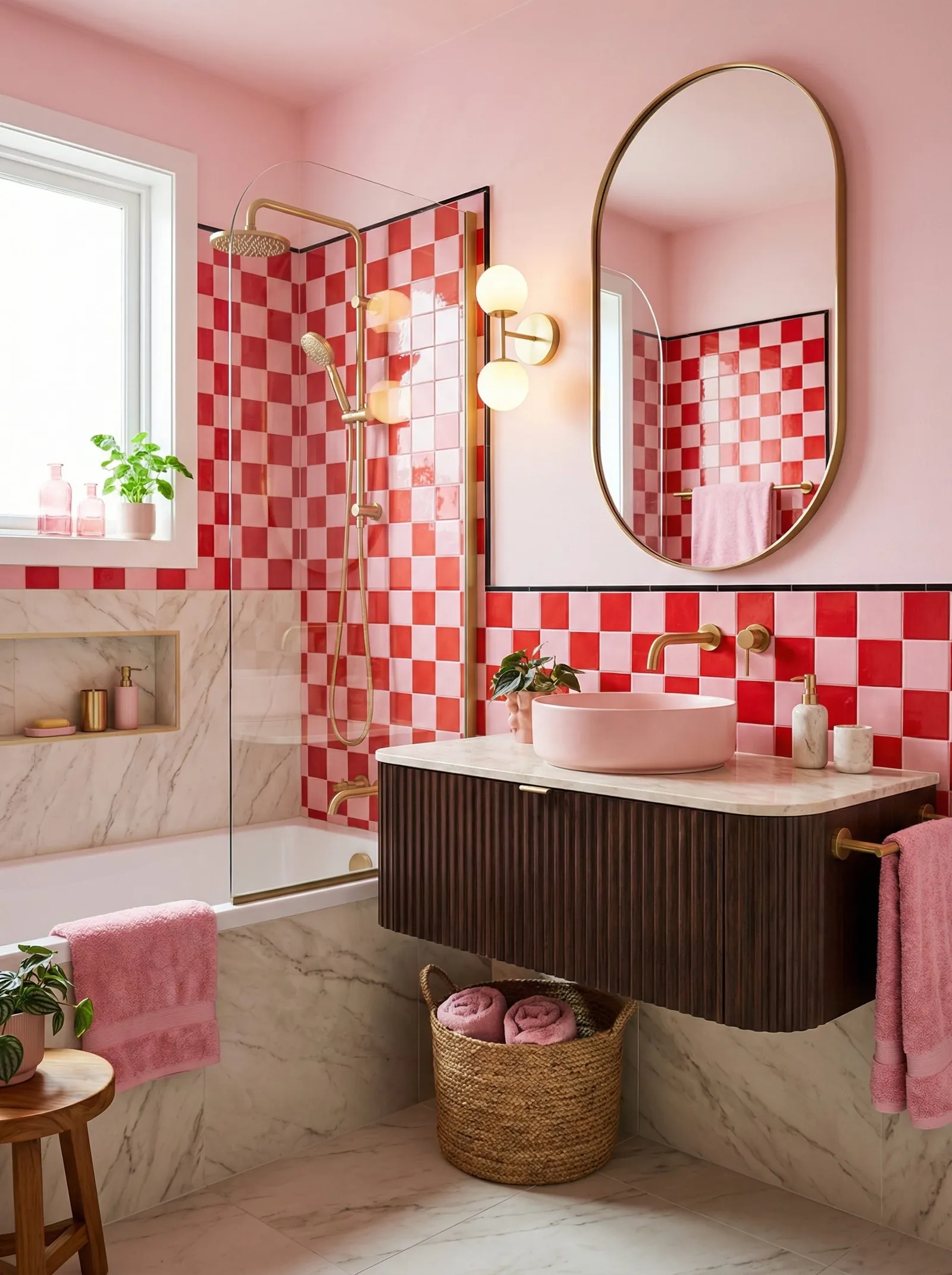
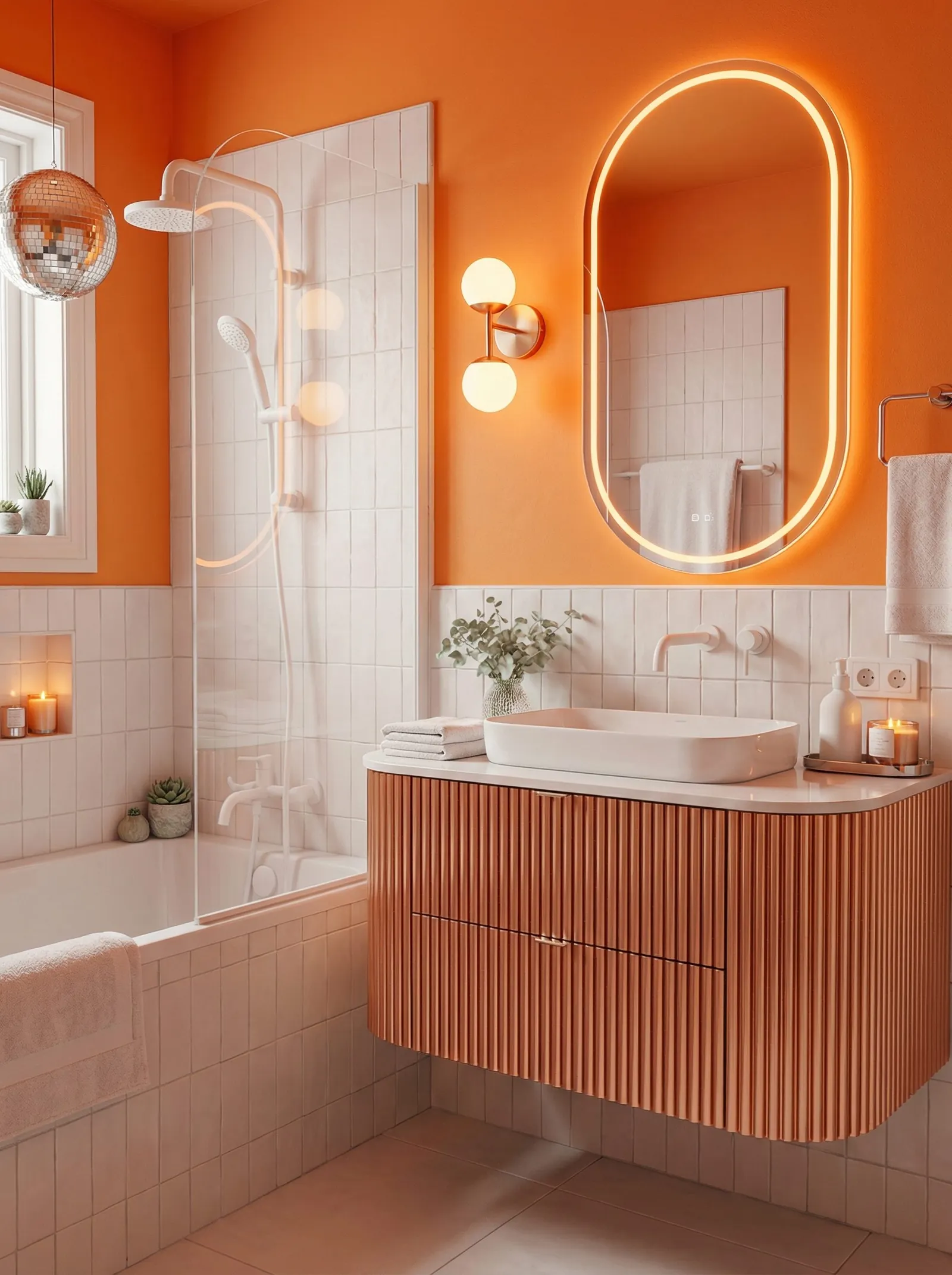
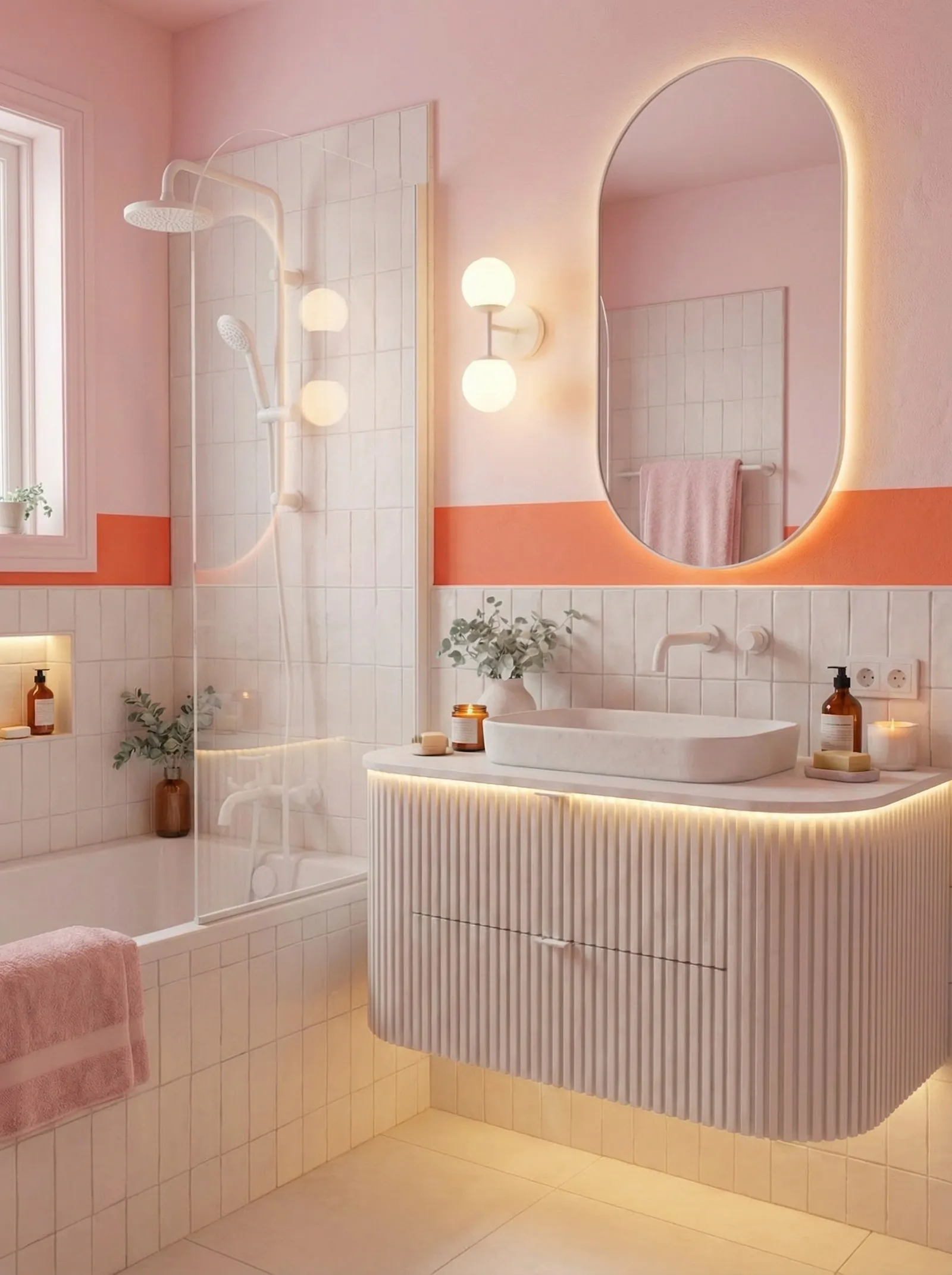
Bathroom Ideas: 65 Versions of a Bathroom Nobody Gutted

The tub, the tile and the laminate vanity stay put in all 65 of them. Only the 23 styles argue.

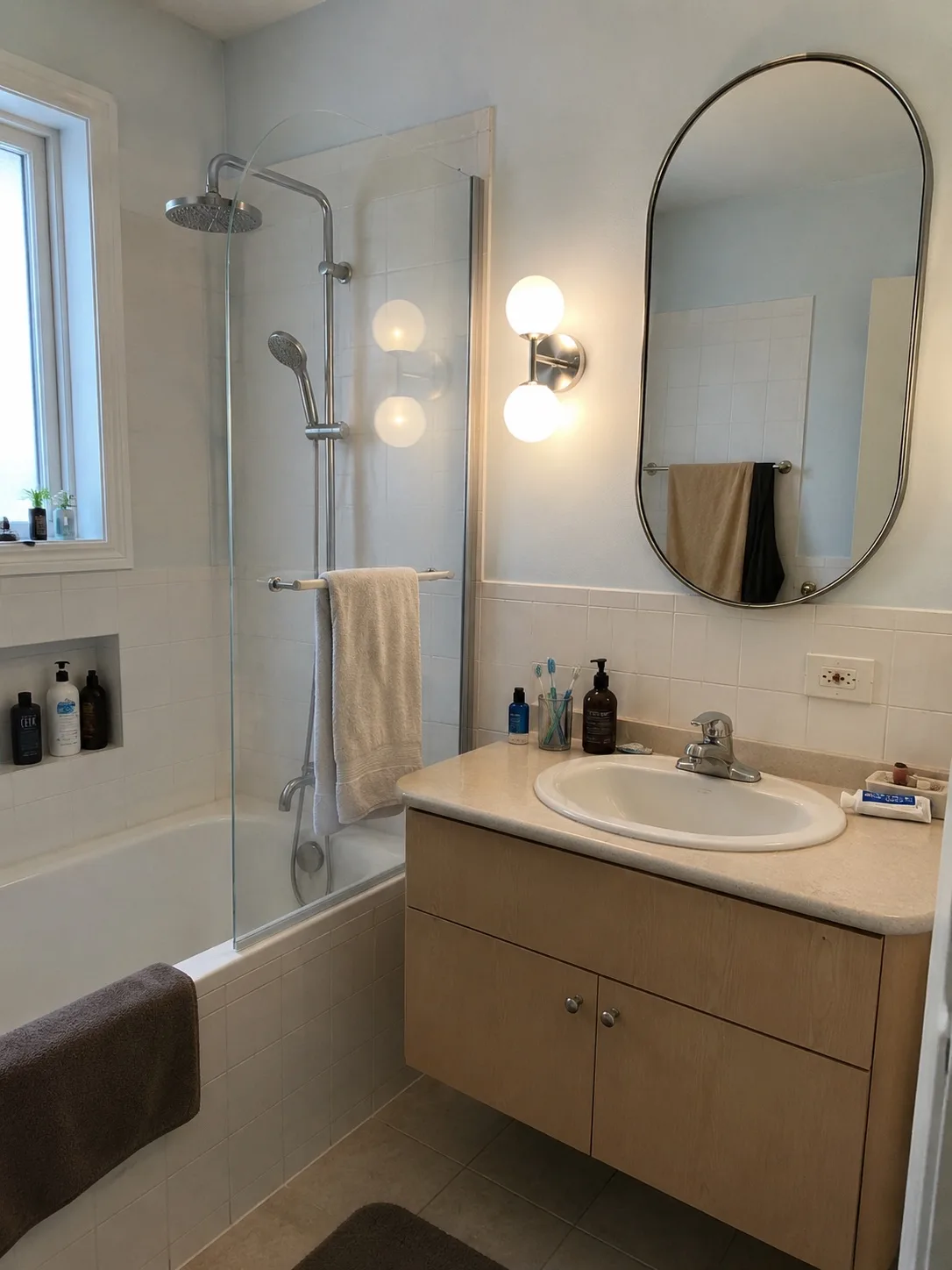
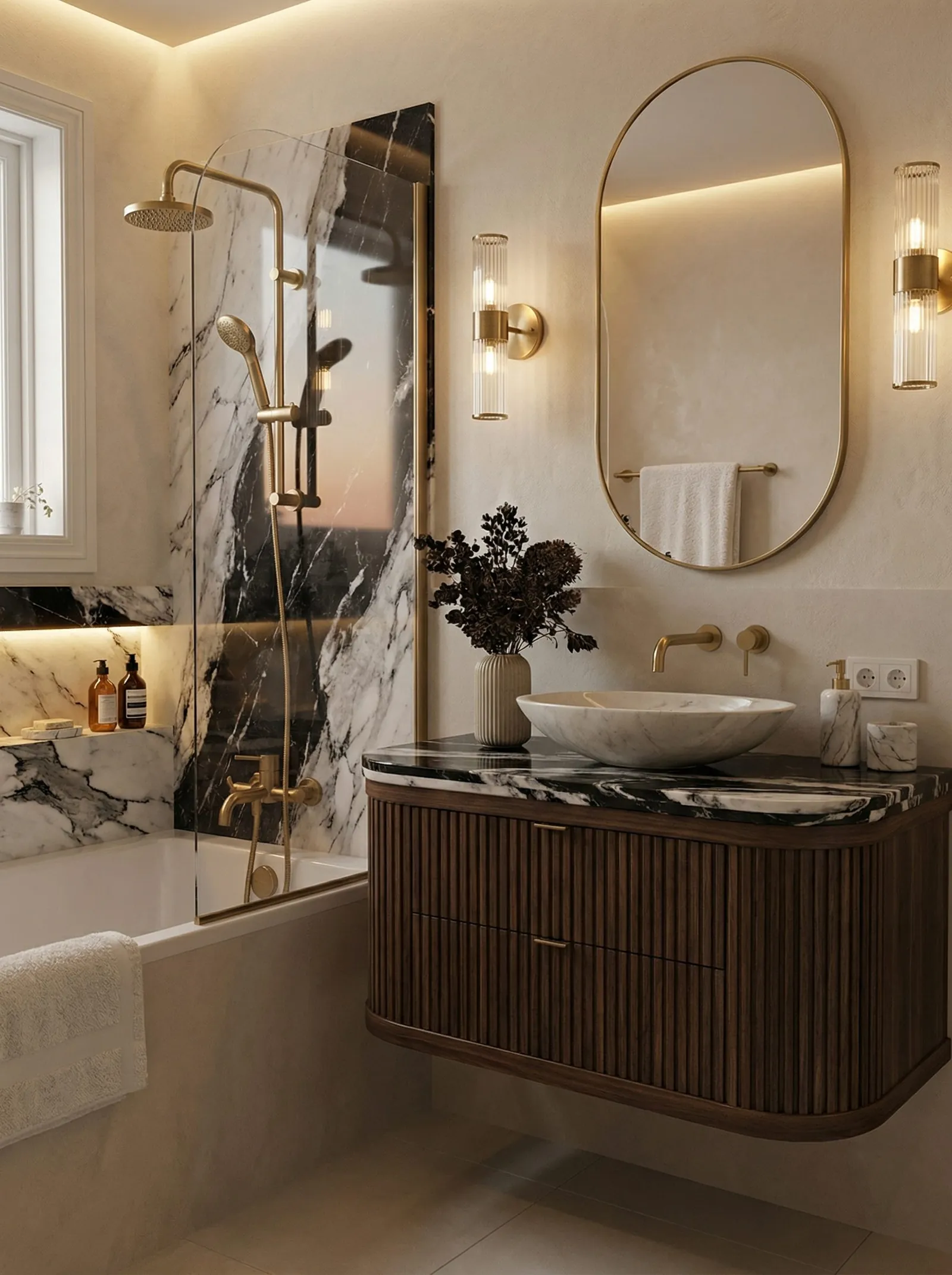
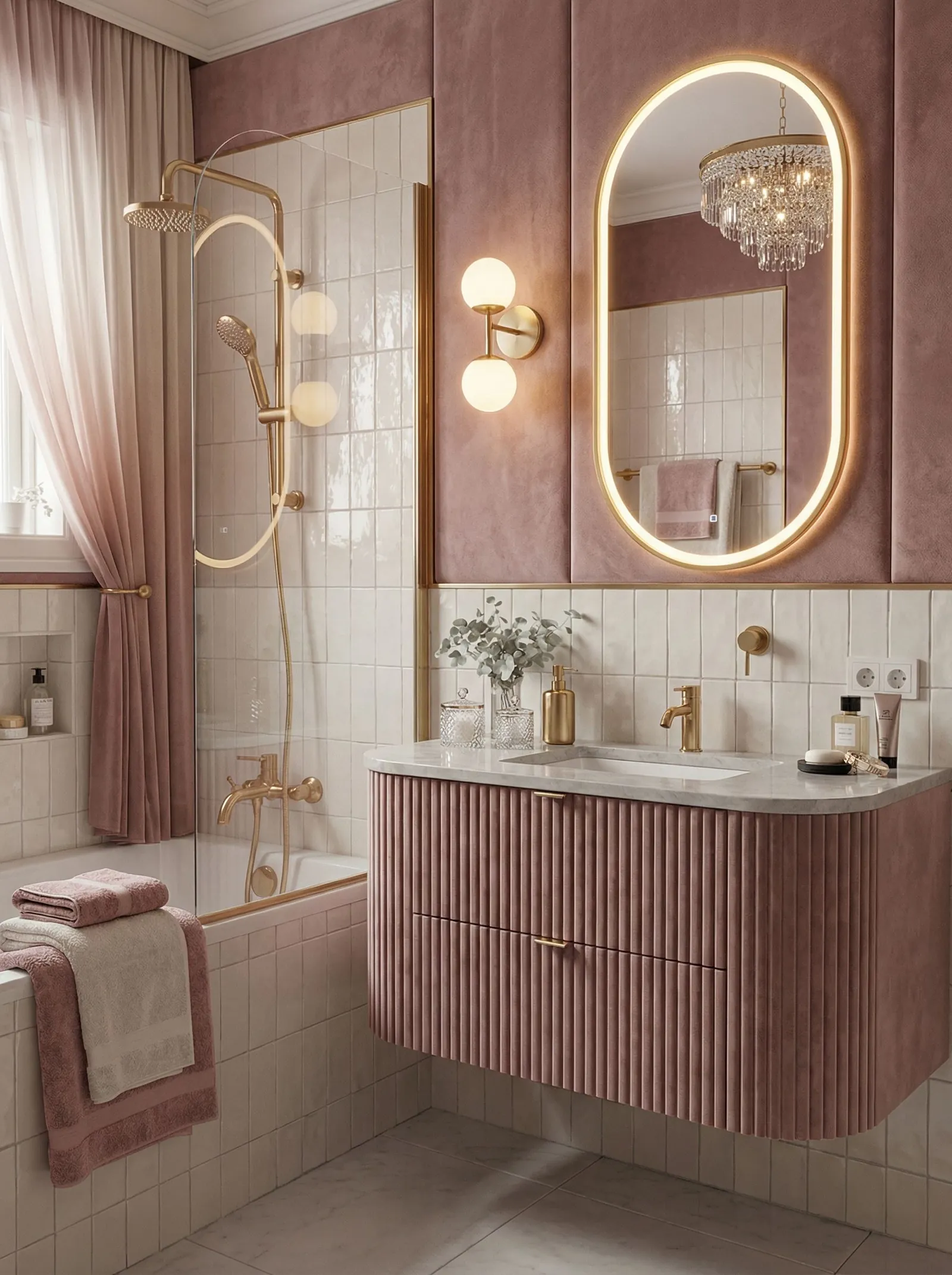
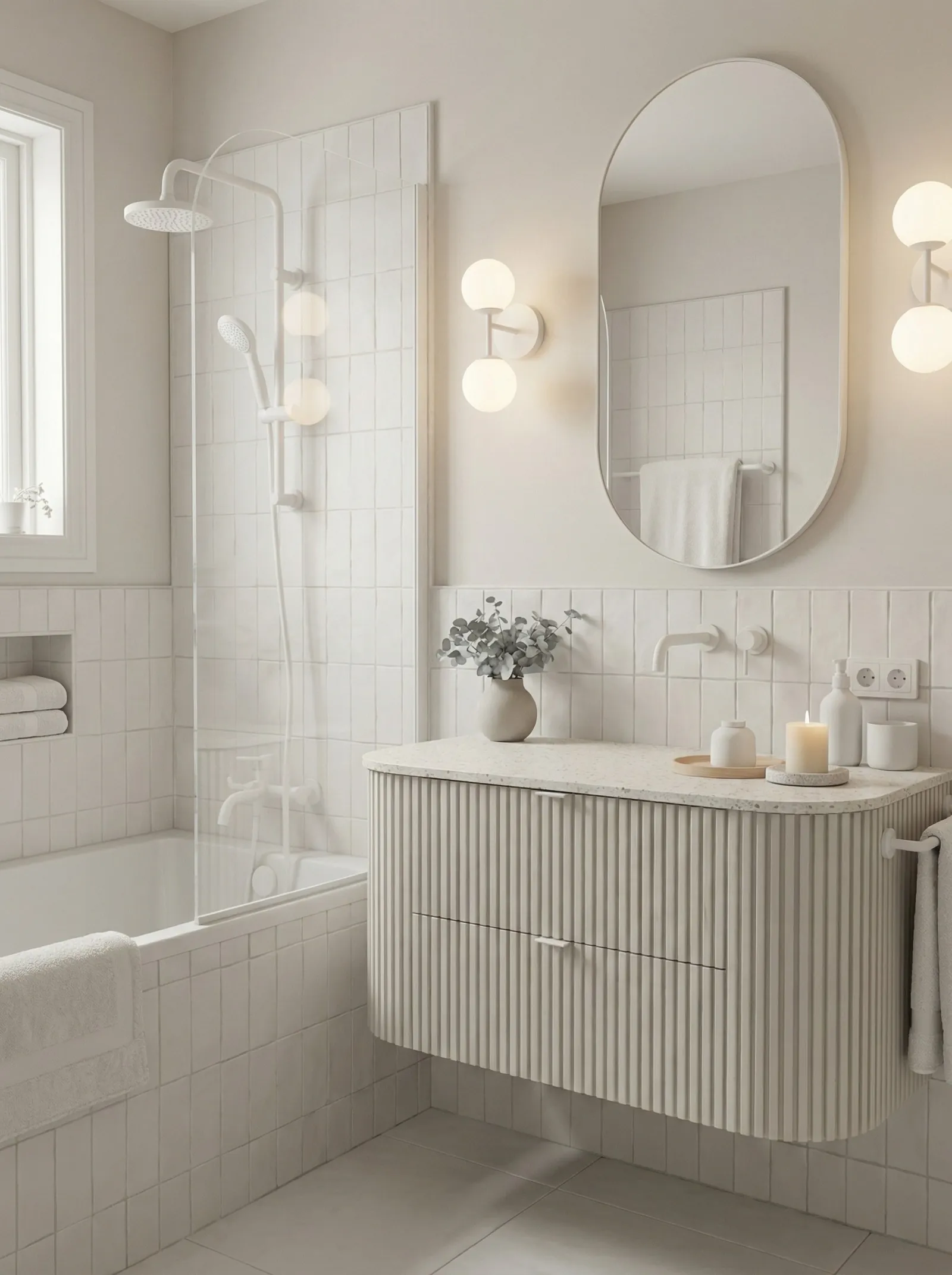
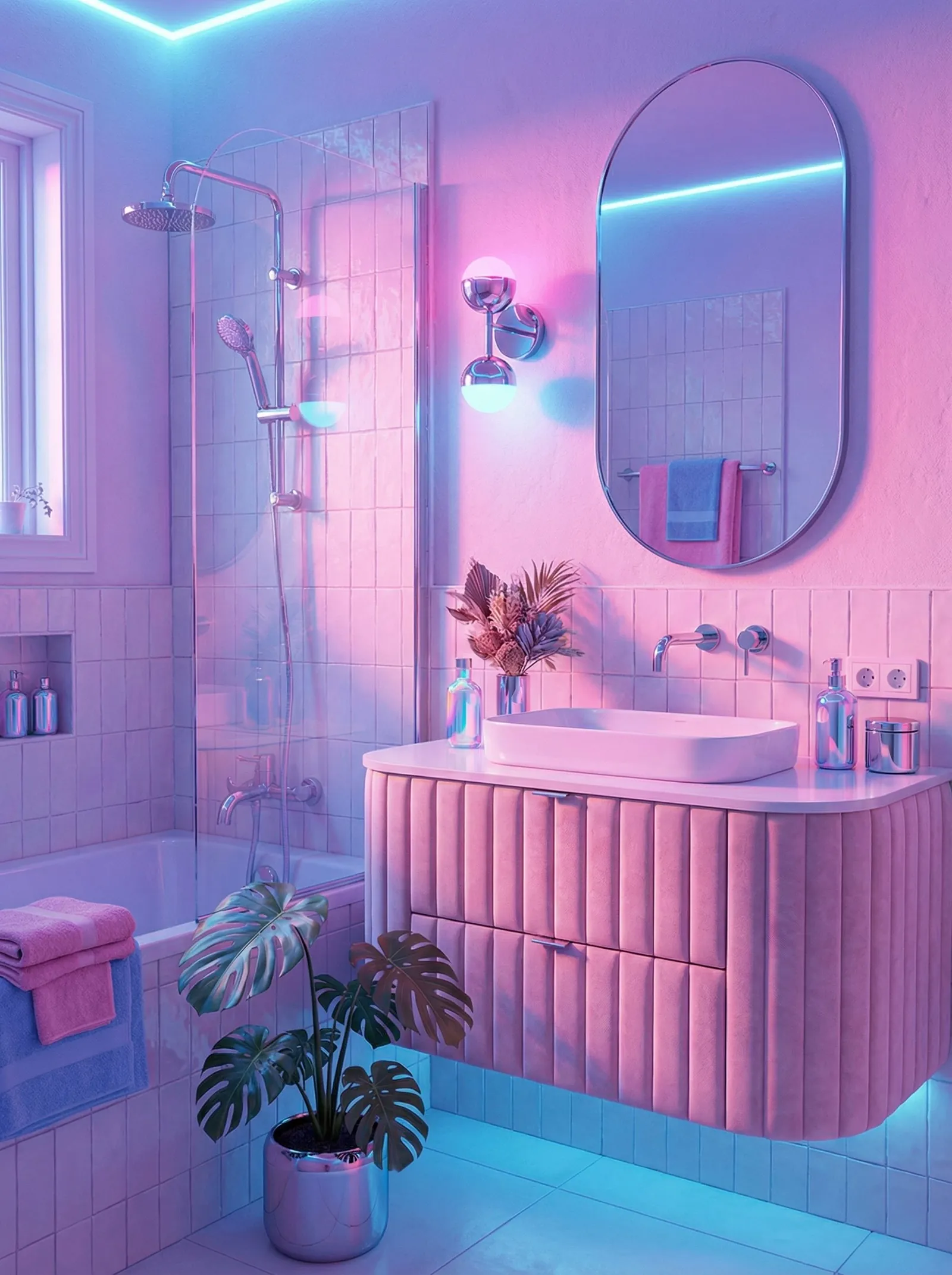
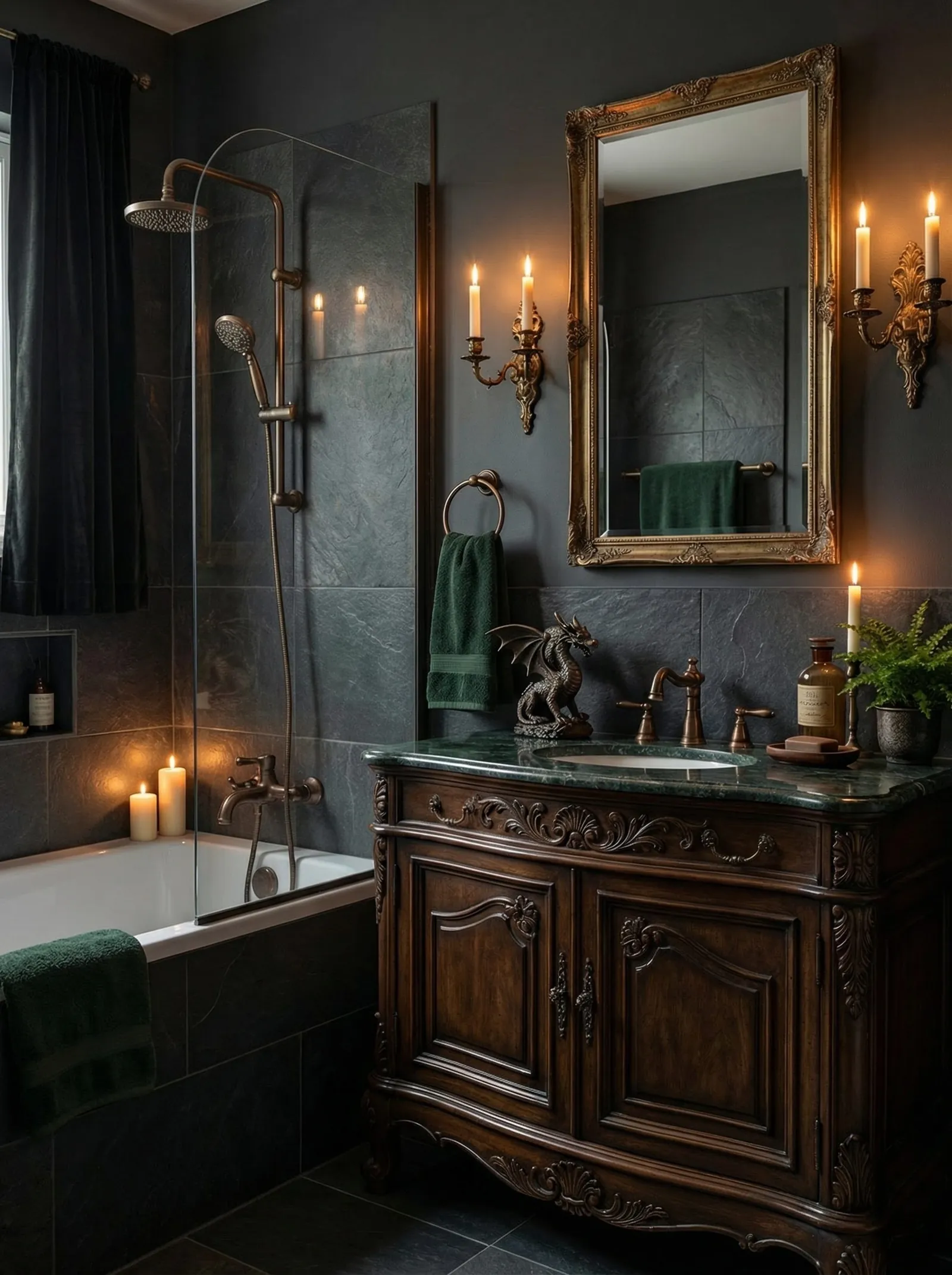
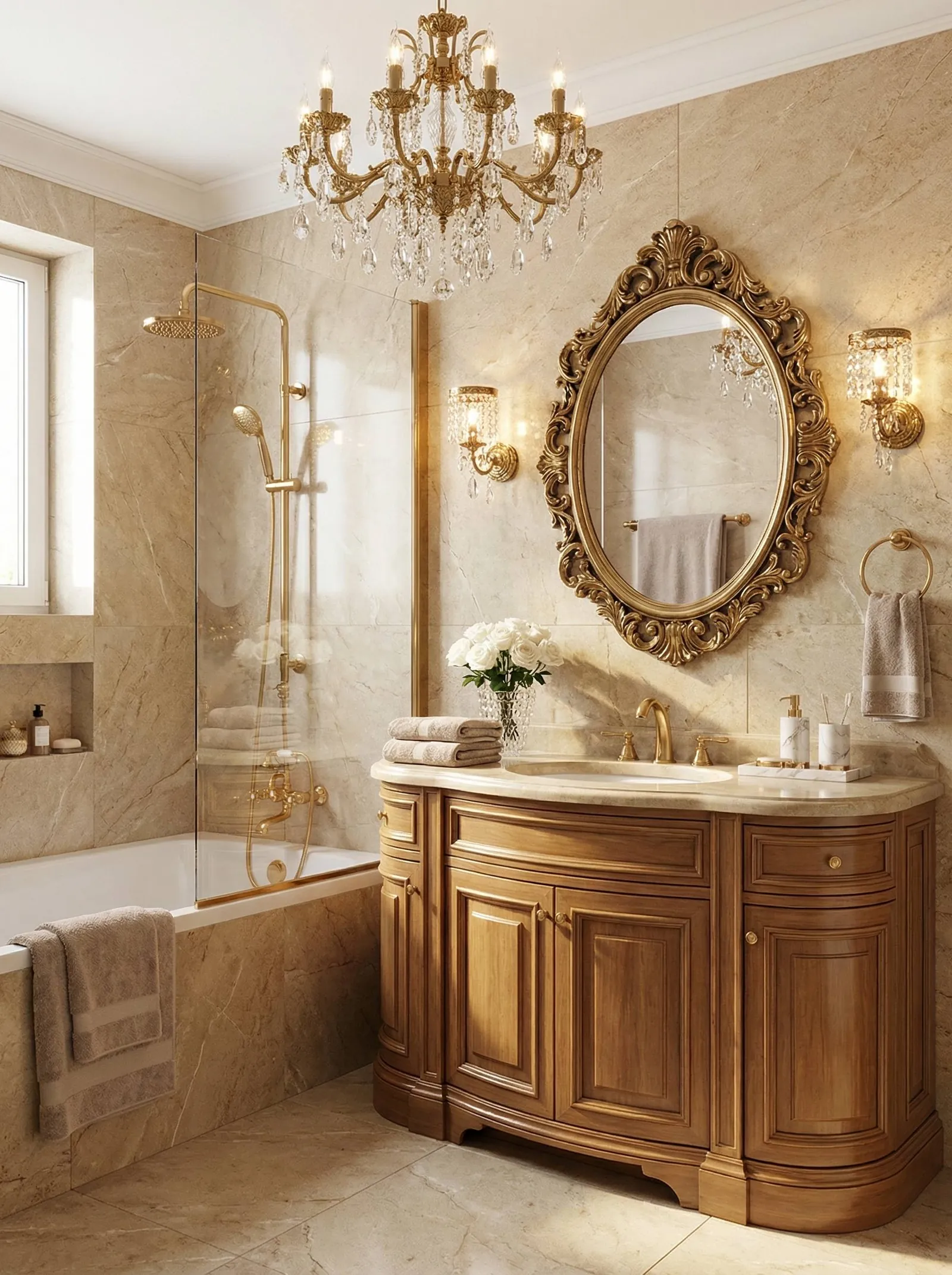
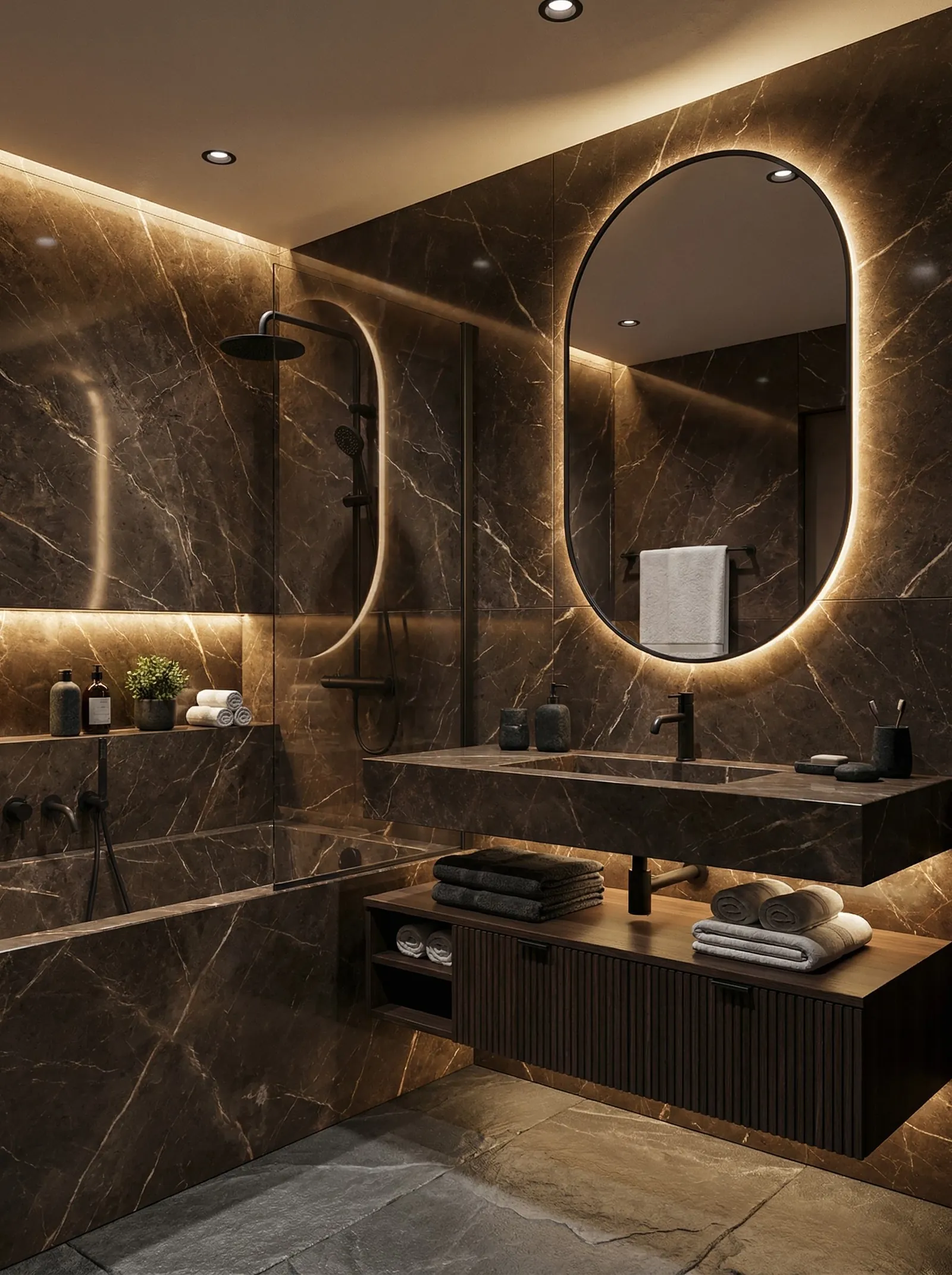
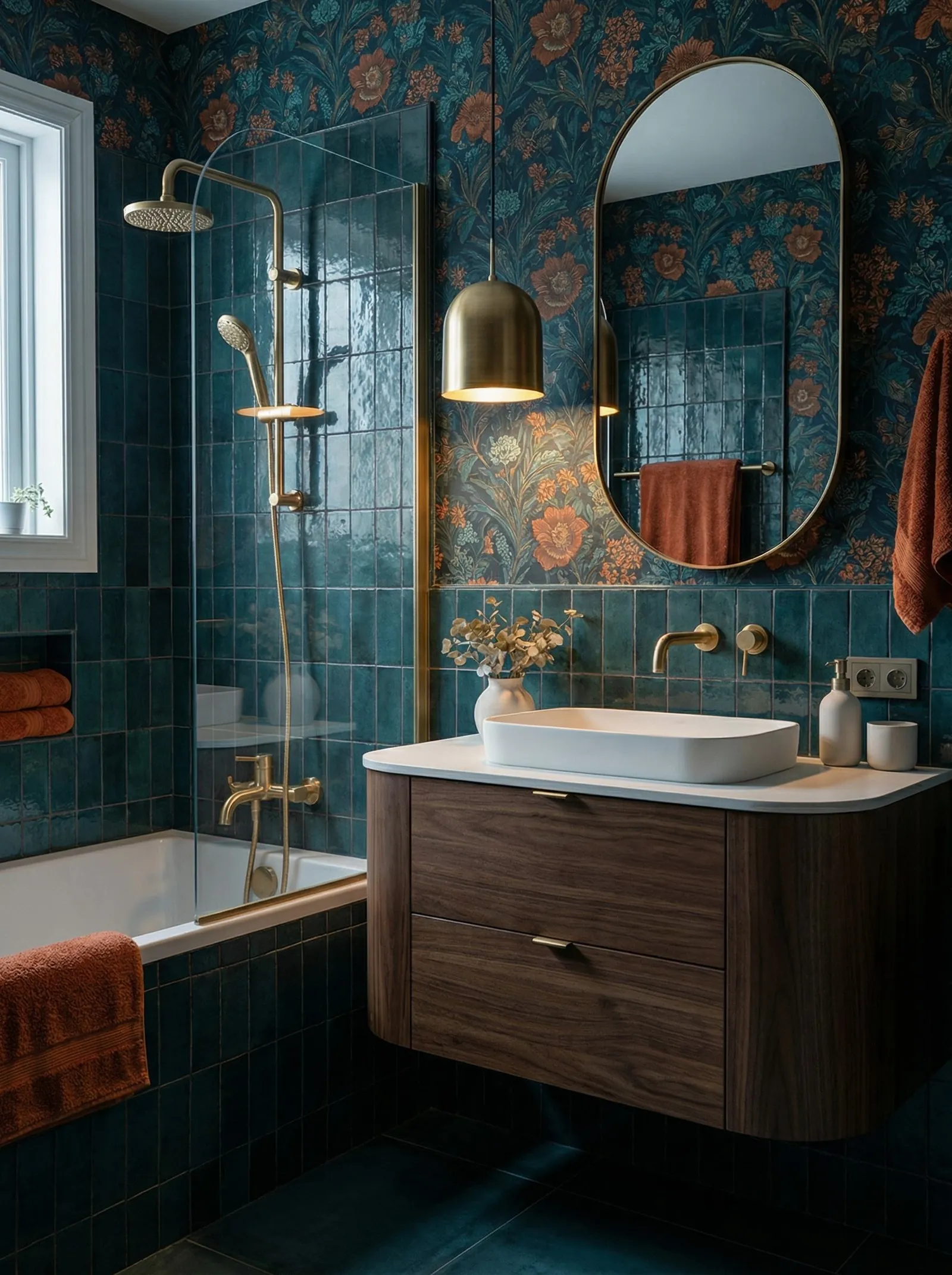
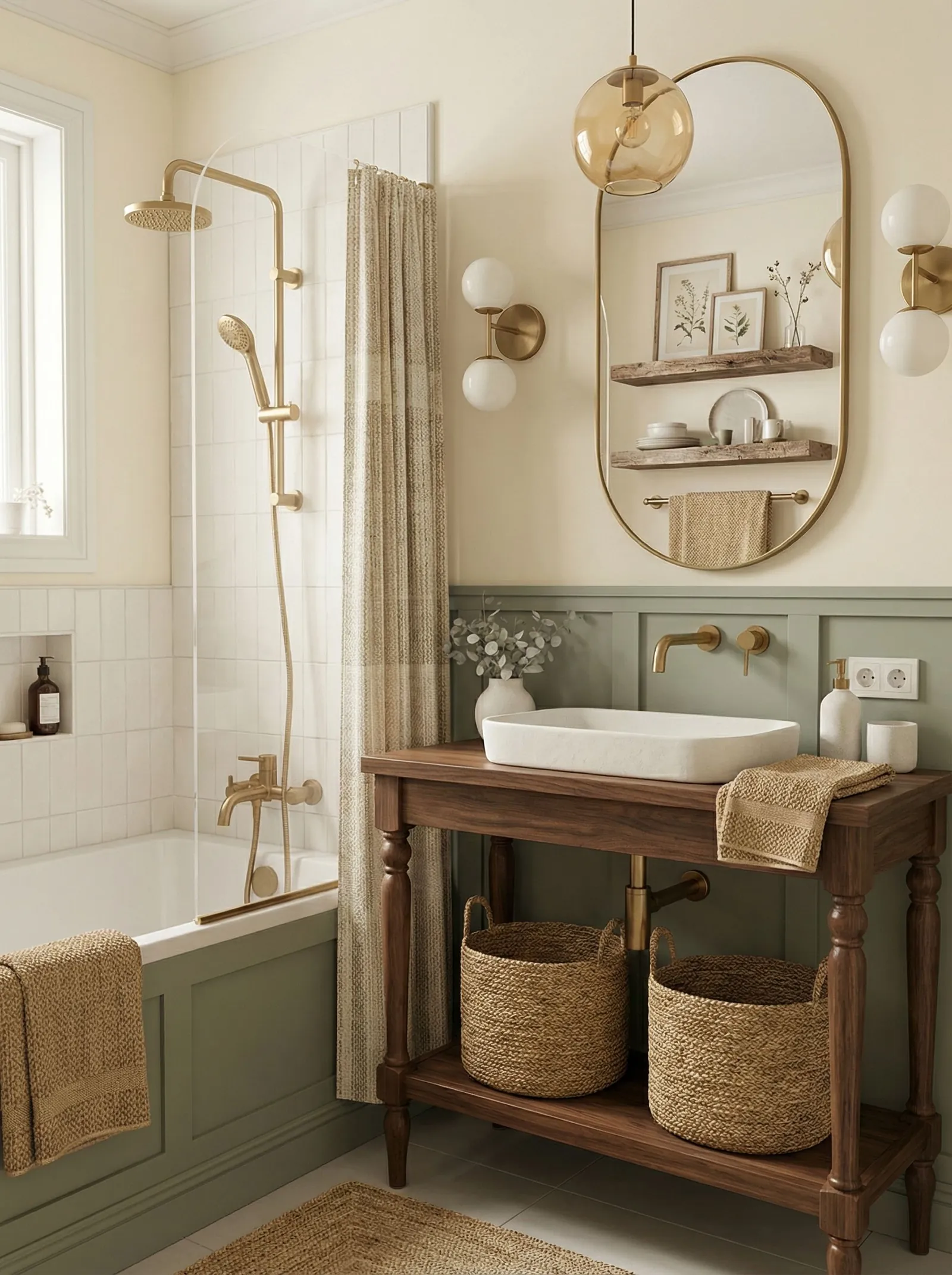
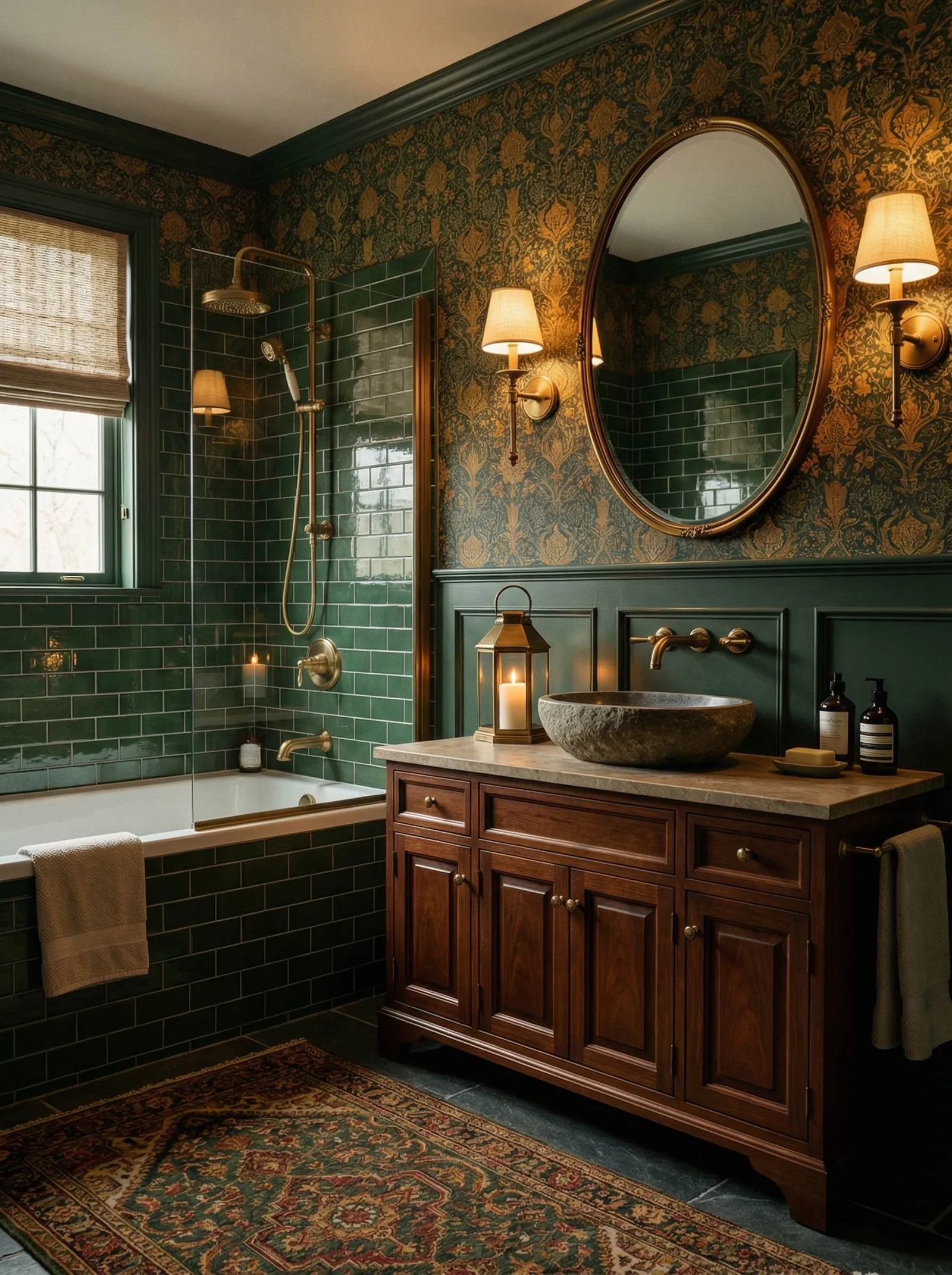
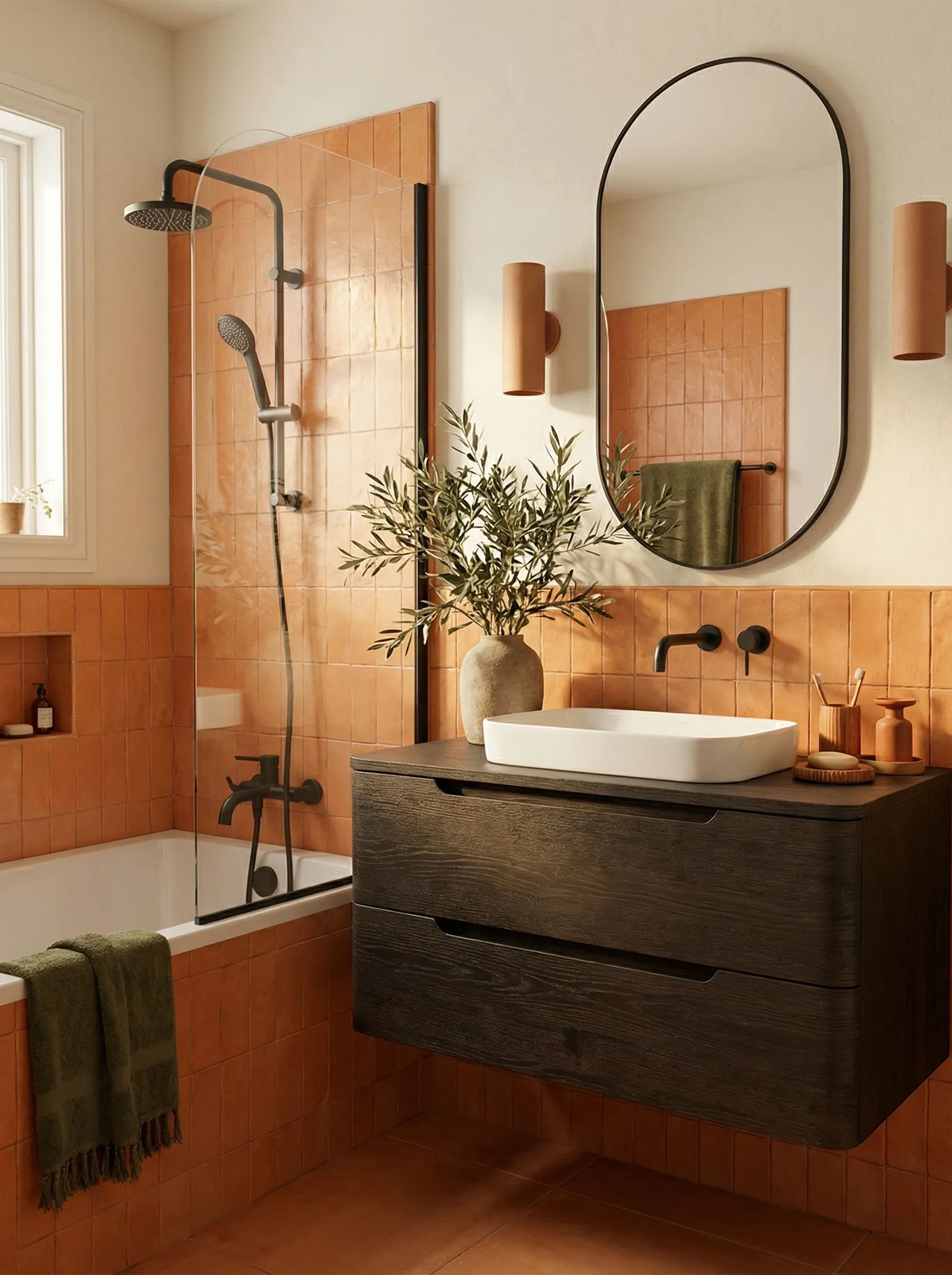
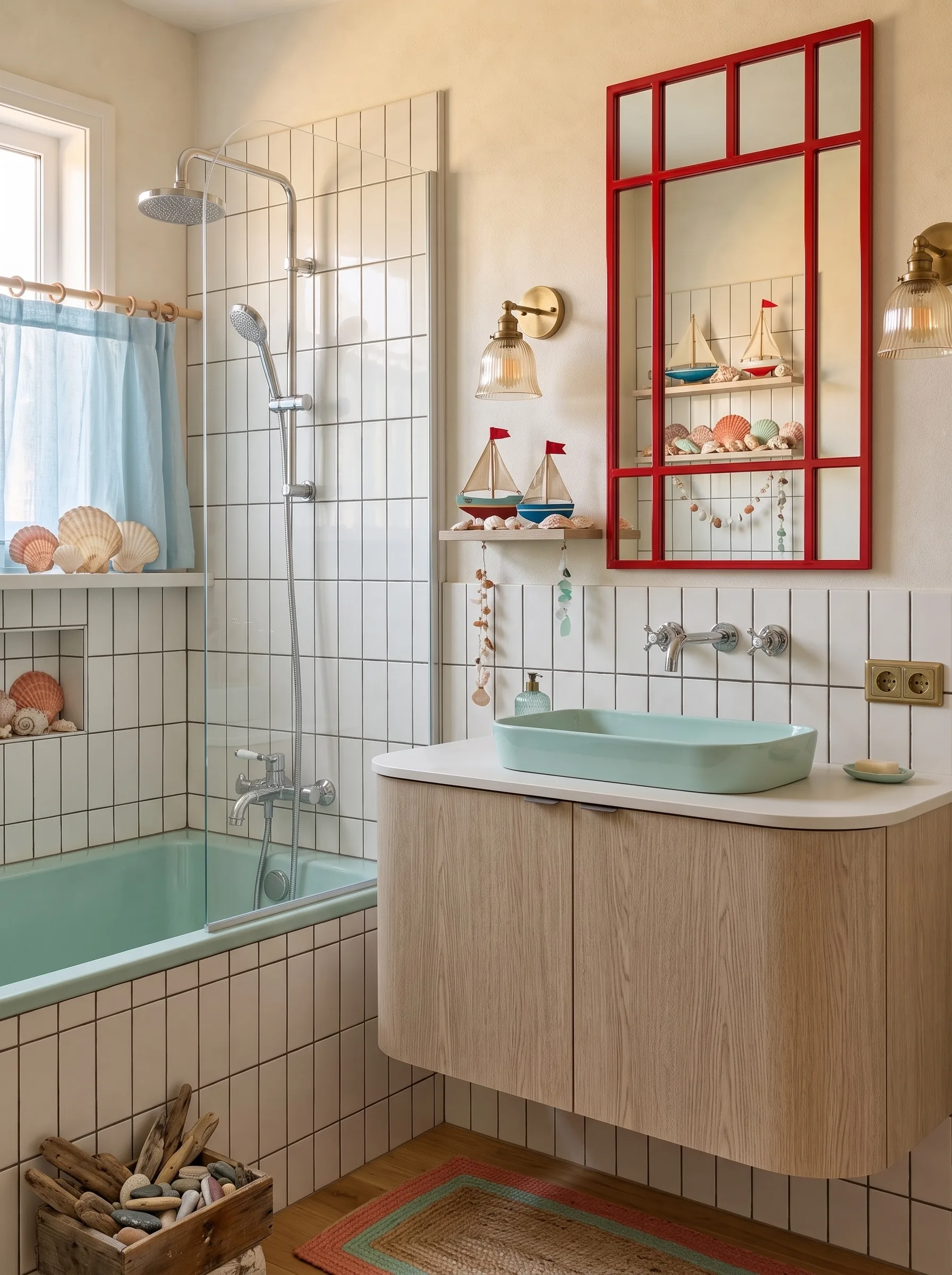
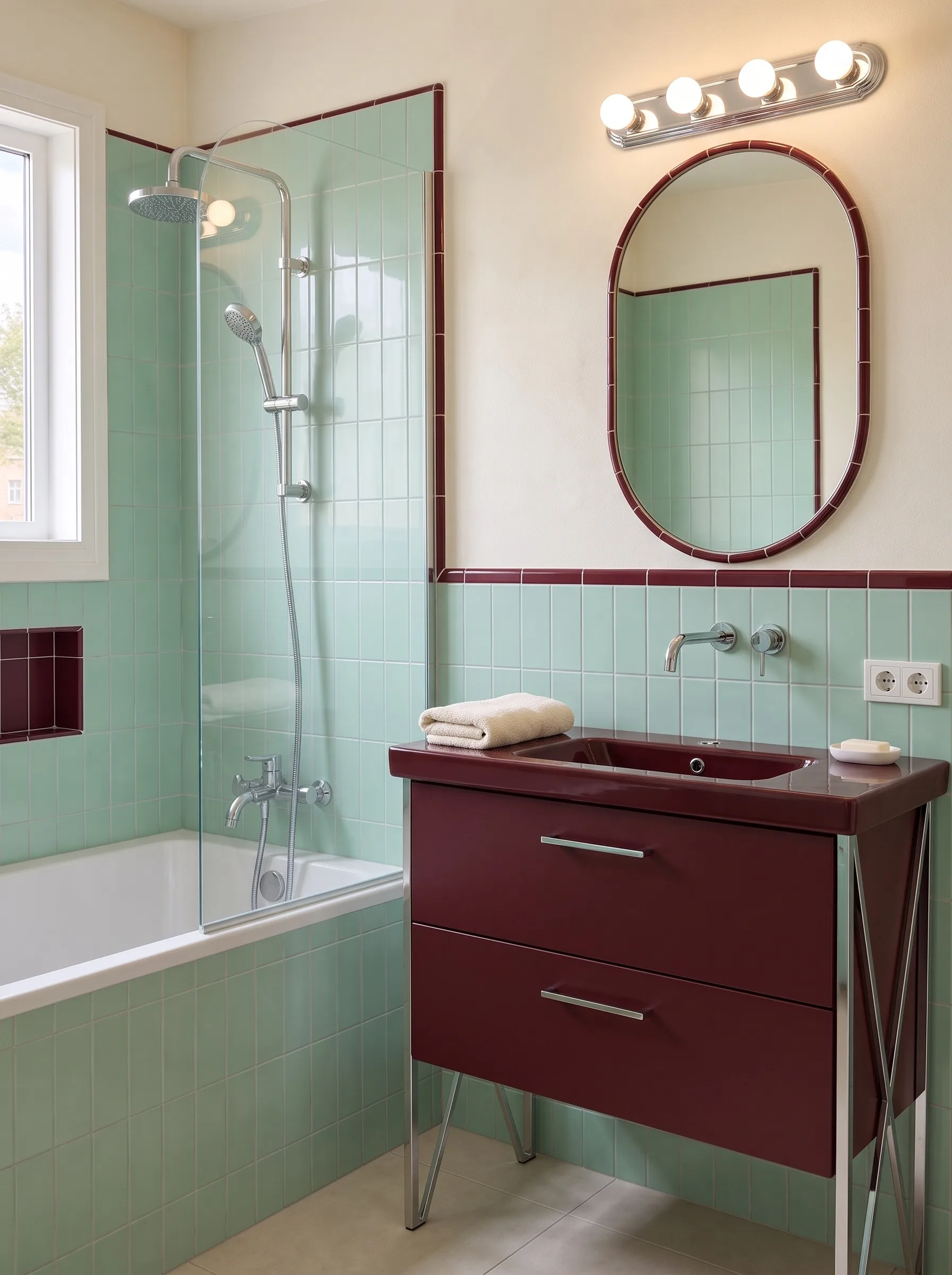
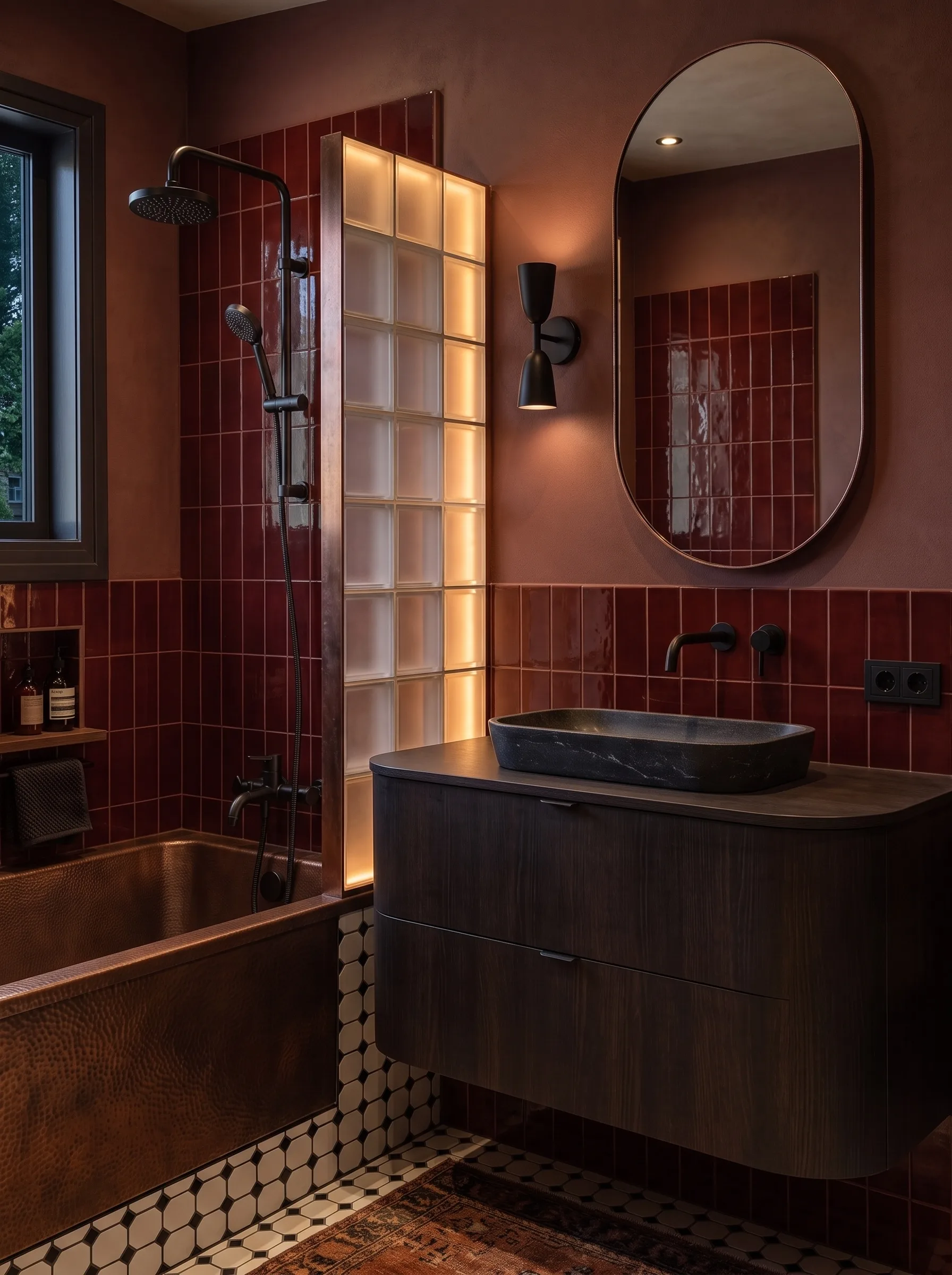
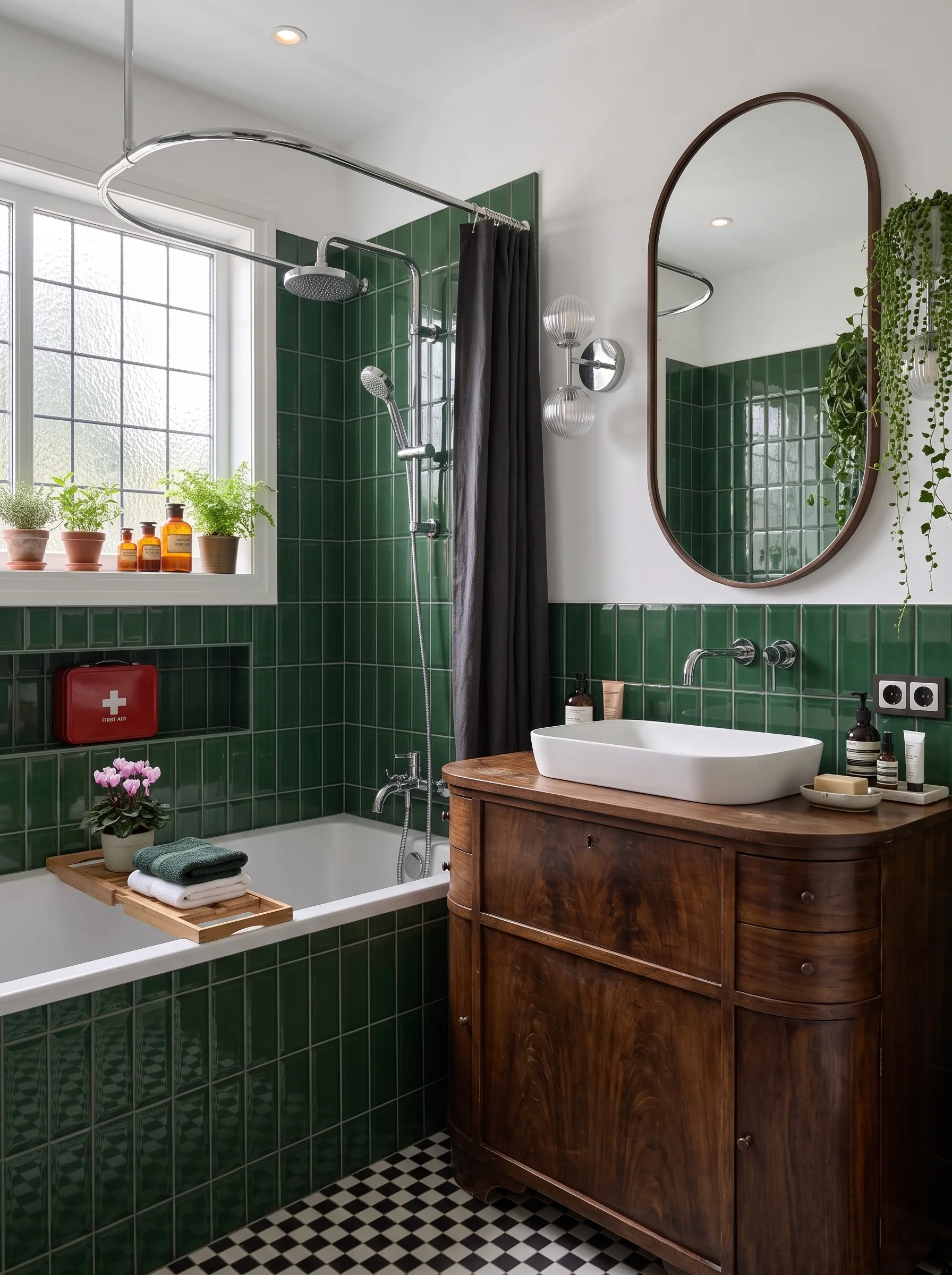
Every bathroom on this page is the same bathroom. White square tile to half height, pale blue paint above it, a birch laminate vanity with a beige speckled top, an oval mirror, a chrome sconce, a tub behind a glass screen, a socket on the tile and toothbrushes in a glass. It is a real bathroom in a real flat, and every style below starts from that photo instead of from an empty room built for a catalogue. That is the whole point. A style behaves differently when it has to survive an existing tub, a small window and a vanity nobody is replacing this year.

What a bathroom actually lets you change

Less than the renders imply, and that is worth knowing before you fall for one. The soil pipe fixes the toilet, the waste fixes the basin, and the tub sits where it sits — nothing on this page moves them, because moving them is trade work with a long tail. The window stays where the window is. What genuinely changes without a plumber: the paint above the tile, the vanity and its doors, the mirror, the tap and shower fittings, the sconce, the floor and everything textile. Tile can be painted or replaced, and that is where the money starts. Renders here will occasionally hand this room a freestanding vanity, or quietly lose the glass screen. Treat that as the visualization it is — a picture of the direction, not a plan you can hand to a fitter.

Which styles survive a real bathroom

Pale is the safe bet in a small or badly lit room: Minimalist, Spa, Japandi and Organic keep the surfaces light and the counters empty, which is most of what makes a small bathroom read bigger. English Green, Dark Academia and Art Deco go the other way deliberately — they close the walls in, and they want a window and an extractor that genuinely pulls before they are a good idea. Boho, Mediterranean and Farmhouse are the friendliest to tile you are keeping, because their look comes from wood, textiles and a mirror rather than from the walls. Colour Block, Pop Art and Vaporwave are mostly paint and fittings, which makes them the cheapest real change on this page and the easiest to put back when a lease ends.

See your own bathroom this way

Inty reads your bathroom from a single photo and rebuilds it in 200+ styles. Your actual room, not a showroom.

Download on the App Store

Starts with a 3-day free trial.

Questions

How much of a bathroom can change without a plumber?
More than people expect, as long as nothing wet moves. Paint, mirror, lighting, vanity doors, tap, shower fittings, floor and textiles are all reachable without touching pipework. The moment the basin, the toilet or the tub changes position you are in trade work, and the price stops being a weekend number.
Why is it the same bathroom in every style?
Because a style is only useful information once it has met a real room. A staged bathroom with nine-foot ceilings and nothing on the counter will make any style look good. This one has a plastic tub, a laminate vanity and a socket on the tile, so the difference between the 23 styles on this page is a difference you can actually judge.
Which of these are cheapest to undo?
Anything that lives in paint, textiles and fittings. Colour Block, Pop Art, Boho and Farmhouse can be reversed with a tin of paint and a box of old towels. Anything that replaces tile, plaster or the vanity is a one-way decision, and worth previewing before rather than after.
Does ventilation limit which styles I can pick?
It does, and it is the constraint people skip. Limewash, plaster, wallpaper and untreated wood all need an extractor that actually pulls and a way for the room to dry. In a bathroom with one small window and a weak fan, the tiled routes to a look are the honest ones. Several style pages here say which version is the tiled route.
The app says 200+ styles. Why are there 23 here?
Because these are the ones this exact bathroom has been photographed in. Every version on this page is a render of one real room that a person then looked at and wrote about, which is slower than listing styles. In the app you pick from the full set for your own bathroom; here you get the smaller set, already checked.
Why do the renders look better lit than my bathroom?
Partly because they are — the AI lights a scene the way a photographer would. Colour and material read differently under a single sconce than under a window at midday, so treat the light in any render as flattering. The layout, the proportions and the material choices are the parts worth taking seriously.