 Inty AI
Glass Block Bathroom Ideas
Two glass block takes on the same real bathroom, both from one spot.
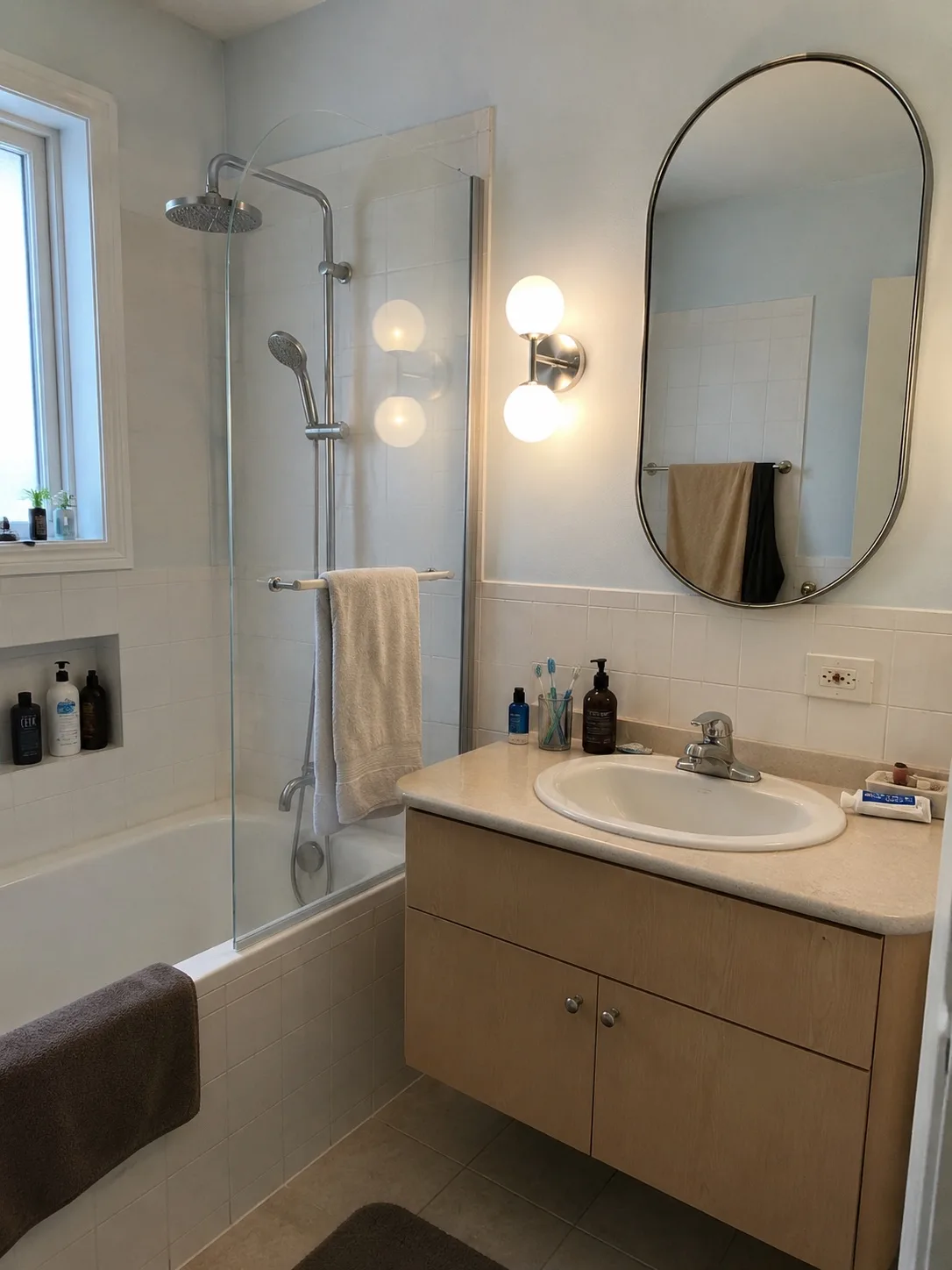 Before
Glass block spent thirty years as the most mocked material in renovation, and it is back for the reason it existed in the first place: it passes light through a wall that still gives you privacy. Both versions here use it as a partition beside the bath — one backlit at night against oxblood tile and a copper tub, one catching afternoon sun over terracotta. Same blocks, opposite rooms. If your bathroom's problem is light, this is the rare trend that is also a fix.
2 versions of glass block
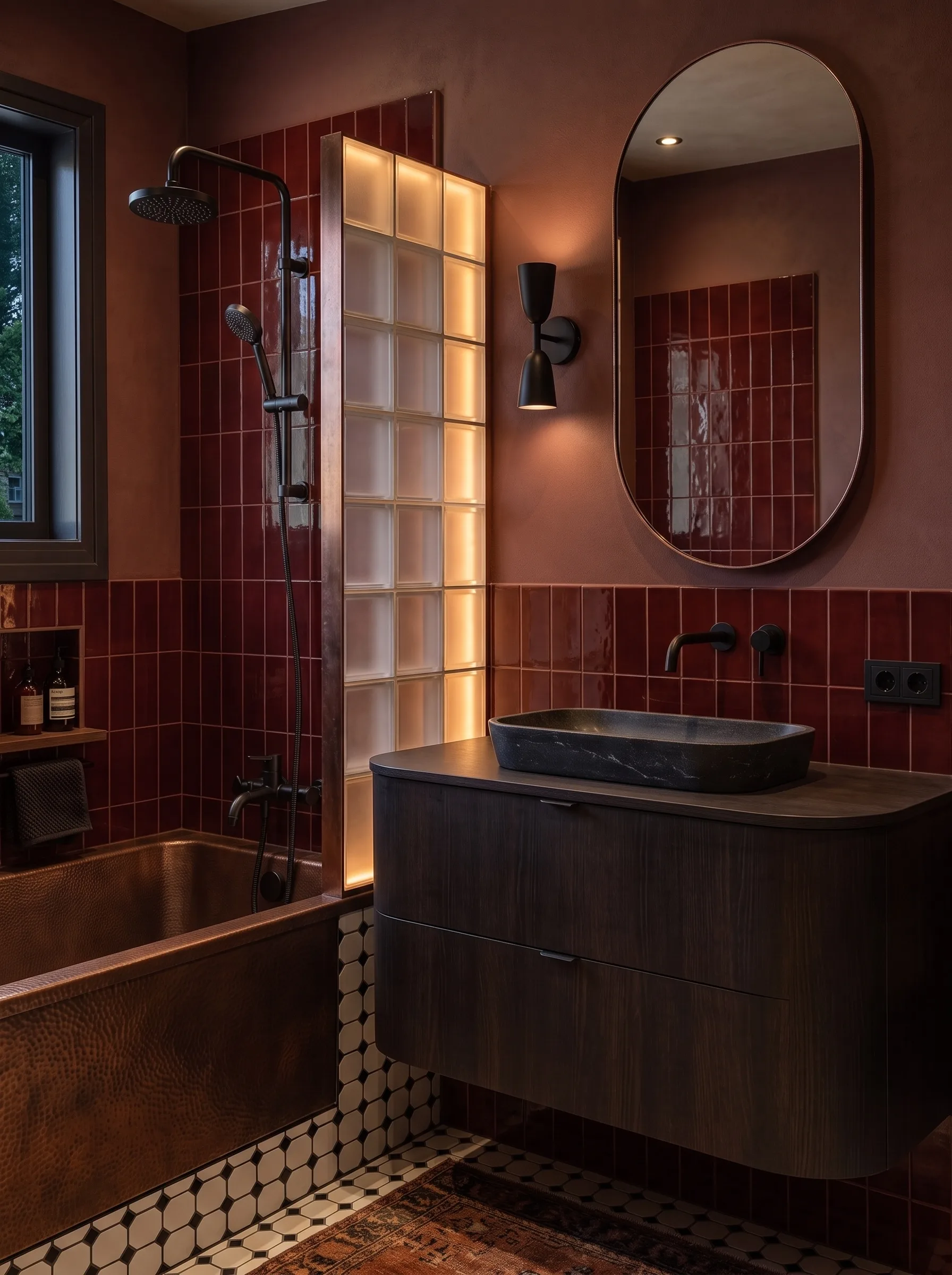
Oxblood Soak
Oxblood tile to shoulder height, plum plaster above, a hammered copper soaking tub, and the glass block wall lit from behind so it reads as a panel of amber light. Fittings in black, floor in a small dark octagon-and-dot. This is glass block as a lamp the size of a wall. The copper tub is the fantasy purchase here — the blocks themselves are one of the cheaper walls a builder can put up.
Sunbaked Terracotta
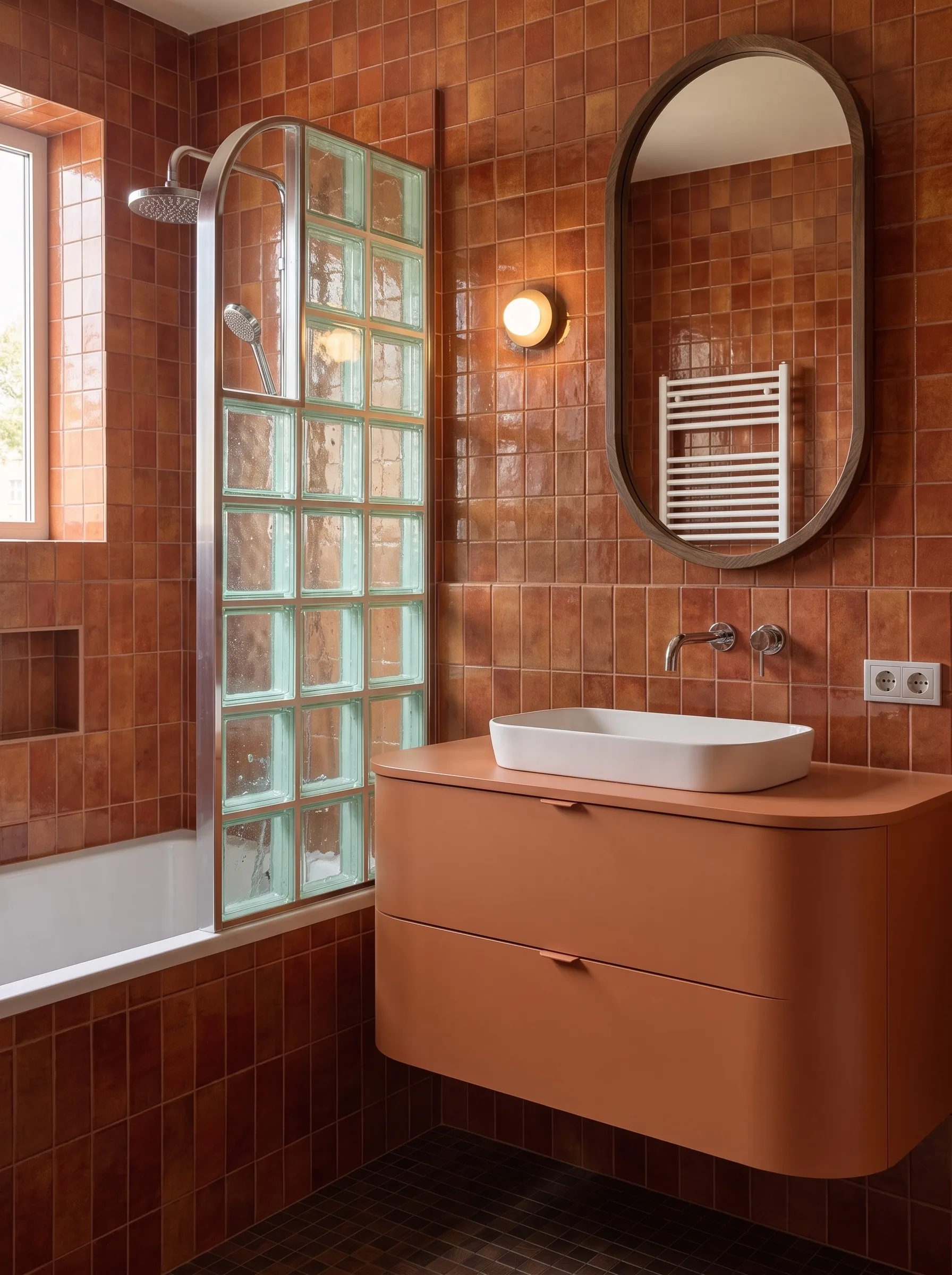
The daylight version: terracotta square tile wall to wall, a glass block partition with a green tint that catches the sun like the bottom of a pool, a clay-toned vanity and plain chrome taps. No backlighting, no tricks — the blocks just take whatever afternoon arrives and scatter it across the tile. Of the two, this is the one that shows you what the material actually does for free.
See your own bathroom in Glass Block style
Every render on this page is one real bathroom, redesigned. Point Inty at yours: it reads the layout from a single photo, then rebuilds it in Glass Block and 200+ other styles. Your actual room, not a showroom.


Free to try. iPhone.
Questions
- Is glass block actually back, or is this irony?
- Back, without the irony. The material never stopped doing the one thing it does — letting light through a private wall — and bathrooms are the room where that problem never went away. What dates a glass block wall is curved corners and chrome everything; laid flat and square against tile, as here, it reads current.
- Where does the backlight in the first version come from?
- An LED strip on the far side of the blocks, which is the whole trick. Glass block diffuses whatever is behind it, so a cheap strip becomes a wall of even amber light. It wants to be on the side you do not see, on a dimmer, and warm — cold white behind glass block is a car park stairwell.
- Can I add a glass block wall to an existing bathroom?
- A non-loadbearing partition like these, yes — it is masonry work but routine masonry work, and blocks are inexpensive. What costs is everything around it in these renders: the retiling, the copper tub in one, the floor in the other. The block wall itself is often the cheapest structural change on the quote.
- Copper tub: worth it?
- It is the most expensive object on this page by a distance, and the render is honest about why people pay it — copper against backlit glass and oxblood tile is a hotel photograph. The look survives substituting a standard tub with a painted panel; the glow does not care what it lands on.
- Does glass block work in a small bathroom?
- Small bathrooms are where it earns its keep, because the alternative — a solid partition — makes a small room smaller and darker at once. The blocks keep the division and hand the light back. The one warning: it is a grid, and against busy tile it can get loud, which is why both versions here pair it with plain squares.