 Inty AI
Colour Block Living Room Ideas
Two colour-block takes on the same real living room, both from one spot.
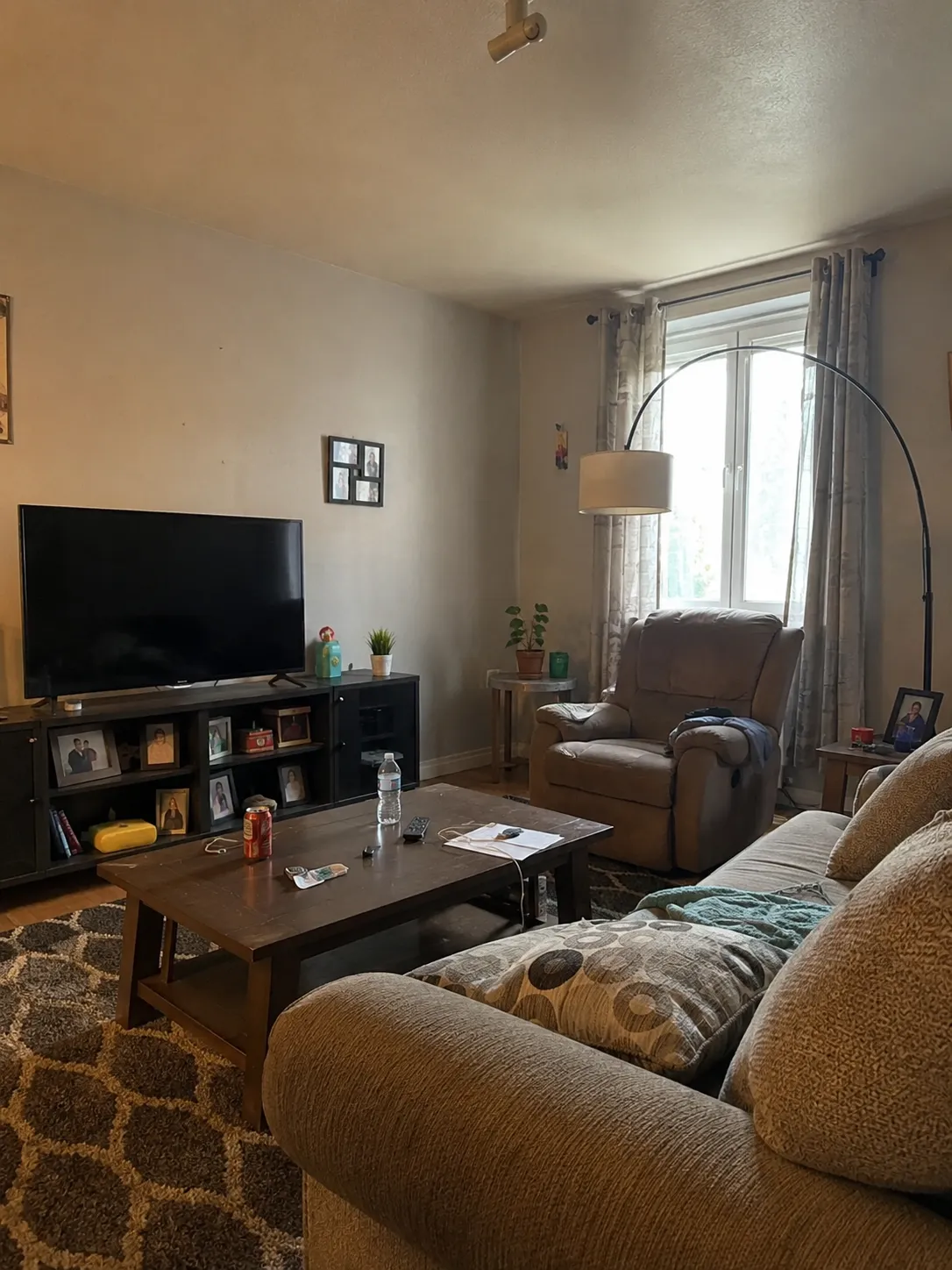 Before
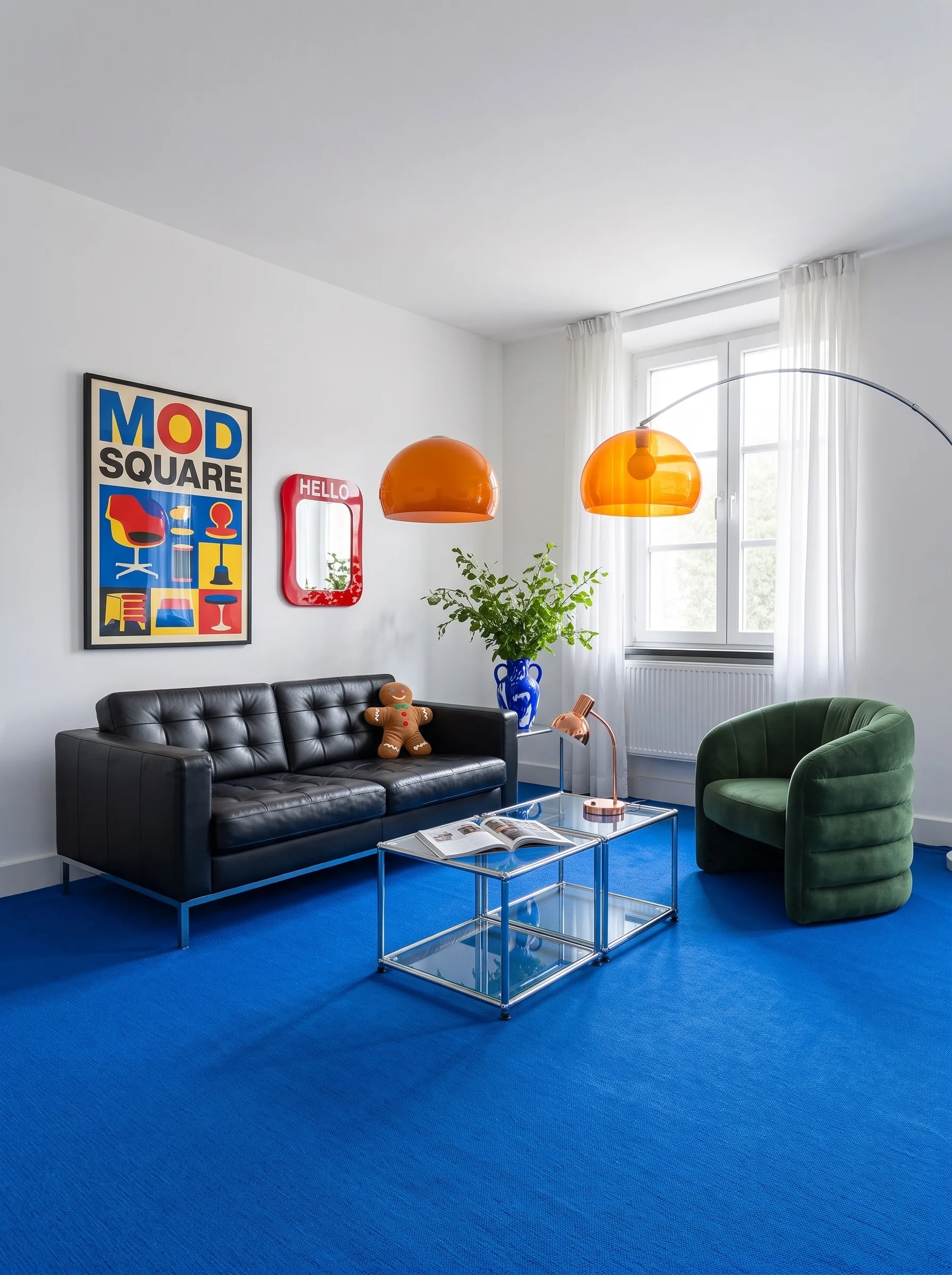
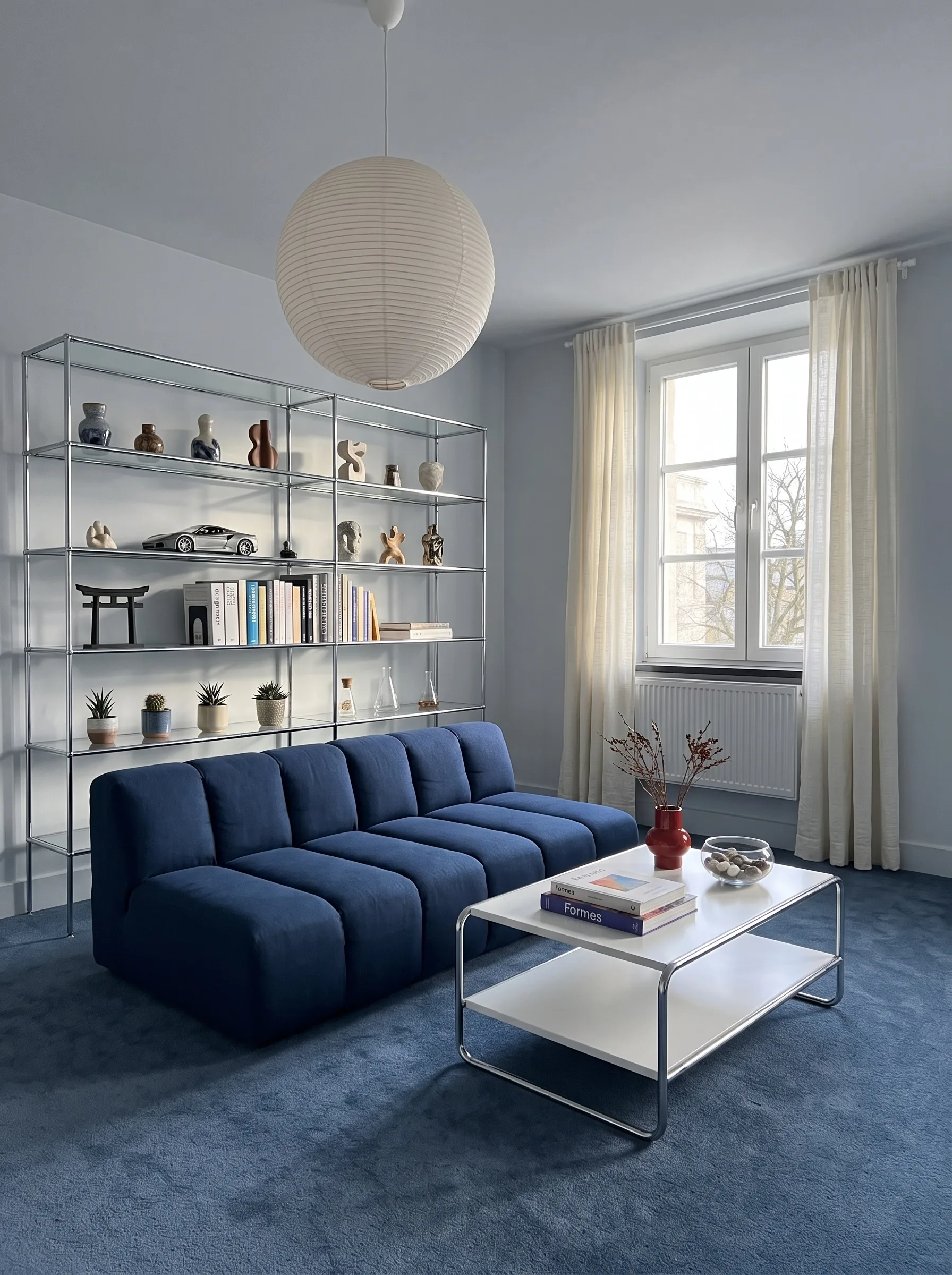
Colour block in a living room means picking two or three colours and giving each one a territory. Both versions here start with the same radical move — a cobalt blue floor, wall to wall — and then argue about what goes on top. One keeps everything else pale and lets chrome shelving and a navy sofa sit in the blue like objects in a gallery. The other goes primary: black leather, two orange dome lamps, a red mirror, a poster that says MOD SQUARE in case you missed the point. A coloured floor sounds unhinged and is actually the most disciplined move on this page, because it forces every later choice to have a reason.
2 versions of colour block
Electric Blue Pop
Cobalt carpet, white walls, a black tufted leather sofa on chrome legs, two orange dome lamps — one hanging, one arcing — a red-framed mirror that says HELLO, a chrome-and-glass table, a MOD SQUARE poster laying out the whole philosophy in primary colours. A gingerbread-man plush sits on the sofa refusing to take any of it seriously. Three colours, each owning its zone: blue floor, orange light, red punctuation. The carpet is the commitment; the discipline is everything the room says no to.
Cobalt Collector
The quiet answer to the same floor: pale blue walls, cobalt carpet, a navy channel-tufted sofa, and a chrome étagère holding little sculptures, ceramics, cacti and a model car like a private museum. A white Breuer-style table, a paper globe, one red vase allowed in as the exception that proves the rule. This is colour blocking as atmosphere rather than argument — the room is essentially one colour at four depths. The étagère styling is the skill: sparse enough that each object reads, which takes more restraint than any paint decision here.
See your own living room in Colour Block style
Every render on this page is one real living room, redesigned. Point Inty at yours: it reads the layout from a single photo, then rebuilds it in Colour Block and 200+ other styles. Your actual room, not a showroom.


Free to try. iPhone.
Questions
- A blue floor — seriously?
- It is the strongest move in the room and the reason both versions work. A coloured floor unifies everything standing on it, the way a gallery's grey concrete makes any sculpture look intentional. The realistic version is an oversized cobalt rug rather than fitted carpet; the effect survives, the lease does too.
- How many colours can a colour-block room take?
- Three, on this page's evidence, and each needs its own job: one on the floor, one in the lighting, one as punctuation. The pale version shows the other direction — one colour at several depths. What breaks the scheme is a fourth colour with no territory, which is usually whatever you carried in from the old room.
- Does colour block need a modern room?
- It needs a plain one, which is not the same thing. This is an ordinary beige box with one window, and the scheme reads because there is no cornicing or panelling arguing with the blocks of colour. Period features fight it; builder-grade plainness, for once, is the asset.
- Is this expensive?
- Cheaper than it looks. Chrome shelving, dome lamps and graphic posters are all mass-produced items with good affordable versions, and paint is paint. The floor is the only real line: fitted colour carpet is a trade job, a big rug is a delivery. The leather sofa in the pop version is the one four-figure object.
- Which of the two should I try?
- The collector version if the room has to stay livable for everyone in the house — one colour at different depths offends nobody. The pop version if the room is genuinely yours: it has more ideas, it dates faster, and it is more fun, which is roughly the trade colour blocking always offers.